Shorebirds & Seabirds
American Oystercatcher
Haematopus palliatus
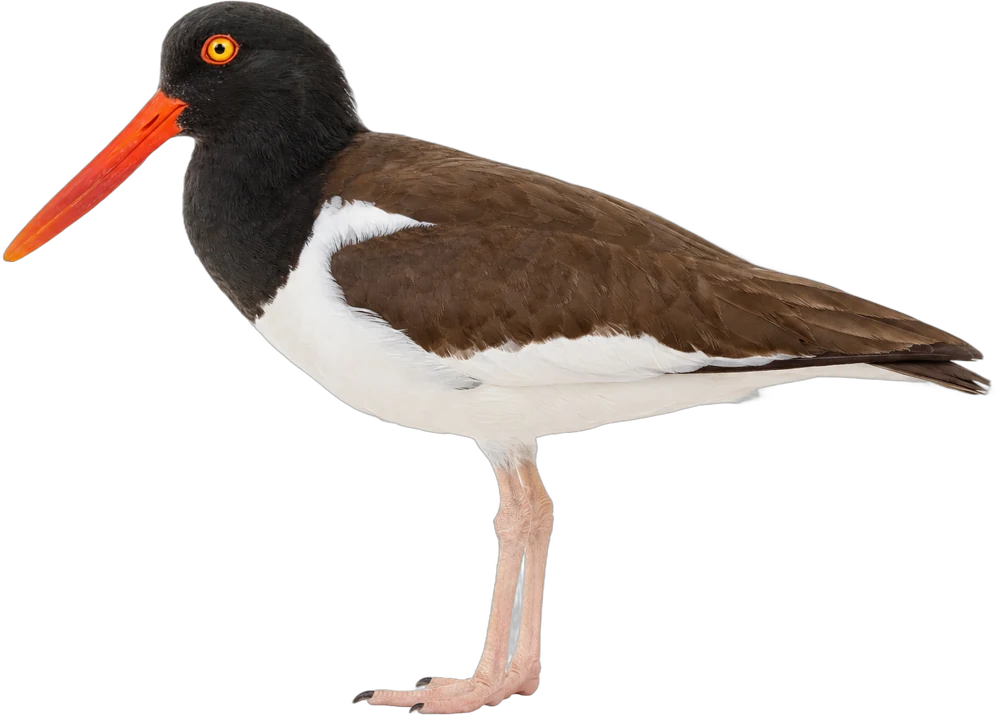
A striking black-and-white shorebird with a long, bright orange bill that it uses to pry open oysters, clams and mussels.
How to identify it
- Black head and neck, brown back, white belly
- Long, thick, bright orange-red bill
- Yellow eye with a red eye-ring
- Pale pink legs
- Loud, piercing "wheep" calls
SizeAbout the size of an American Crow
American Robin10 in
American Oystercatcher17 in
American Crow19 in
Canada Goose37 in
6 inAverage length, bill to tail
Details
- Size
- 15.5–17.5 in long; wingspan about 32 in
- Weight
- 14–25 oz
- Habitat
- Beaches, salt marshes, oyster reefs and tidal flats
- When to see it
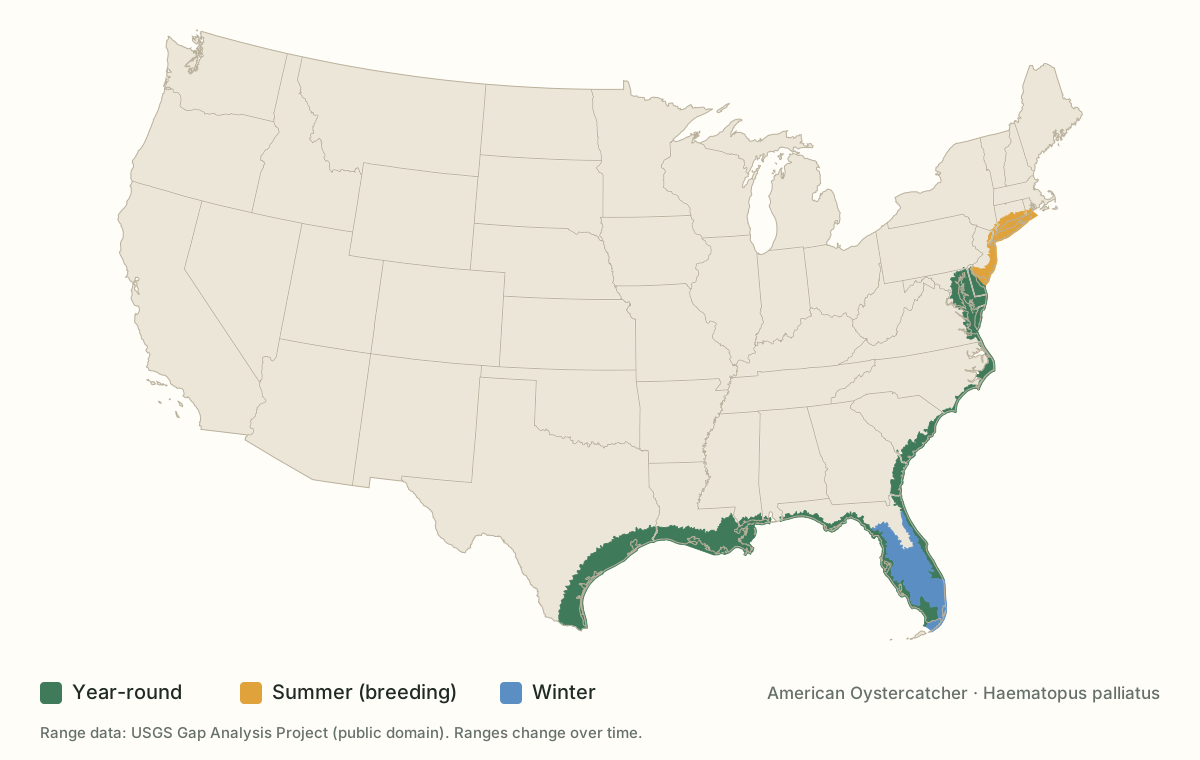
- Year-round along the Atlantic and Gulf coasts
- Diet
- Oysters, clams, mussels, other shellfish
Range in the United States
Life history
Food
Pries open oysters, clams and mussels with its blade-like bill, stabbing the muscle that holds the shell shut.
Nesting
A shallow scrape on sand or shell above the high-tide line.
- Clutch
- 2–3 eggs
- Incubation
- 24–29 days
- Young
- Leave the nest within a day; fly at about 5 weeks
- Broods
- 1 per year
Behavior
Pairs are loud and territorial, piping as they chase intruders. Parents feed chicks for weeks, unlike most shorebirds.
Conservation
Recovering on the Atlantic coast after decades of decline; still sensitive to beach disturbance.
Cool facts
- Its bill is flattened side to side like a knife.
- Young oystercatchers need weeks of practice to open shells.
- Pairs can stay together for many years.
Songs & calls
▶Bird sounds video coming soon
Watch the American Oystercatcher
▶Video coming soon