Waterfowl & Diving Birds
Bufflehead
Bucephala albeola
A tiny, energetic diving duck that pops up and down constantly on winter lakes and bays. It nests in old Northern Flicker holes in northern forests.
How to identify it
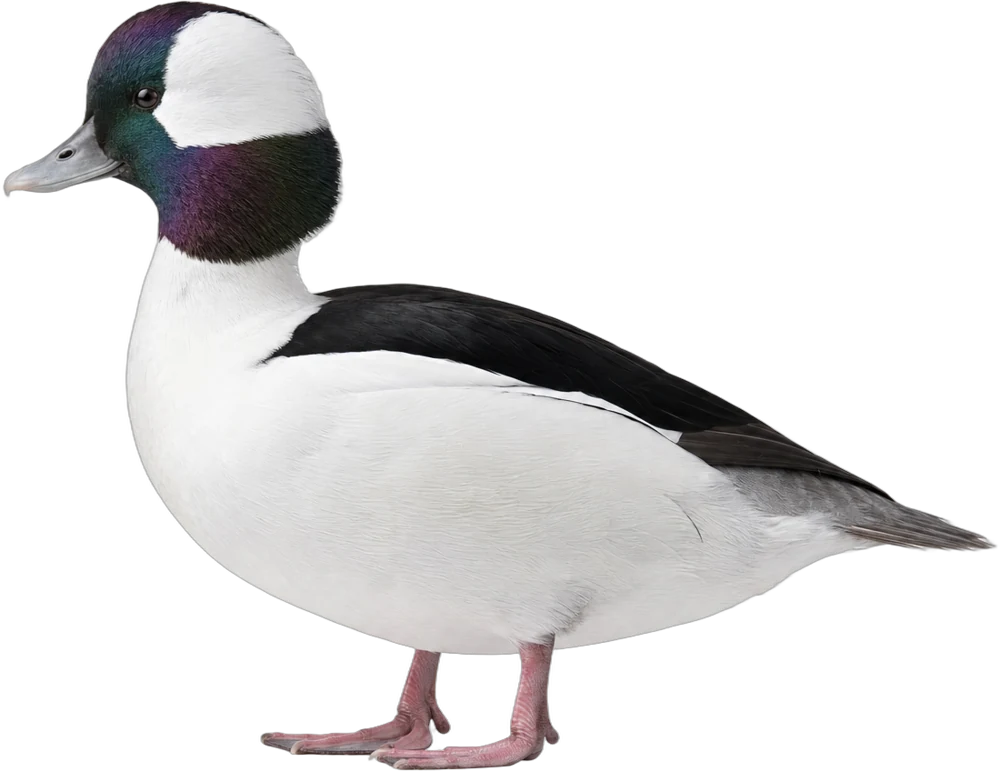
- Male: large white patch on the back of a glossy dark head
- Male: bright white body with a black back
- Female: dark gray-brown with a small white oval on the cheek
- Very small, round-headed and compact
SizeBetween an American Robin and an American Crow
American Robin10 in
Bufflehead15 in
American Crow19 in
Canada Goose37 in
6 inAverage length, bill to tail
Details
- Size
- 13–16 in long; wingspan about 21 in
- Weight
- 9–22 oz
- Habitat
- Bays, estuaries, lakes and reservoirs
- When to see it
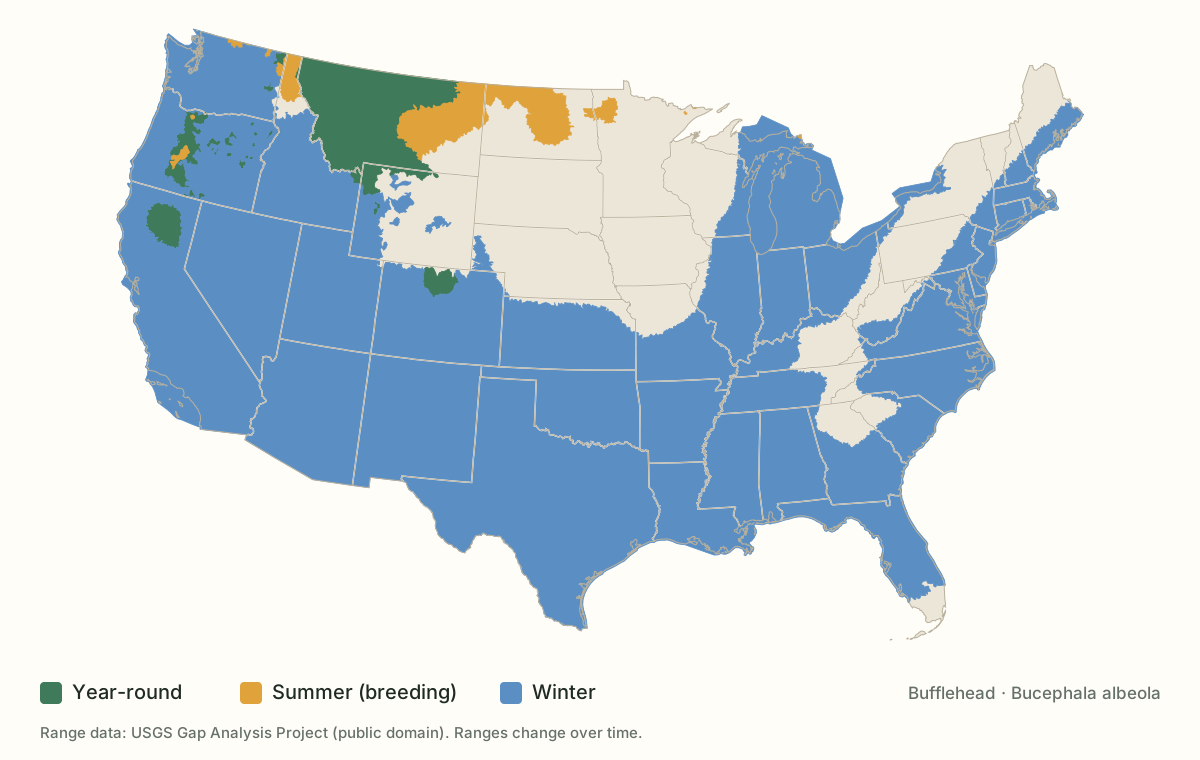
- Winter visitor across most of the US; breeds in Canada and Alaska
- Diet
- Aquatic insects, small crustaceans and snails
Range in the United States
Life history
Food
Dives for aquatic insects, small crustaceans and snails; in salt water, it eats small clams and shrimp.
Nesting
In tree cavities, especially old Northern Flicker holes, in northern forests near lakes.
- Clutch
- 6–11 eggs
- Incubation
- 28–33 days
- Young
- Leave the nest within 1–2 days; fly at about 7–8 weeks
- Broods
- 1 per year
Behavior
Feeds in small groups where some birds stay on the surface as lookouts while others dive.
Conservation
Numbers are stable or increasing.
Cool facts
- It is small enough to nest in old woodpecker holes, which few ducks can fit into.
- Buffleheads are among the last ducks to head south in fall.
- Unlike most ducks, Buffleheads often return to the same mate year after year.