Waterfowl & Diving Birds
Canada Goose
Branta canadensis
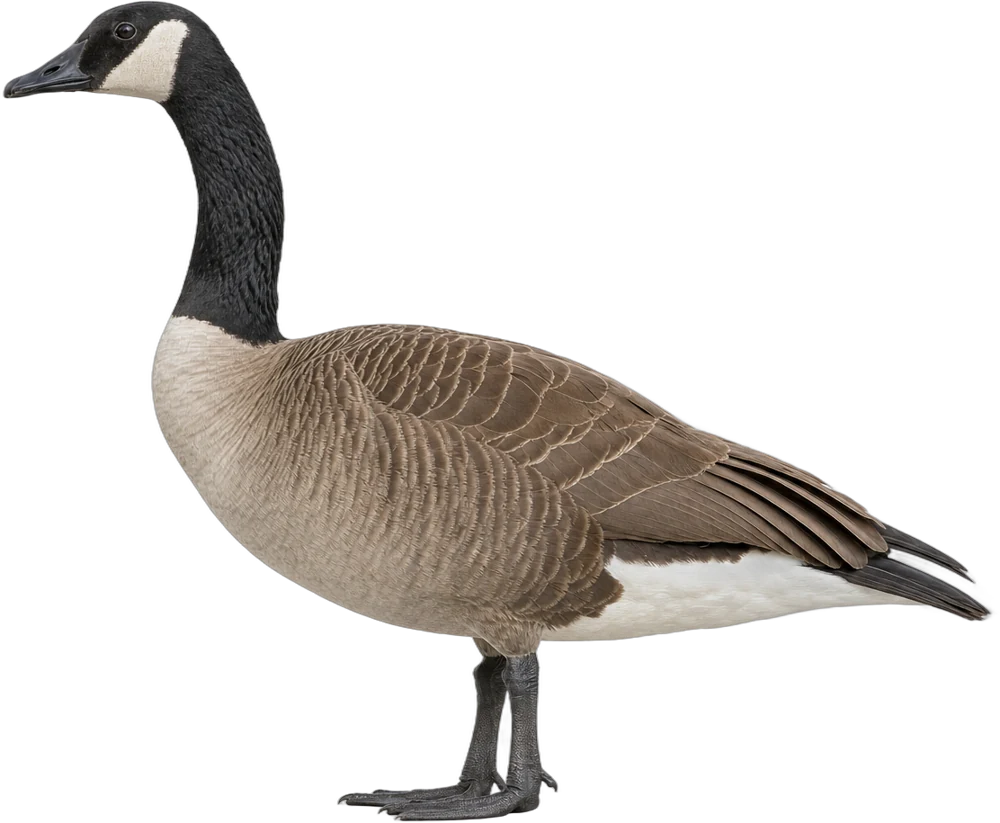
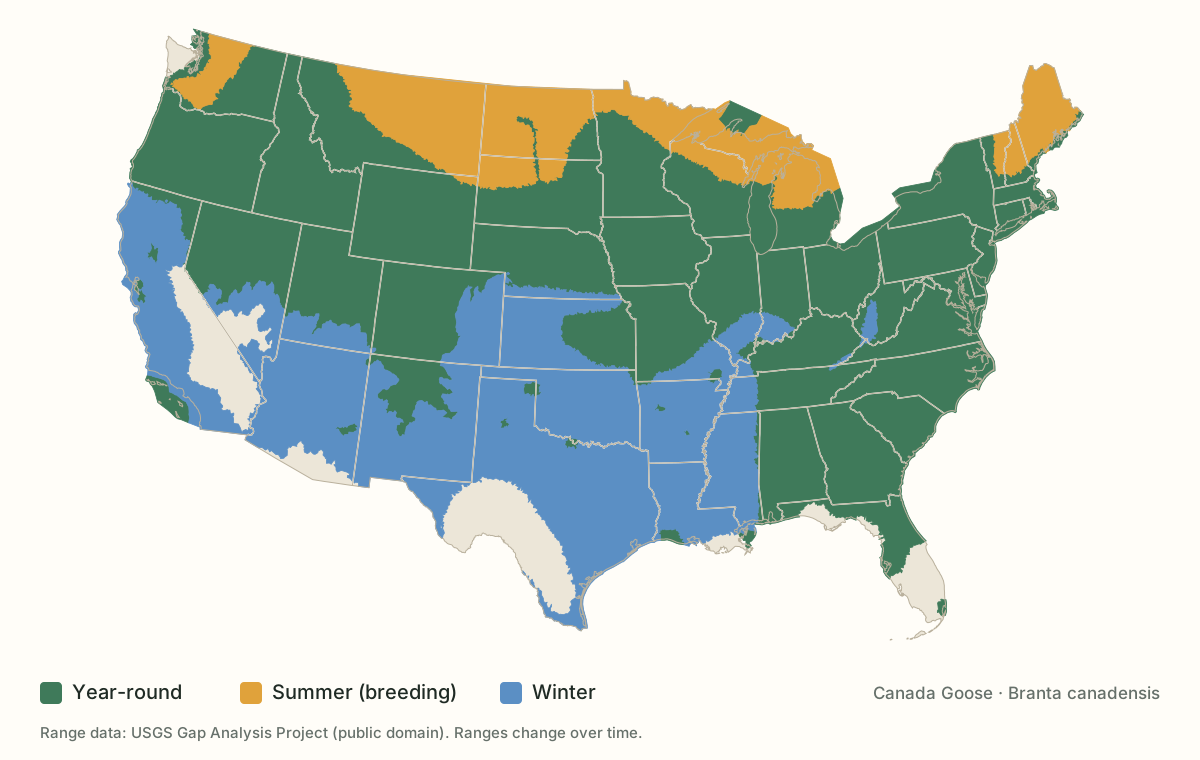
A large, familiar goose with a black neck and a bright white "chinstrap." Once mostly a migrant from Canada, it now lives year-round on lakes, golf courses and park ponds across most of the United States, and flies in noisy V-shaped flocks.
How to identify it
- Long black neck and head with a white cheek patch that wraps under the chin
- Brown-gray back and wings, paler tan-gray breast
- White under the tail; black tail, bill and legs
- Loud, honking "ah-HONK" call, often given in flight
- Flies in V or line formations
Details
- Size
- 30–43 in long; wingspan 50–67 in
- Weight
- 6.6–14.3 lb
- Habitat
- Lakes, rivers, ponds, marshes, fields, parks and golf courses
- When to see it
- Year-round across most of the US; more numerous in winter
- Diet
- Grasses, sedges, waste grain and aquatic plants
Range in the United States
Life history
Food
Grazes on grasses, sedges and clover on land, and tips up in shallow water for aquatic plants. In fall and winter it feeds heavily on waste corn and other grain in harvested fields.
Nesting
On the ground near water, often on a slight rise, island or muskrat lodge. The female builds a shallow bowl of plant material lined with her own down.
- Clutch
- 2–8 eggs
- Incubation
- 25–28 days
- Young
- Leave the nest within a day; fly at 6–9 weeks
- Broods
- 1 per year
Behavior
Pairs usually stay together for life, and families travel as a group through their first winter. Nesting geese hiss and charge at anything that comes too close.
Conservation
Abundant and increasing. Year-round flocks in parks and on golf courses have grown so large that many towns manage them as a nuisance.
Cool facts
- Adults replace all their flight feathers at once in summer and can't fly for about six weeks.
- Flying in a V saves energy: each goose rides the air lifted by the bird ahead, and they take turns at the front.
- Goslings can swim and feed themselves within a day of hatching.