Woodpeckers, Doves & Other Land Birds
Chuck-will's-widow
Antrostomus carolinensis
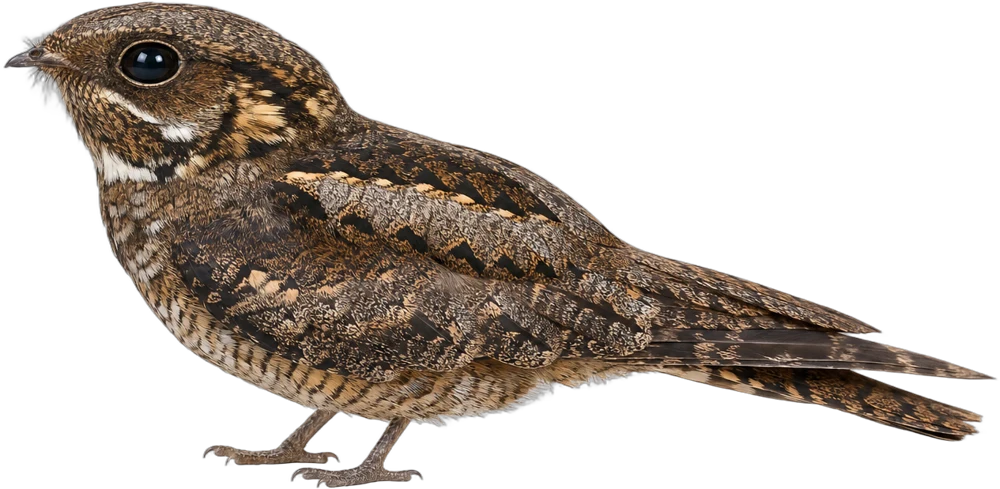
A large nightjar of southern pine woods, almost invisible on the forest floor by day. On summer nights it repeats its name over and over.
How to identify it
- Cryptic brown, gray and buff camouflage pattern
- Large flat head with a tiny bill and huge mouth
- Rests flat on the ground or along a branch by day
- Night song: "chuck-WILL'S-WI-dow"
SizeBetween an American Robin and an American Crow
Song Sparrow6 in
American Robin10 in
Chuck-will's-widow12 in
American Crow19 in
6 inAverage length, bill to tail
Details
- Size
- 11–12.5 in long; wingspan about 25 in
- Weight
- 3.4–6.4 oz
- Habitat
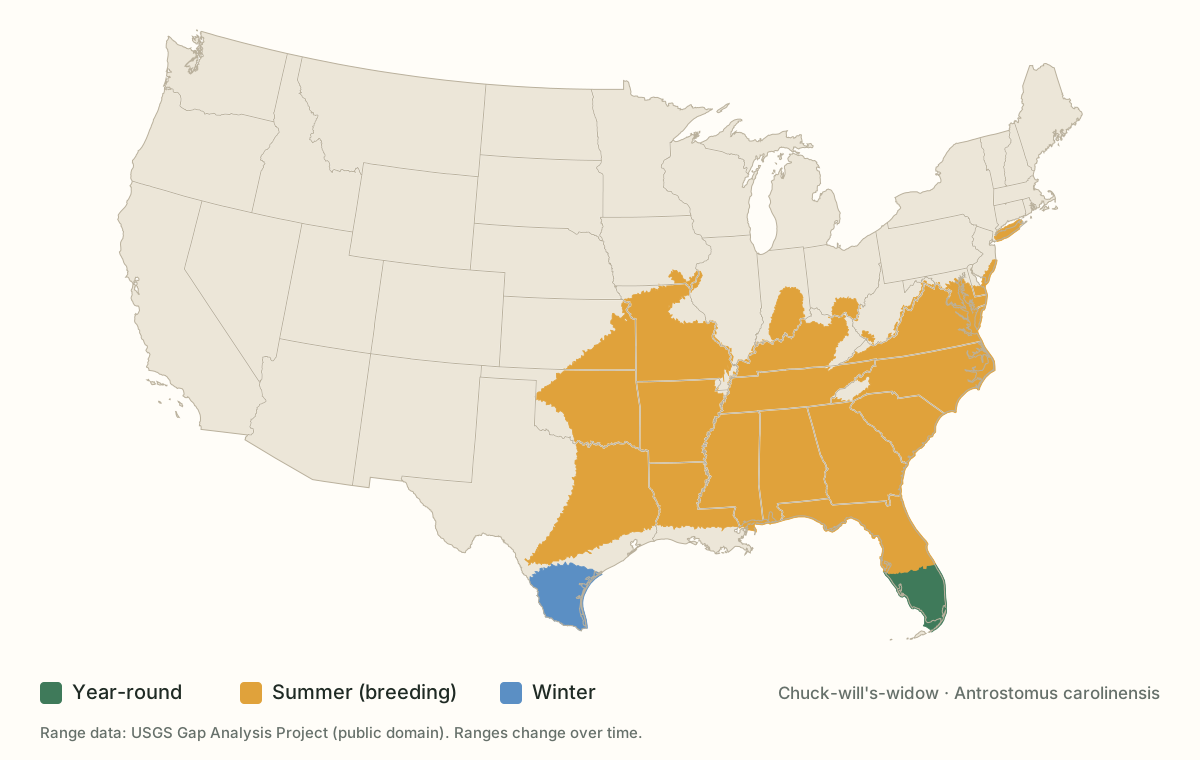
- Pine and oak woodlands, forest edges in the Southeast
- When to see it
- Summer (April–September) across the Southeast
- Diet
- Moths, beetles and other night-flying insects
Range in the United States
Life history
Food
Catches moths, beetles and other flying insects at night; occasionally swallows small birds.
Nesting
No nest; eggs are laid on bare ground or leaf litter in the forest.
- Clutch
- 2 eggs
- Incubation
- about 20–21 days
- Young
- Fly at about 2.5 weeks
- Broods
- 1 per year
Behavior
Rests on the ground or along branches by day, perfectly camouflaged. Sings at dusk and before dawn.
Conservation
Declining, possibly from fewer large insects and habitat loss.
Cool facts
- It is the largest nightjar in North America.
- Its huge mouth can swallow small birds and bats whole.
- If disturbed, a female may move her eggs or chicks a short distance.
Songs & calls
▶Bird sounds video coming soon
Watch the Chuck-will's-widow
▶Video coming soon