Waterfowl & Diving Birds
Common Loon
Gavia immer
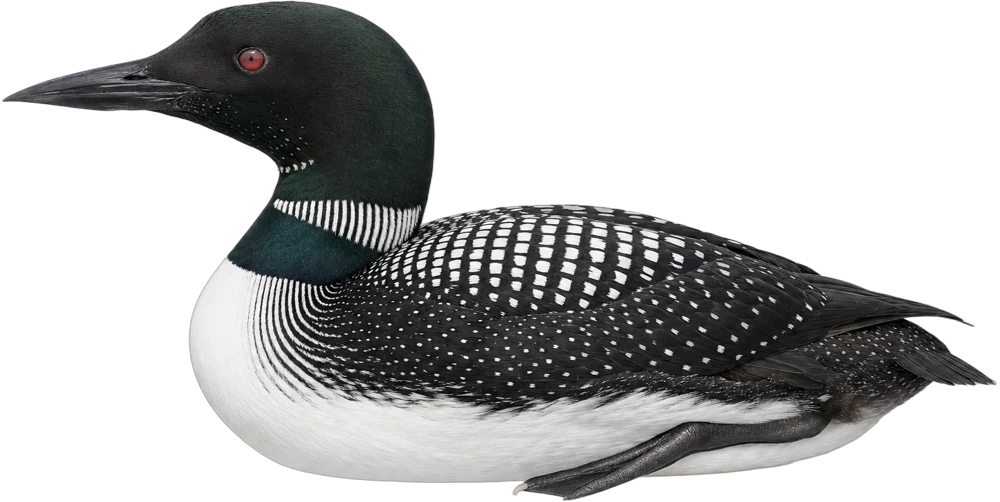
A powerful diving bird known for its haunting calls on northern lakes. In winter it moves to the coast and large reservoirs in plain gray-and-white plumage.
How to identify it
- Breeding: black head, checkered black-and-white back, white striped necklace, red eye
- Winter: dark gray above, white throat and underparts
- Thick, dagger-shaped bill
- Sits low in the water and dives for long periods
- Wailing and yodeling calls, mostly in summer
SizeBetween an American Crow and a Canada Goose
American Crow19 in
Common Loon31 in
Canada Goose37 in
Great Blue Heron46 in
6 inAverage length, bill to tail
Details
- Size
- 26–36 in long; wingspan 41–52 in
- Weight
- 5.5–17.6 lb
- Habitat
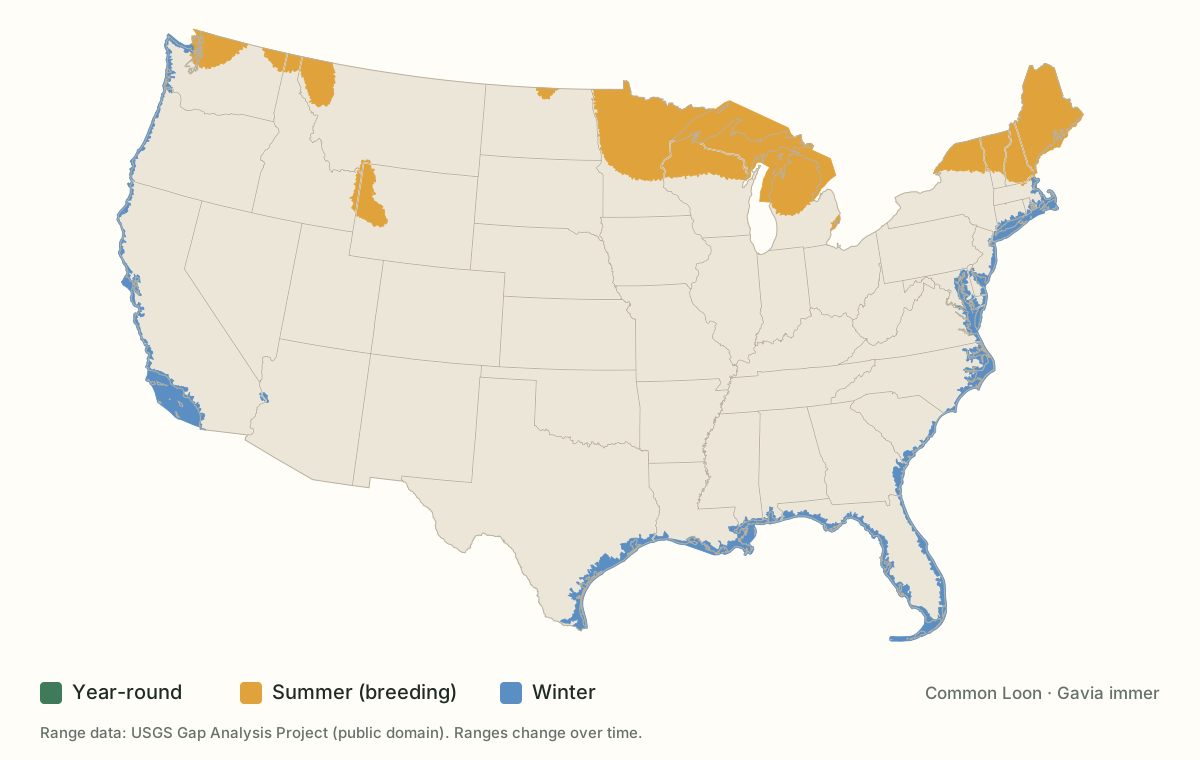
- Northern lakes in summer; ocean coasts and large lakes in winter
- When to see it
- Winter visitor along the coasts and on big southern lakes; breeds in the far North
- Diet
- Fish, plus crayfish and other aquatic animals
Range in the United States
Life history
Food
Dives for fish, chasing them underwater with its feet; also eats crayfish, frogs and aquatic insects.
Nesting
A mound of plant material right at the water's edge, often on a small island.
- Clutch
- 1–3 eggs
- Incubation
- 26–31 days
- Young
- Leave the nest within a day; fly at about 11 weeks
- Broods
- 1 per year
Behavior
Can dive as deep as 200 feet. Chicks often ride on their parents' backs for the first couple of weeks.
Conservation
Widespread but sensitive to lead fishing tackle, mercury pollution and disturbance on nesting lakes.
Cool facts
- Unlike most birds, loons have solid bones, which helps them dive.
- Loons need a long "runway" of open water to take off.
- Each male's yodel call is unique, and males change their yodel when they move to a new lake.