Woodpeckers, Doves & Other Land Birds
Mourning Dove
Zenaida macroura
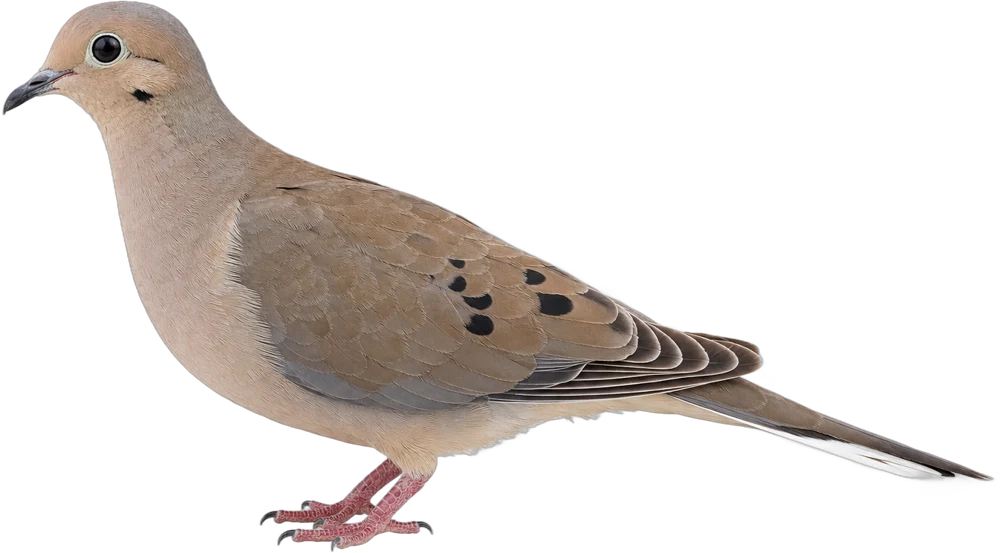
A slender, soft-brown dove whose mournful cooing is a familiar backyard sound. It is one of the most widespread and abundant birds in North America.
How to identify it
- Soft buff-brown body with a small head
- Long, pointed tail with white edges
- Black spots on the wings
- Mournful "coo-OO-oo-oo-oo"
- Wings whistle on takeoff
SizeBetween an American Robin and an American Crow
Song Sparrow6 in
American Robin10 in
Mourning Dove11 in
American Crow19 in
6 inAverage length, bill to tail
Details
- Size
- 9–13 in long; wingspan about 18 in
- Weight
- 3–6 oz
- Habitat
- Fields, farmland, suburbs, roadsides and feeders
- When to see it
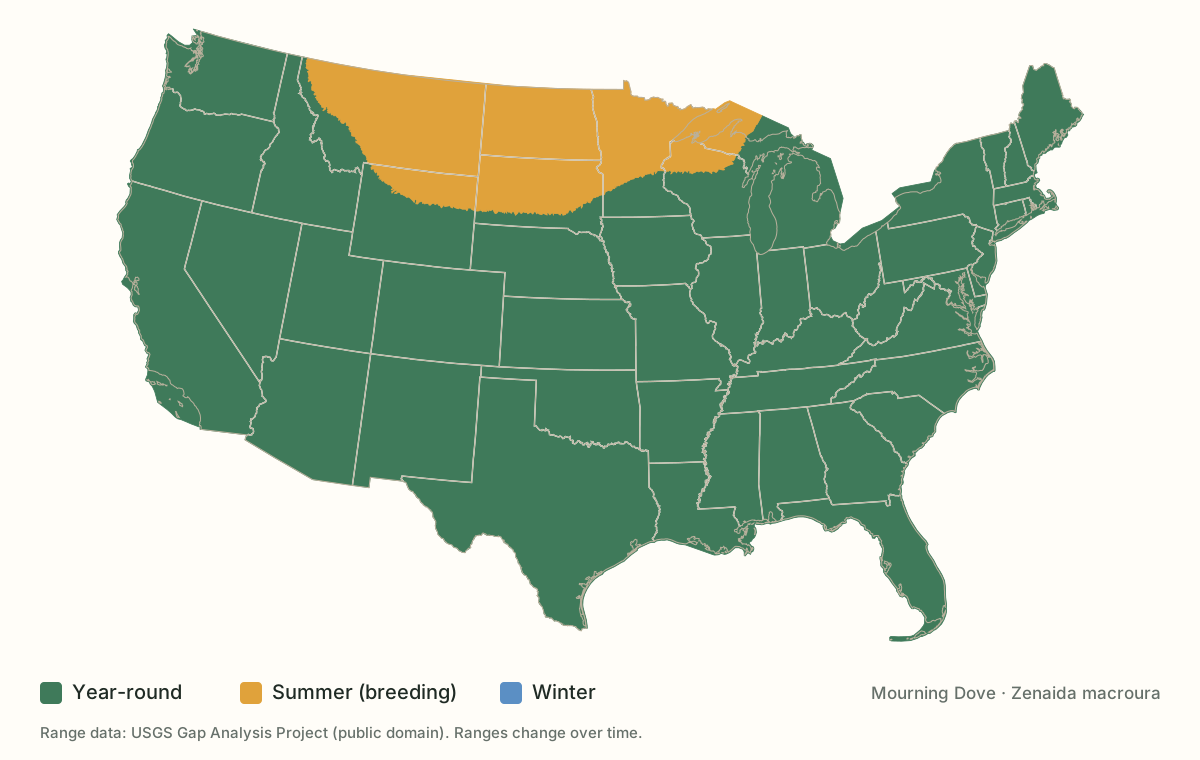
- Year-round across most of the US
- Diet
- Seeds
Range in the United States
Life history
Food
Eats seeds almost exclusively, from grasses, weeds, grains and feeders.
Nesting
A flimsy platform of twigs in a tree, shrub, gutter or on a ledge.
- Clutch
- 2 eggs
- Incubation
- about 14 days
- Young
- Fledge at about 2 weeks
- Broods
- Up to 6 per year in the South
Behavior
Swallows seeds quickly and stores them in its crop to digest later. Feeds young "crop milk."
Conservation
Abundant; one of the most common birds in North America.
Cool facts
- It can raise up to six broods a year in warm areas.
- Both parents make "crop milk" to feed their chicks.
- A dove may eat 12–20% of its body weight in seeds daily.
Songs & calls
▶Bird sounds video coming soon
Watch the Mourning Dove
▶Video coming soon