Warblers, Sparrows, Finches & Blackbirds
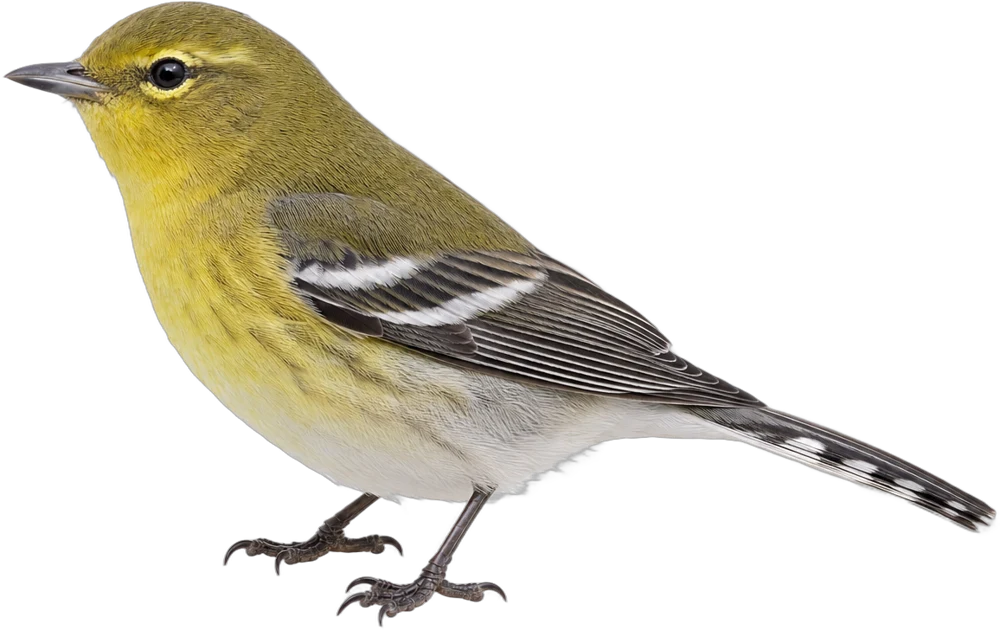
Pine Warbler
Setophaga pinus
A yellow warbler of pine forests and one of the few warblers that regularly visit backyard feeders for suet, especially in winter.
How to identify it
- Yellow throat and breast; olive-green back
- Two white wing bars
- Faint dark streaks on the sides of the breast
- Musical, even trill song
SizeAbout the size of a Song Sparrow
Carolina Chickadee4 in
Pine Warbler5 in
Song Sparrow6 in
American Robin10 in
6 inAverage length, bill to tail
Details
- Size
- 5–5.5 in long; wingspan 7.5–9 in
- Weight
- 0.3–0.5 oz
- Habitat
- Pine and mixed pine-hardwood forests
- When to see it
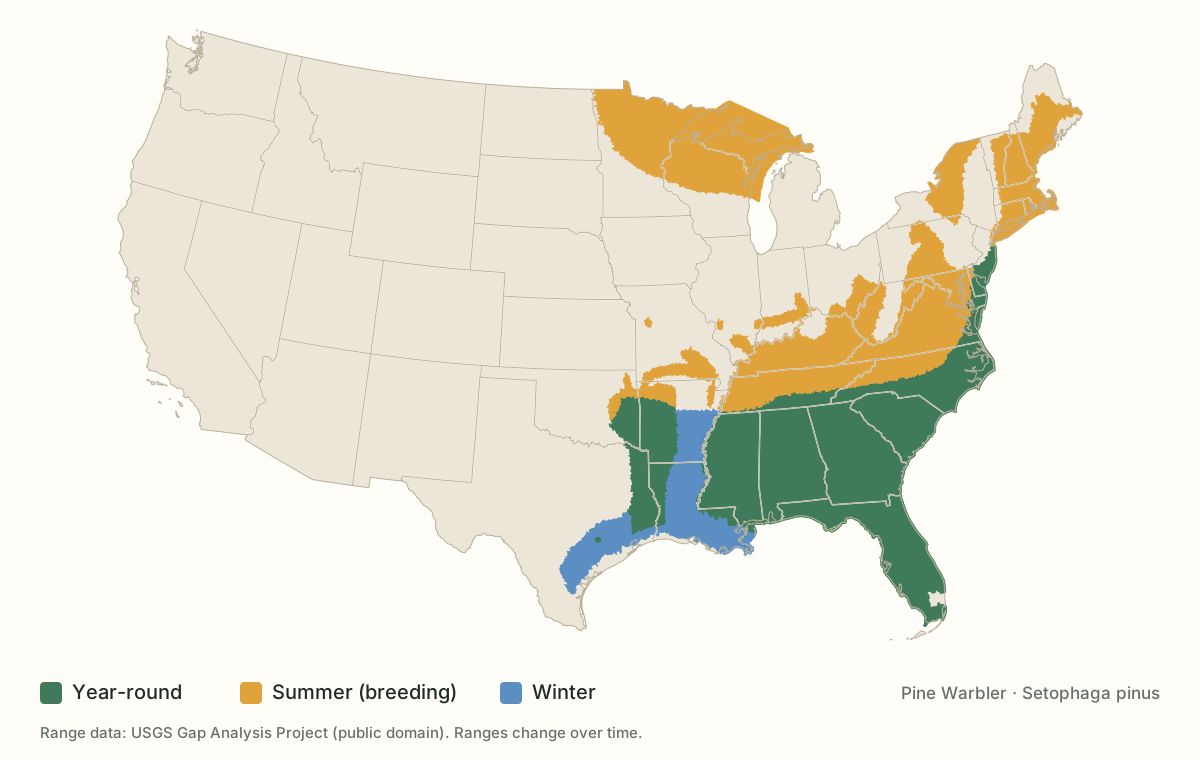
- Year-round across the Southeast; summer farther north
- Diet
- Insects, pine seeds; suet at feeders
Range in the United States
Life history
Food
Eats insects and spiders from pine needles and bark; eats pine seeds and visits suet in winter.
Nesting
A cup of pine needles and bark strips high in a pine.
- Clutch
- 3–5 eggs
- Incubation
- about 10–13 days
- Young
- Fledge at about 10 days
- Broods
- 1–2 per year
Behavior
Forages slowly along pine branches. One of the few warblers that winters mainly in the US.
Conservation
Common and stable.
Cool facts
- It's one of the few warblers that eats a lot of seeds.
- It's one of the earliest warblers to sing in spring.
- It readily comes to suet feeders, unusual for a warbler.
Songs & calls
▶Bird sounds video coming soon
Watch the Pine Warbler
▶Video coming soon