Warblers, Sparrows, Finches & Blackbirds
Summer Tanager
Piranga rubra
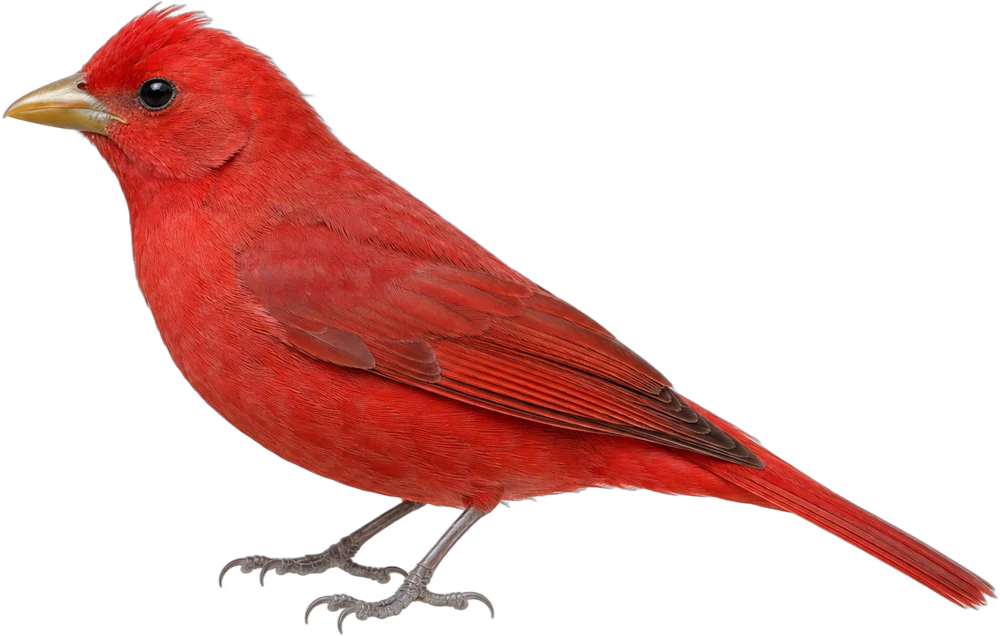
The only completely red bird in North America. It catches bees and wasps in flight and rubs off the stingers before eating them.
How to identify it
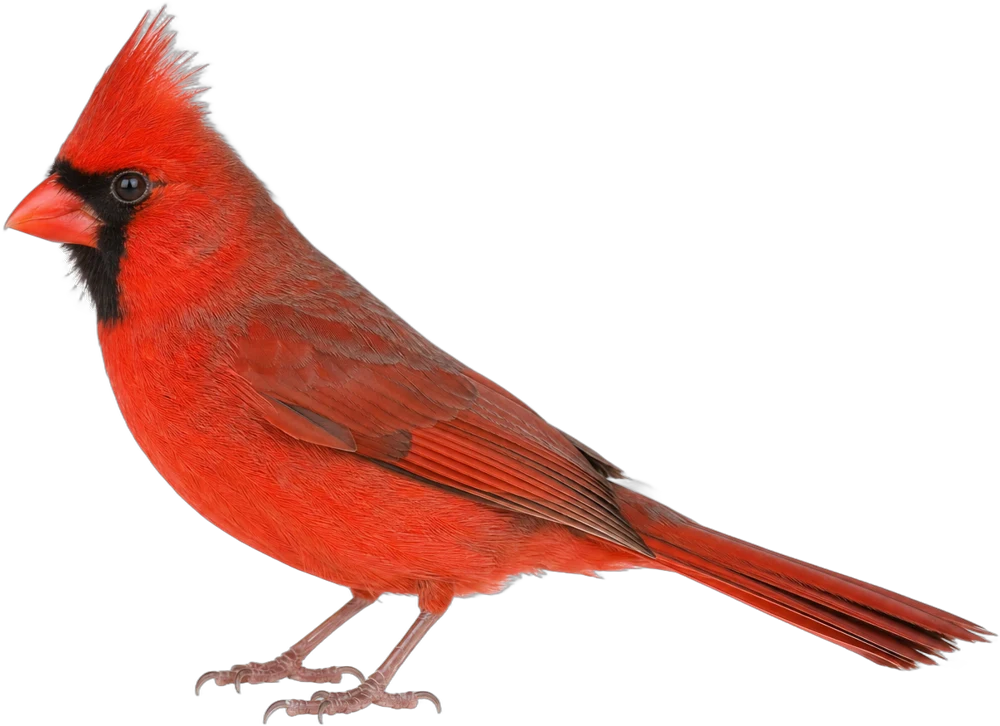
- Male: rose-red all over, with no crest and no black mask
- Female: mustard-yellow to orange-yellow
- Large, pale bill
- Robin-like song and a "pi-tuk" call
SizeBetween a Song Sparrow and an American Robin
Carolina Chickadee4 in
Song Sparrow6 in
Summer Tanager7 in
American Robin10 in
6 inAverage length, bill to tail
Details
- Size
- about 6.5–7 in long; wingspan 11–12 in
- Weight
- about 1–1.1 oz
- Habitat
- Open pine and oak woods, woodland edges
- When to see it
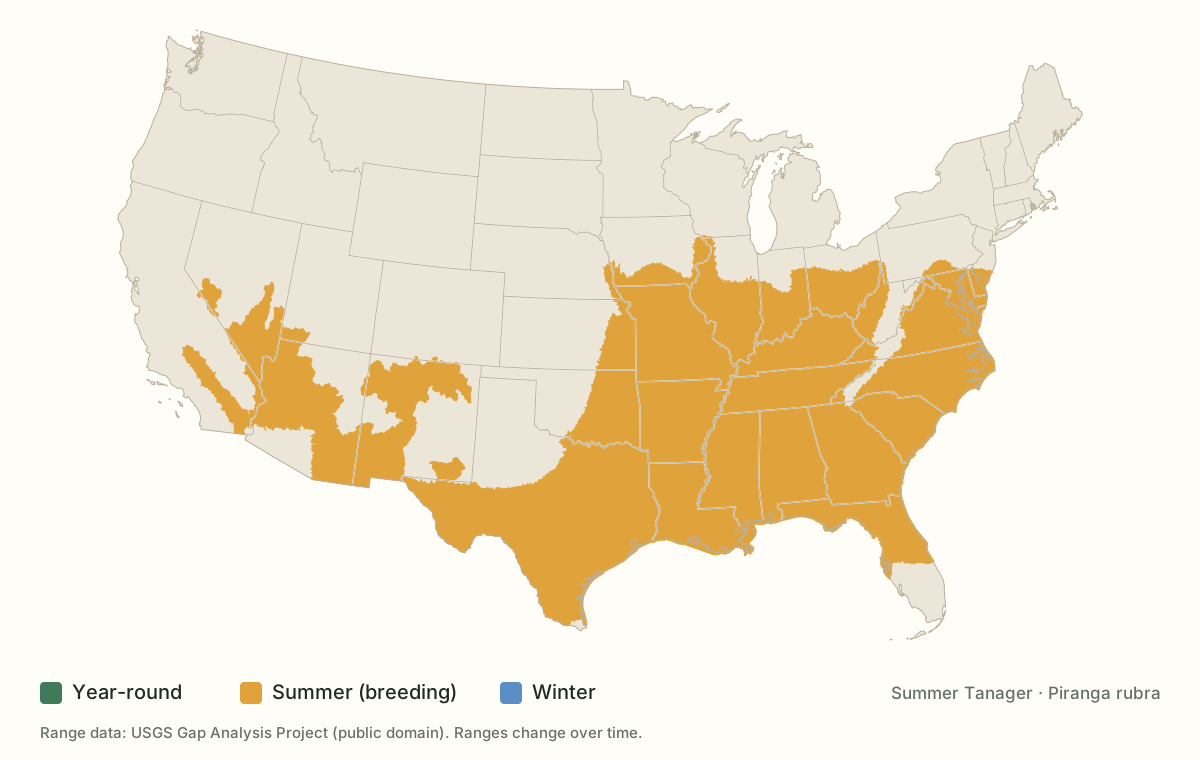
- Summer across the southern US; winters in Central and South America
- Diet
- Bees, wasps and other insects; berries
Range in the United States
Life history
Food
Catches bees and wasps in flight, rubbing off the stingers; also eats other insects and berries.
Nesting
A shallow cup of grass high on a horizontal branch.
- Clutch
- 2–5 eggs
- Incubation
- 11–12 days
- Young
- Fledge at about 8–12 days
- Broods
- 1 per year
Behavior
Often raids wasp nests to eat the larvae.
Conservation
Common and stable.
Cool facts
- It is the only completely red bird in North America.
- Young males are patchy red and yellow.
- It winters as far south as Brazil.
Songs & calls
▶Bird sounds video coming soon
Watch the Summer Tanager
▶Video coming soon