Woodpeckers, Doves & Other Land Birds
Wild Turkey
Meleagris gallopavo
North America's largest game bird. After nearly disappearing, it was successfully brought back and now roams woods and fields across the country.
How to identify it
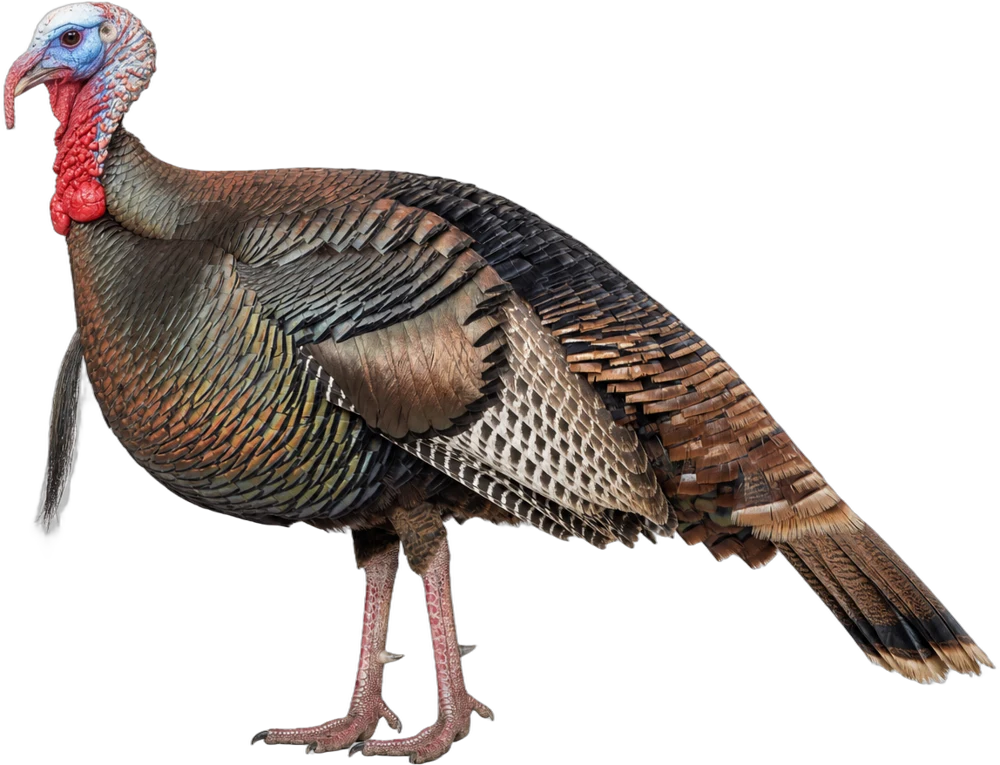
- Very large, dark body with a bronze-green sheen
- Male: bare red-and-blue head, wattle and hair-like "beard" on the chest
- Male fans its tail and struts in spring
- Female: smaller and duller
- Male's loud gobble in spring
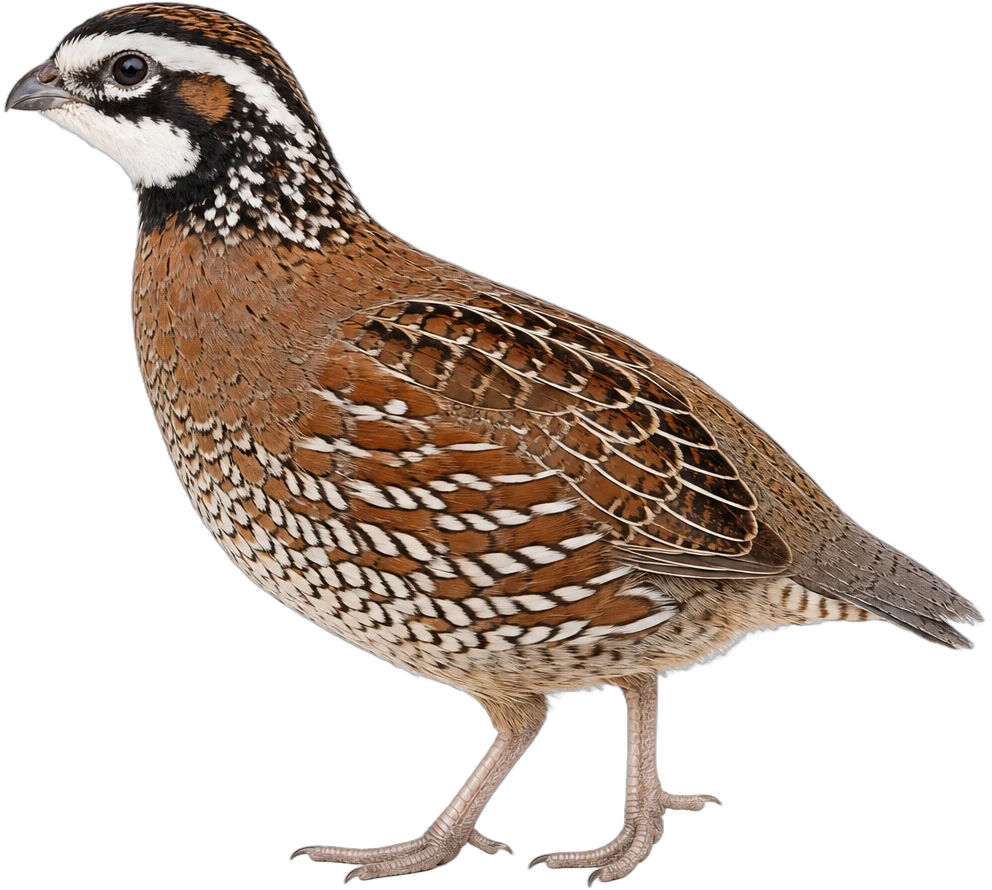
SizeAbout the size of a Great Blue Heron
American Crow19 in
Canada Goose37 in
Wild Turkey45 in
Great Blue Heron46 in
6 inAverage length, bill to tail
Details
- Size
- 43–46 in long (males); wingspan 50–57 in
- Weight
- 5.5–24 lb
- Habitat
- Forests and woodlands with clearings, farm fields
- When to see it
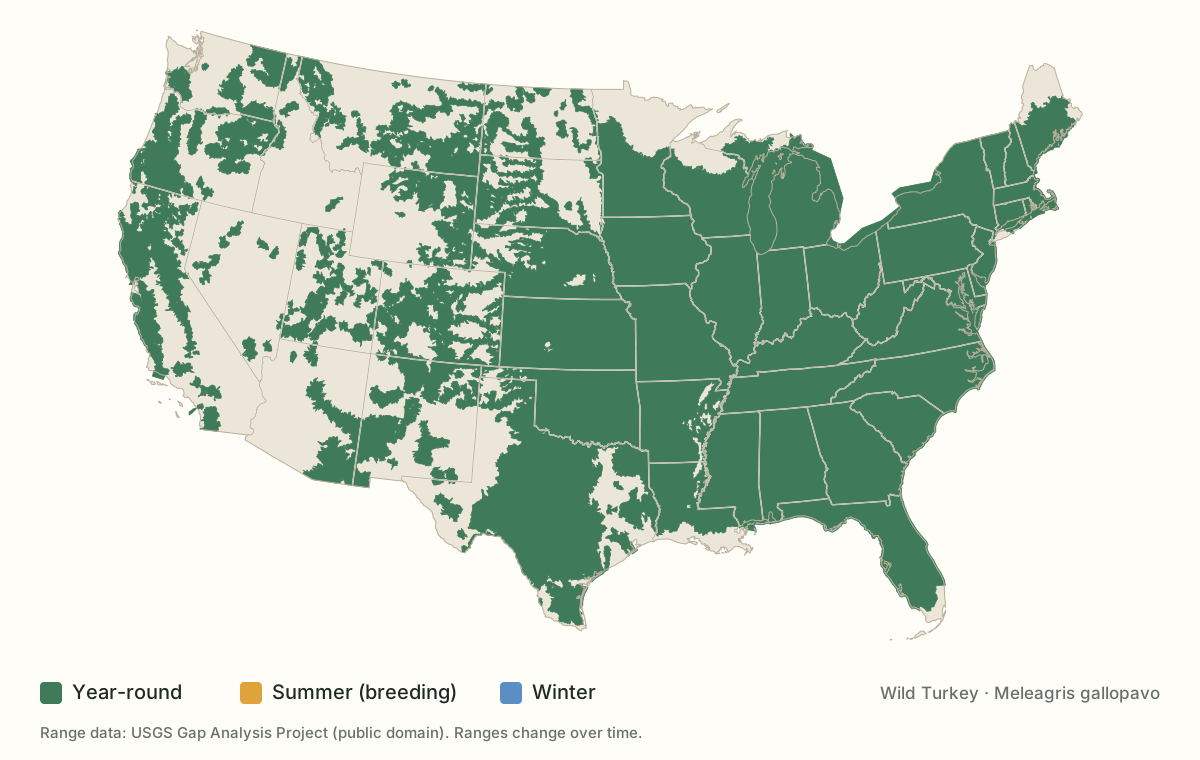
- Year-round across most of the US
- Diet
- Acorns, nuts, seeds, berries, insects
Range in the United States
Life history
Food
Forages on the ground for acorns, nuts, seeds, berries and insects; scratches leaves aside with its feet.
Nesting
A shallow scrape on the ground, hidden in thick cover.
- Clutch
- 4–17 eggs
- Incubation
- about 28 days
- Young
- Leave the nest within a day; can fly short distances at 2 weeks
- Broods
- 1 per year
Behavior
Roosts in trees at night. Males gather in groups to strut and gobble for females in spring.
Conservation
Nearly gone by the early 1900s; restoration made it common again in all lower 48 states.
Cool facts
- Wild Turkeys can fly up to about 55 mph in short bursts.
- A male's head can change from red to white to blue in seconds.
- Benjamin Franklin praised the turkey as a "bird of courage."
Songs & calls
▶Bird sounds video coming soon
Watch the Wild Turkey
▶Video coming soon