Woodpeckers, Doves & Other Land Birds
Yellow-bellied Sapsucker
Sphyrapicus varius
A woodpecker that drills neat rows of small holes in tree bark, then returns to drink the sap and eat the insects it attracts.
How to identify it
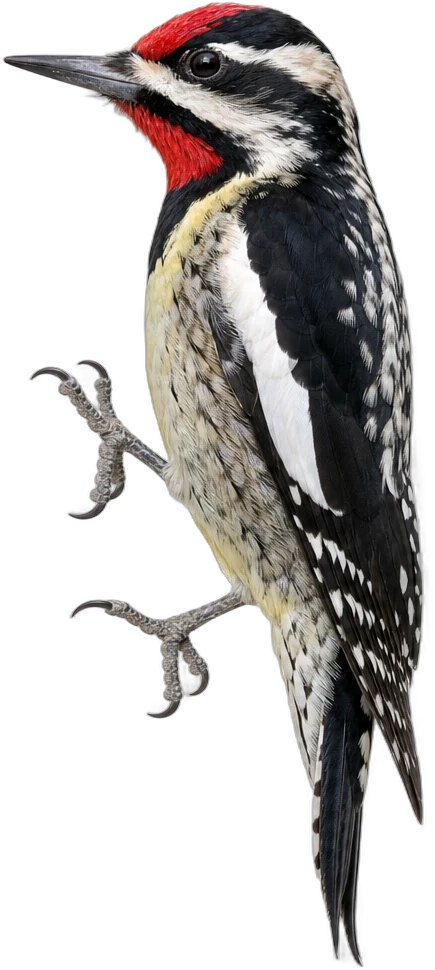
- Red forehead; male also has a red throat
- Bold black-and-white face pattern
- Long white stripe along the folded wing
- Pale yellowish wash on the belly
- Rows of small holes in tree bark show where it feeds
SizeBetween a Song Sparrow and an American Robin
Carolina Chickadee4 in
Song Sparrow6 in
Yellow-bellied Sapsucker8 in
American Robin10 in
6 inAverage length, bill to tail
Details
- Size
- 7–8.5 in long; wingspan 13–16 in
- Weight
- 1.5–1.9 oz
- Habitat
- Forests and wooded yards; mountain forests in summer
- When to see it
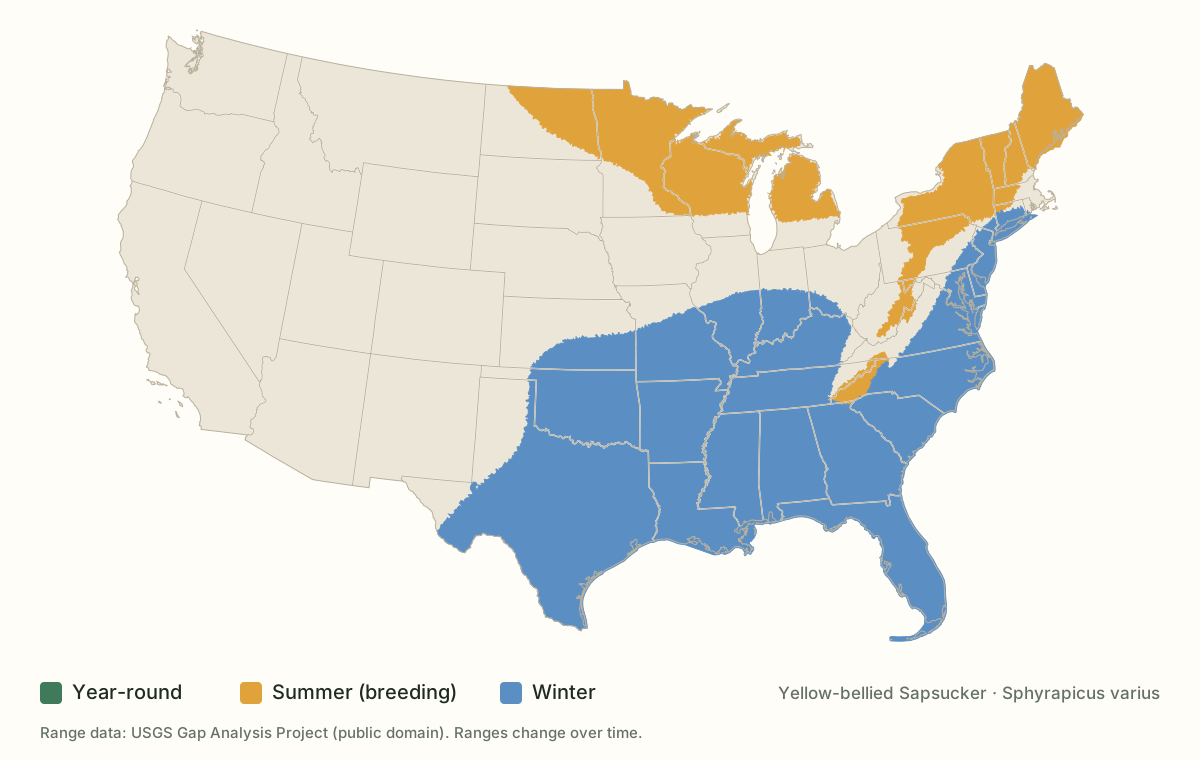
- Winter visitor across the Southeast, including the Carolinas; breeds in the North and Appalachians
- Diet
- Tree sap, insects, fruit
Range in the United States
Life history
Food
Drinks sap from neat rows of holes it drills, and eats insects attracted to the sap, plus fruit.
Nesting
A cavity in a living tree with soft heartwood, often aspen or birch.
- Clutch
- 5–6 eggs
- Incubation
- 10–13 days
- Young
- Fledge at about 25–29 days
- Broods
- 1 per year
Behavior
Visits its sap wells regularly to keep them flowing. Drums in a stuttering rhythm.
Conservation
Common and stable.
Cool facts
- Ruby-throated Hummingbirds often feed at its sap wells.
- Its sap holes can be seen as neat rows on tree trunks.
- It's the only woodpecker in the East that is fully migratory.
Songs & calls
▶Bird sounds video coming soon
Watch the Yellow-bellied Sapsucker
▶Video coming soon