Birds of Prey
American Kestrel
Falco sparverius
North America's smallest falcon, often seen on roadside wires or hovering over fields. Kestrels are declining in many areas, and nest boxes help them.
How to identify it
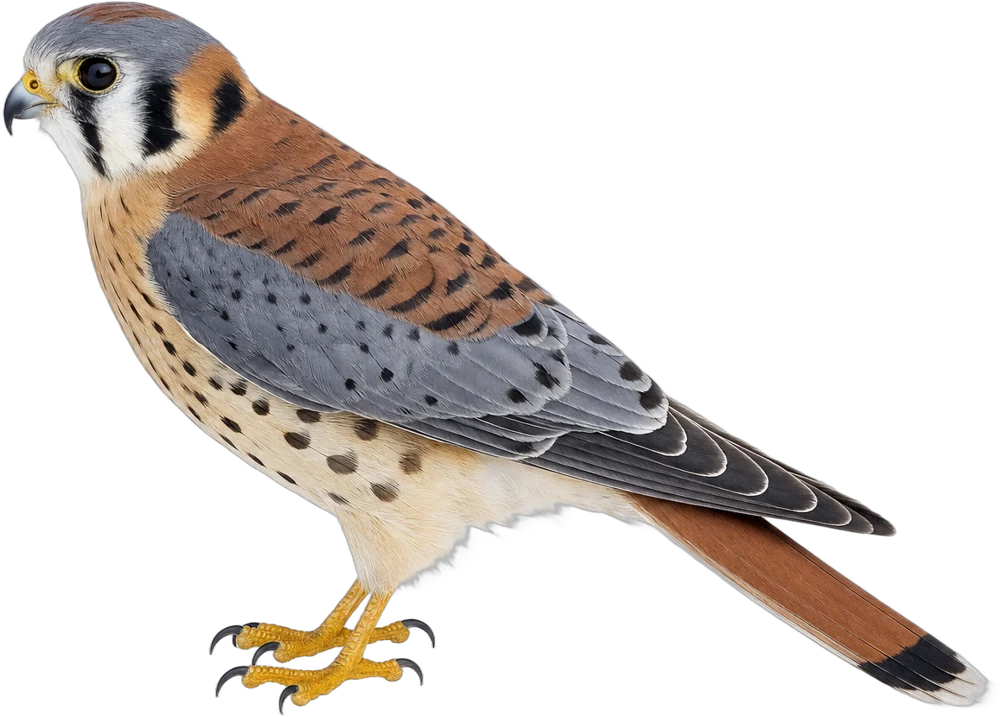
- Rusty-orange back and tail
- Two vertical black stripes on a pale face
- Male: blue-gray wings; female: rusty wings with bars
- Bobs its tail while perched; hovers in place over fields
SizeAbout the size of an American Robin
Song Sparrow6 in
American Robin10 in
American Kestrel11 in
American Crow19 in
6 inAverage length, bill to tail
Details
- Size
- 9–12 in long; wingspan 20–24 in
- Weight
- 3–5.8 oz
- Habitat
- Open fields, pastures, roadsides and parks
- When to see it
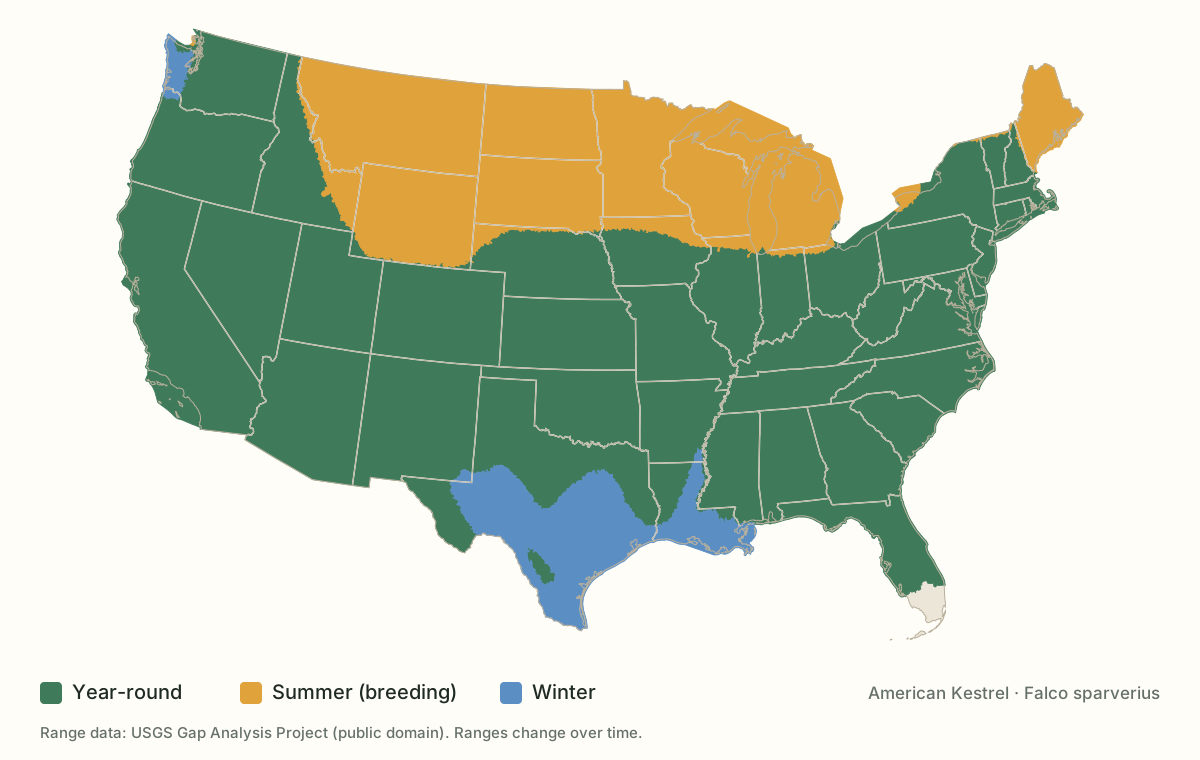
- Year-round across most of the US
- Diet
- Grasshoppers and other insects, mice, small birds
Range in the United States
Life history
Food
Eats grasshoppers and other large insects, plus mice, voles, lizards and small birds.
Nesting
In a tree cavity, old woodpecker hole, building crevice or nest box.
- Clutch
- 4–6 eggs
- Incubation
- about 29–31 days
- Young
- Fledge at about 4–5 weeks
- Broods
- 1 per year
Behavior
Hovers facing into the wind while scanning for prey. Often seen on roadside wires.
Conservation
Declining in many areas; nest-box programs help.
Cool facts
- It's about the size of a Mourning Dove.
- Kestrels can see ultraviolet light, which helps them track rodent urine trails.
- Males and females have different wing colors, rare among hawks.
Songs & calls
▶Bird sounds video coming soon
Watch the American Kestrel
▶Video coming soon