Birds of Prey
Mississippi Kite
Ictinia mississippiensis
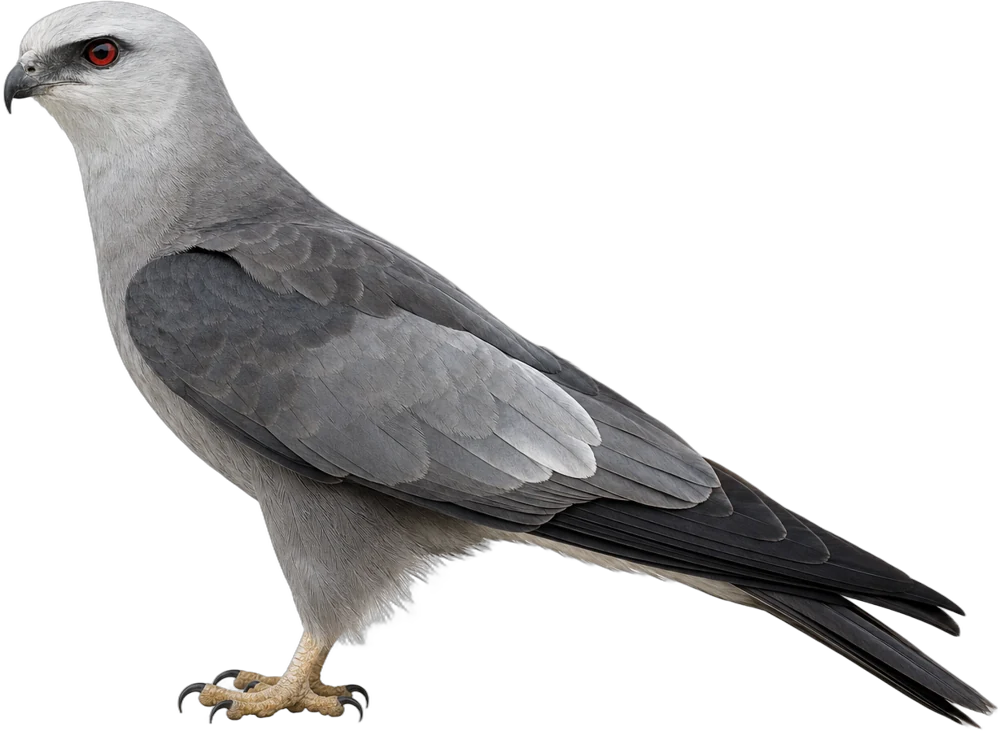
A sleek gray kite that catches dragonflies and cicadas in midair and eats them while flying. Small flocks often hunt together on summer afternoons.
How to identify it
- Gray body with a paler, almost white head
- Dark gray to black tail
- Red eyes
- Long, pointed wings; floats and swoops like a falcon
SizeBetween an American Robin and an American Crow
Song Sparrow6 in
American Robin10 in
Mississippi Kite14 in
American Crow19 in
6 inAverage length, bill to tail
Details
- Size
- 12–15 in long; wingspan about 31 in
- Weight
- 8–13 oz
- Habitat
- Forests near rivers, open woodlands, towns and farmland
- When to see it
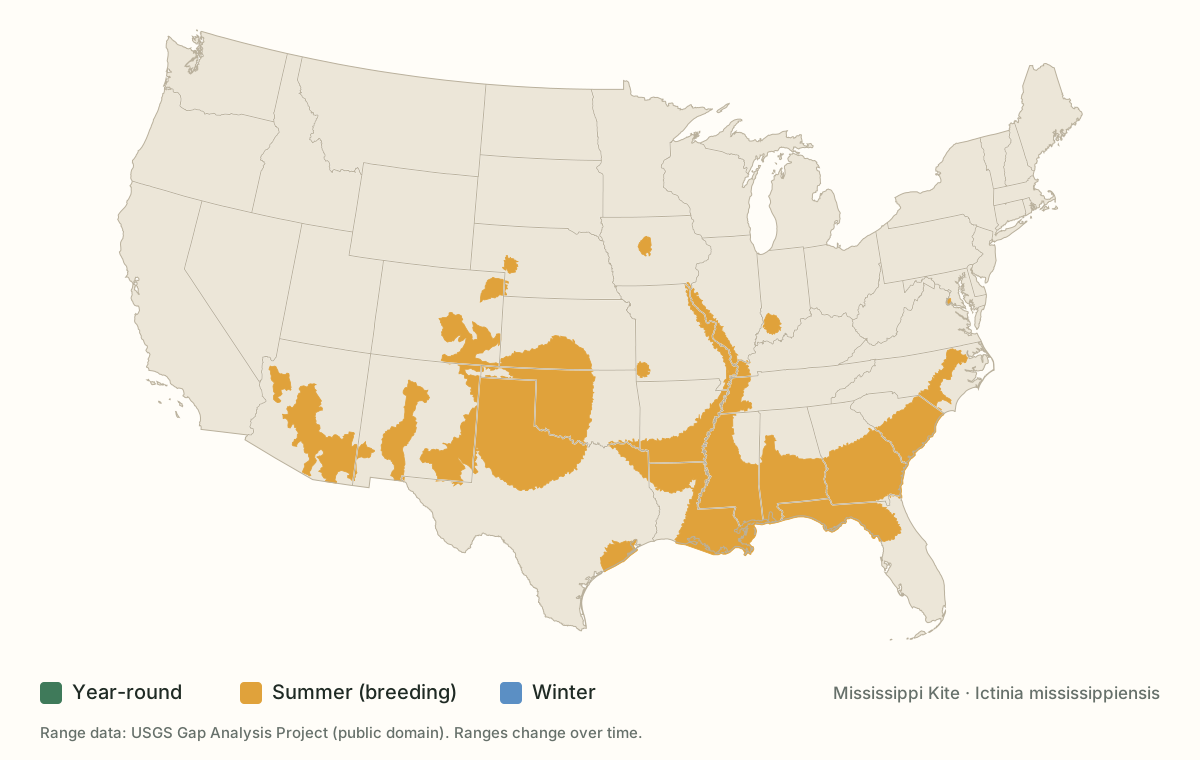
- Summer across the southern US; winters in South America
- Diet
- Large flying insects such as dragonflies and cicadas
Range in the United States
Life history
Food
Catches large insects such as dragonflies, cicadas and grasshoppers in midair, eating them while flying.
Nesting
A small stick nest in a tree, often in loose colonies; also in towns and shelterbelts.
- Clutch
- 1–3 eggs
- Incubation
- 29–32 days
- Young
- Fledge at about 5 weeks
- Broods
- 1 per year
Behavior
Hunts in loose groups. Will dive at people who come too close to its nest.
Conservation
Increasing and expanding its range, including into towns.
Cool facts
- It eats most of its food on the wing.
- Its range has spread north and east in recent decades.
- It spends winter in South America.
Songs & calls
▶Bird sounds video coming soon
Watch the Mississippi Kite
▶Video coming soon