Wading Birds & Marsh Birds
Black-crowned Night-Heron
Nycticorax nycticorax
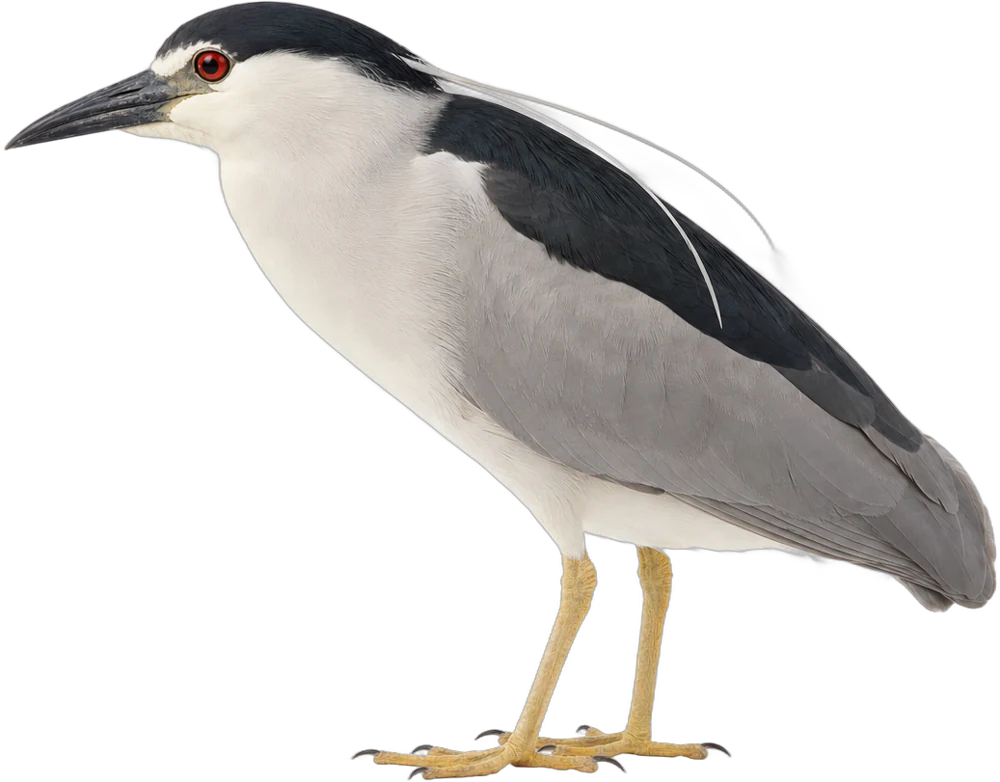
A stocky, thick-necked heron that hunts mostly at dusk and through the night. By day, groups roost hidden in trees over water.
How to identify it
- Black cap and back, gray wings and white underparts
- Bright red eye
- Short, thick black bill and short neck
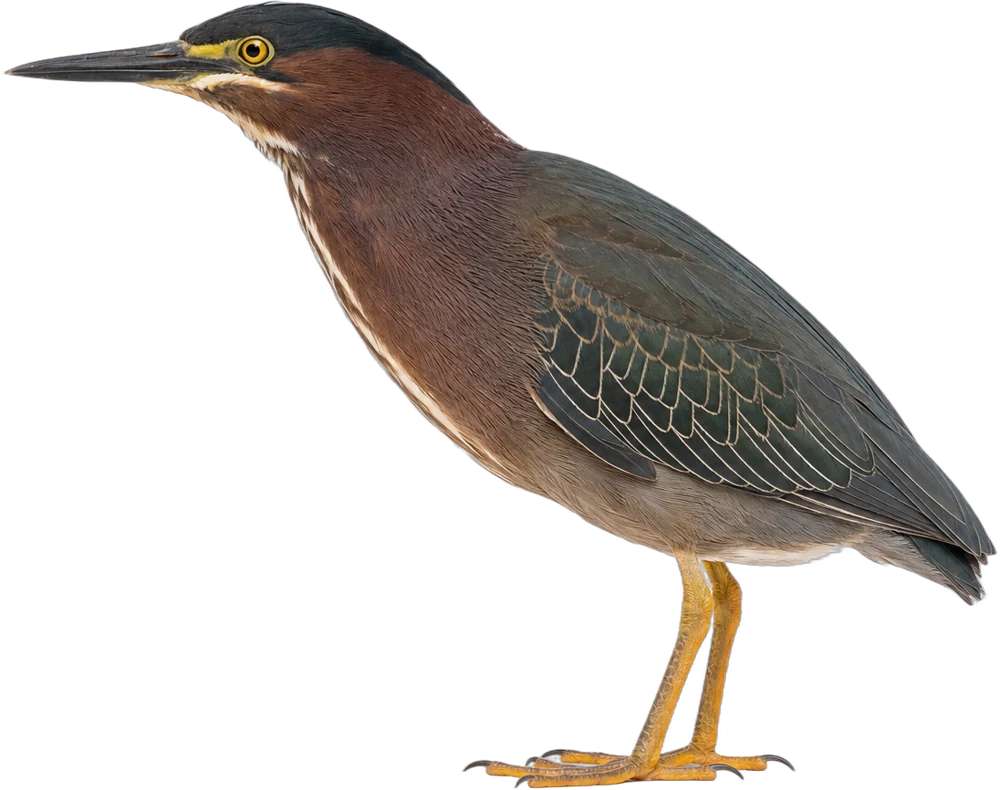
- Juvenile: brown, streaked, with white spots on the wings
- Barking "quok!" call at night
SizeBetween an American Crow and a Canada Goose
American Crow19 in
Black-crowned Night-Heron25 in
Canada Goose37 in
Great Blue Heron46 in
6 inAverage length, bill to tail
Details
- Size
- 23–26 in long; wingspan about 45 in
- Weight
- 1.6–2.2 lb
- Habitat
- Marshes, swamps, lake and river edges, coastal islands
- When to see it
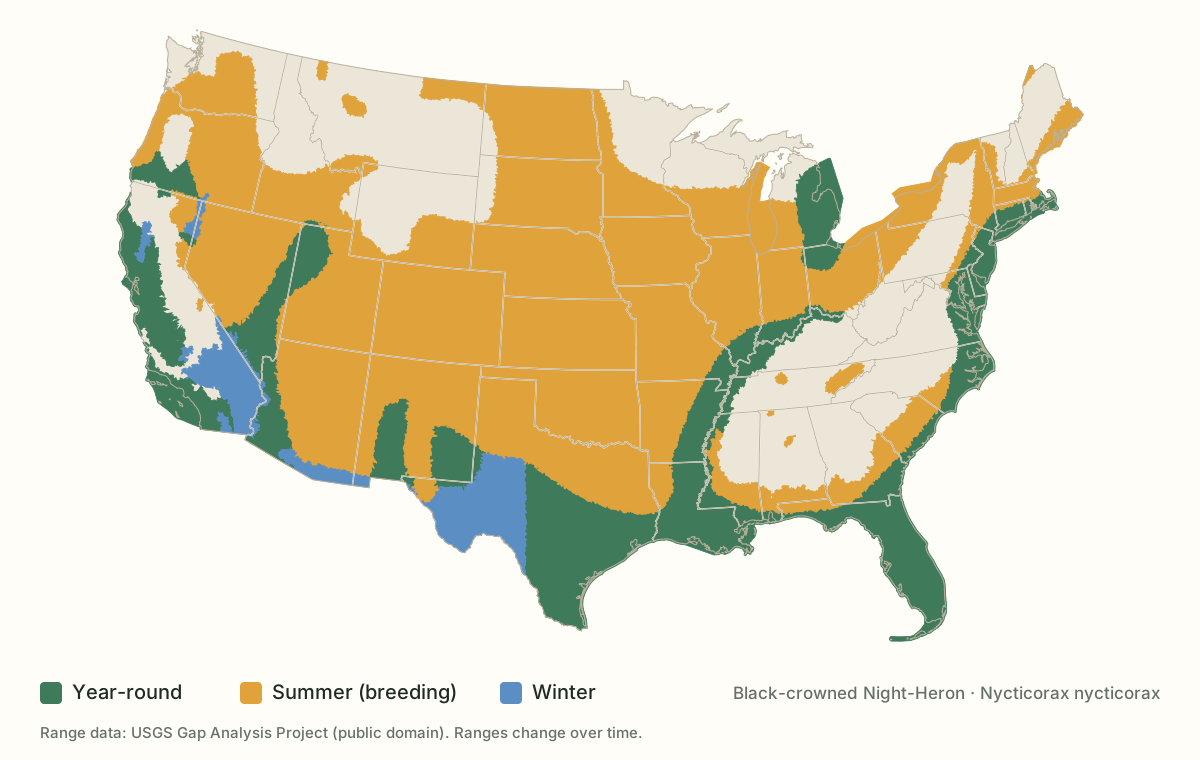
- Year-round along the coasts and across the South; summer farther north
- Diet
- Fish, crayfish, frogs, eggs and young birds
Range in the United States
Life history
Food
Hunts mostly at dusk and night for fish, crayfish, frogs, insects, and eggs and chicks of other birds.
Nesting
A platform of sticks in trees, shrubs or reeds, in colonies.
- Clutch
- 1–7 eggs
- Incubation
- 24–26 days
- Young
- Fledge at about 6 weeks
- Broods
- 1 per year
Behavior
Roosts in groups by day, hidden in trees. Young birds may wander far after leaving the colony.
Conservation
Widespread, but local colonies are sensitive to disturbance and wetland loss.
Cool facts
- It is one of the most widespread herons in the world, found on five continents.
- Its big red eyes help it see in low light.
- Chicks will accept and feed young that aren't their own.
Songs & calls
▶Bird sounds video coming soon
Watch the Black-crowned Night-Heron
▶Video coming soon