Wading Birds & Marsh Birds
White Ibis
Eudocimus albus
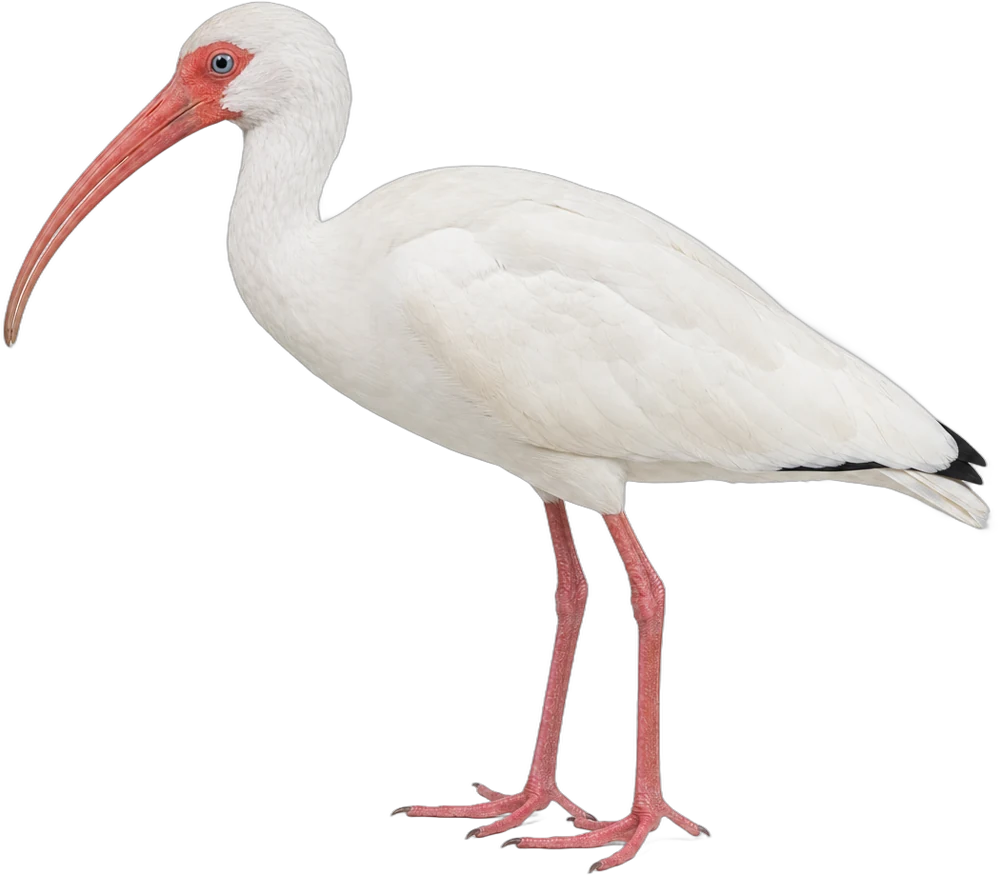
A white wading bird with a long, downcurved red bill. Flocks probe the mud for crayfish and crabs and fly in long lines over southern marshes.
How to identify it
- All-white body with black wingtips visible in flight
- Long, curved pinkish-red bill
- Red face and legs (brightest in breeding season)
- Juvenile: brown above, white below, with a pinkish-orange bill
SizeBetween an American Crow and a Canada Goose
American Crow19 in
White Ibis24 in
Canada Goose37 in
Great Blue Heron46 in
6 inAverage length, bill to tail
Details
- Size
- 21–27 in long; wingspan 35–41 in
- Weight
- 1.5–2.3 lb
- Habitat
- Salt and freshwater marshes, mudflats, lawns and wet fields
- When to see it
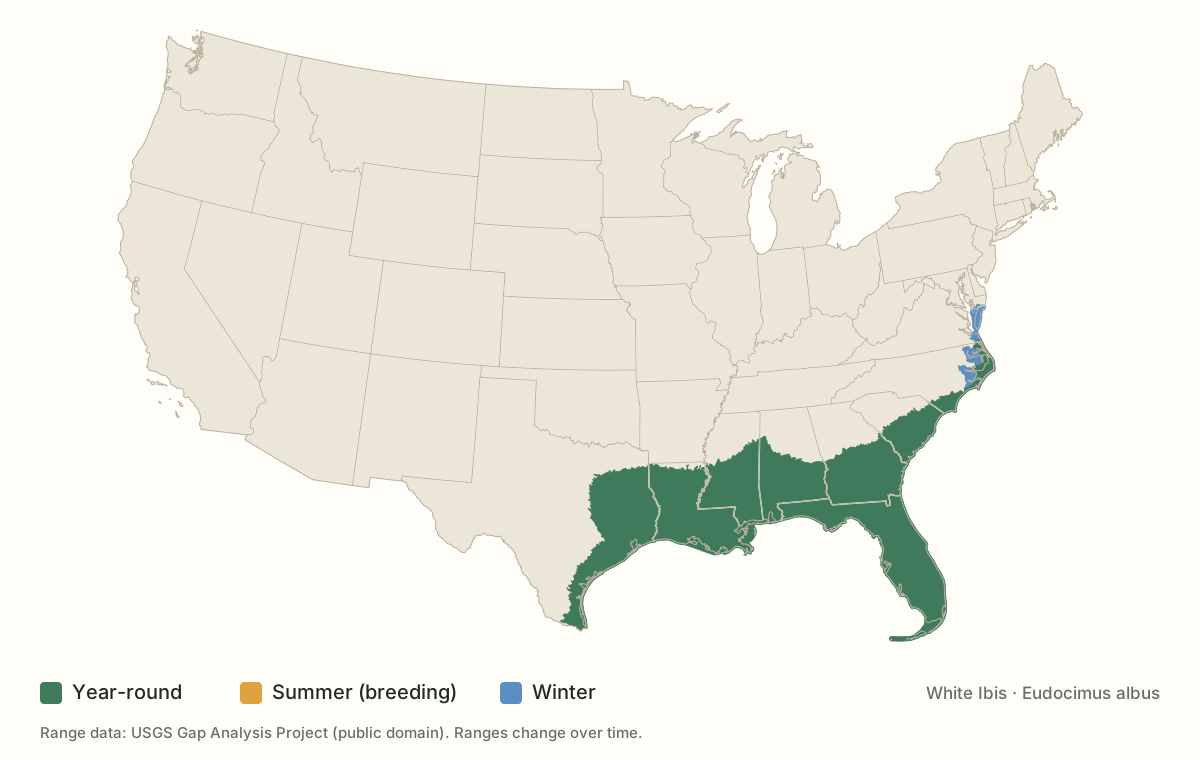
- Year-round along the Southeast and Gulf coasts
- Diet
- Crayfish, crabs, insects, small fish
Range in the United States
Life history
Food
Probes mud and shallow water with its curved bill, feeling for crayfish, crabs, insects and small fish.
Nesting
A platform of sticks in trees or shrubs over water, in large colonies.
- Clutch
- 2–3 eggs
- Incubation
- about 21 days
- Young
- Fledge at about 4–7 weeks
- Broods
- 1 per year
Behavior
Highly social, feeding and flying in flocks. Colonies may move from year to year depending on water levels.
Conservation
Common, though colonies shift with changes in wetlands.
Cool facts
- It finds food mostly by touch, not sight.
- Ibises have learned to probe city lawns and parks for insects.
- Young White Ibises are brown and take about two years to turn white.
Songs & calls
▶Bird sounds video coming soon
Watch the White Ibis
▶Video coming soon