Wading Birds & Marsh Birds
Great Egret
Ardea alba
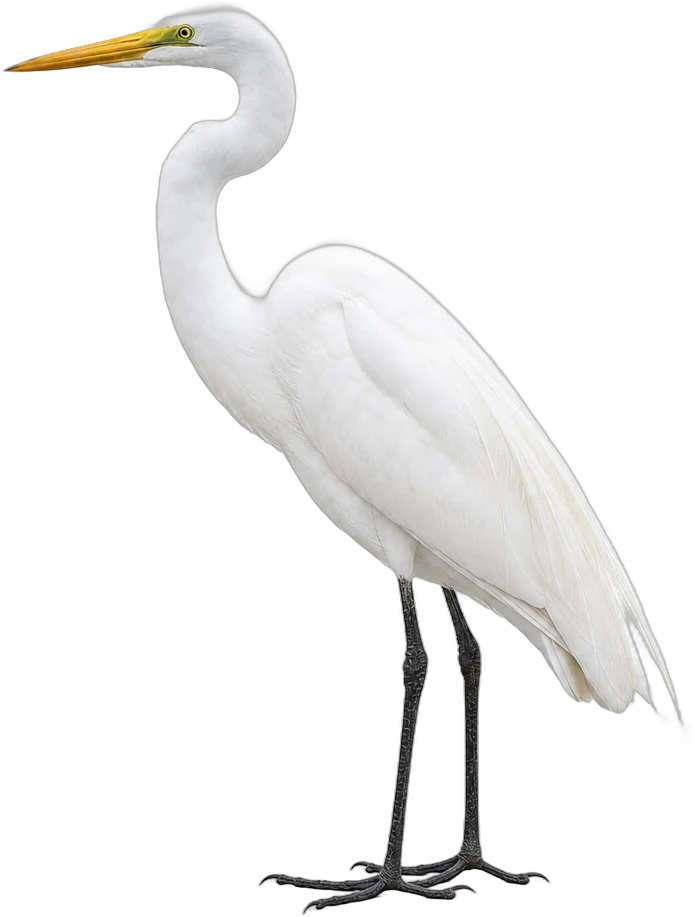
A tall, all-white heron with a yellow bill. Hunted nearly to extinction for its plumes in the late 1800s, it became the symbol of the National Audubon Society.
How to identify it
- All-white plumage with a long S-shaped neck
- Yellow-orange, dagger-like bill
- Black legs and black feet
- Long lacy plumes on the back in breeding season
SizeAbout the size of a Canada Goose
American Crow19 in
Canada Goose37 in
Great Egret39 in
Great Blue Heron46 in
6 inAverage length, bill to tail
Details
- Size
- 37–41 in long; wingspan 51–57 in
- Weight
- about 2 lb
- Habitat
- Marshes, ponds, tidal flats, rivers and flooded fields
- When to see it
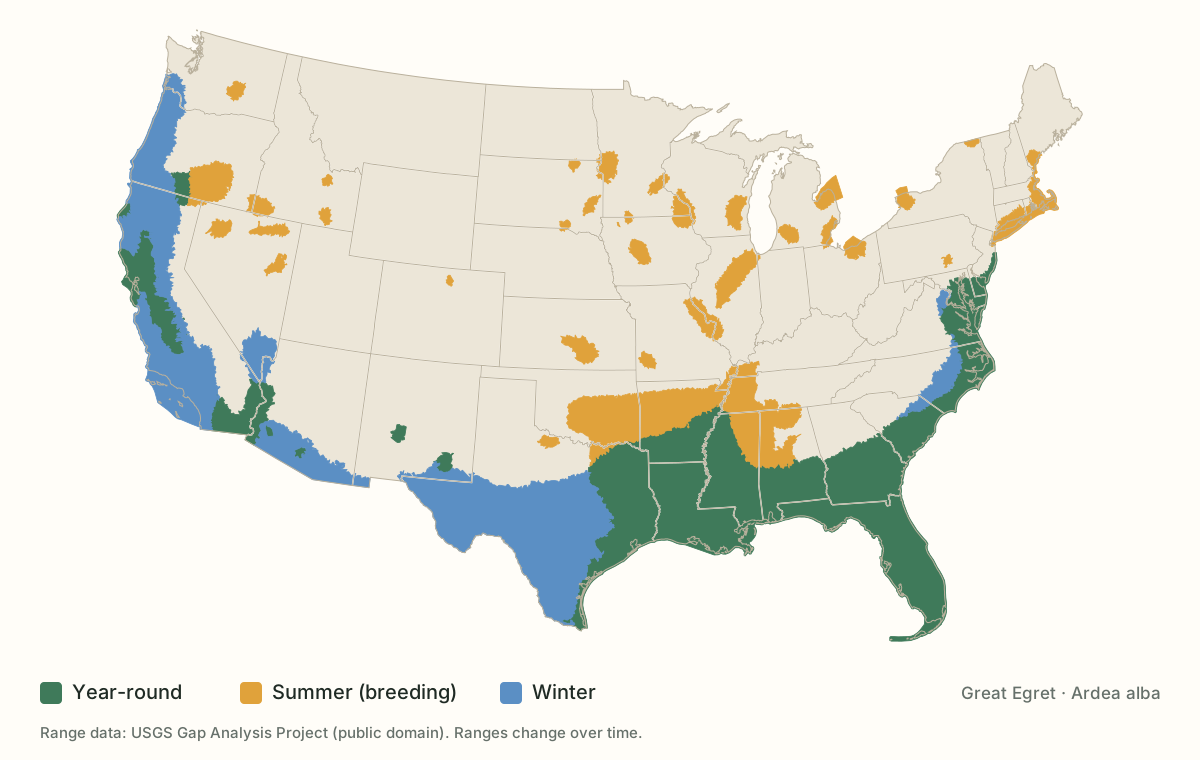
- Year-round along the southern coasts; summer farther inland and north
- Diet
- Fish, frogs, crayfish, small reptiles
Range in the United States
Life history
Food
Wades slowly and spears fish, frogs, crayfish, snakes and insects with its dagger-like bill.
Nesting
A platform of sticks in trees or shrubs over water, in colonies with other herons.
- Clutch
- 1–6 eggs
- Incubation
- 23–27 days
- Young
- Fledge at about 6–7 weeks
- Broods
- 1 per year
Behavior
Often feeds alone but nests and roosts in colonies. Breeding adults grow lacy plumes and green skin around the eyes.
Conservation
Recovered from near-extinction caused by the plume trade; now common.
Cool facts
- In the late 1800s its plumes were worth more than their weight in gold.
- Saving egrets from plume hunters helped launch the bird conservation movement.
- Great Egrets sometimes follow cattle or people to catch prey they stir up.
Songs & calls
▶Bird sounds video coming soon
Watch the Great Egret
▶Video coming soon