Wading Birds & Marsh Birds
Great Blue Heron
Ardea herodias
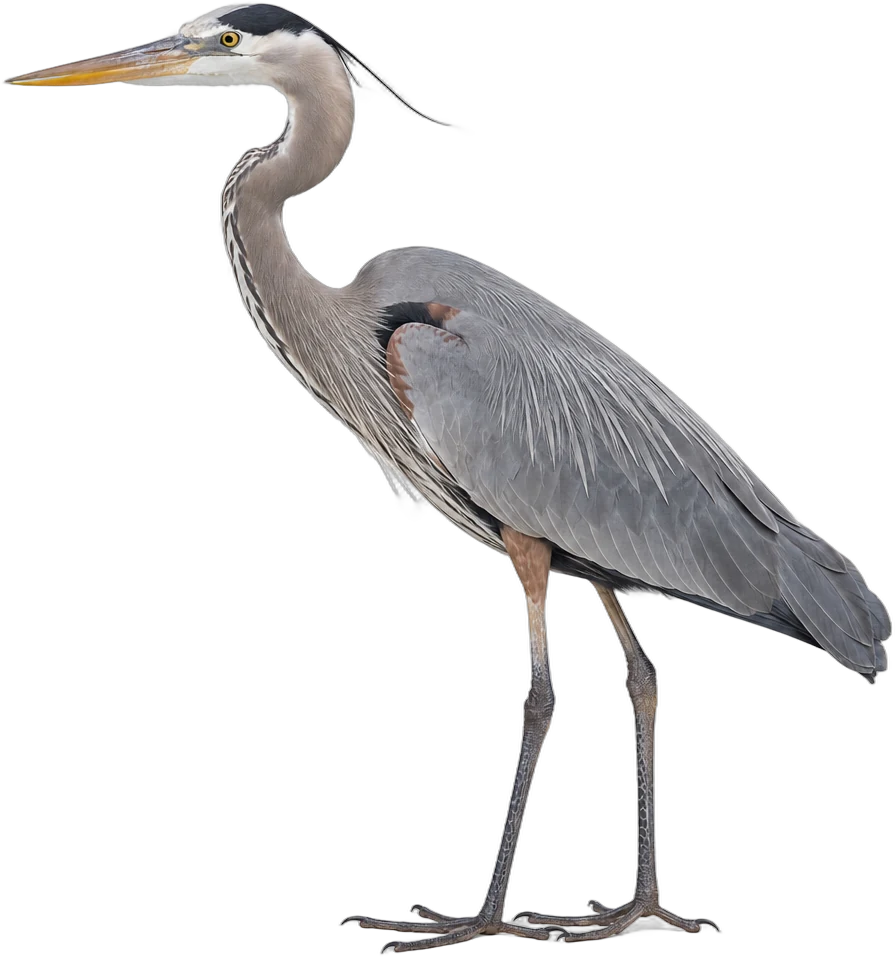
The largest heron in North America, standing motionless at the water's edge before striking at fish with lightning speed. It flies with slow wingbeats and its neck folded back.
How to identify it
- Tall, blue-gray heron with a long neck and legs
- White face with a black stripe above the eye ending in plumes
- Thick, dagger-like yellowish bill
- Flies with neck tucked in an S-curve and legs trailing
- Deep, croaking "frahnk" when disturbed
SizeLarger than a Canada Goose
American Robin10 in
American Crow19 in
Canada Goose37 in
Great Blue Heron46 in
6 inAverage length, bill to tail
Details
- Size
- 38–54 in long; wingspan 66–79 in
- Weight
- 4.6–5.5 lb
- Habitat
- Marshes, shorelines, rivers, ponds and wet fields
- When to see it
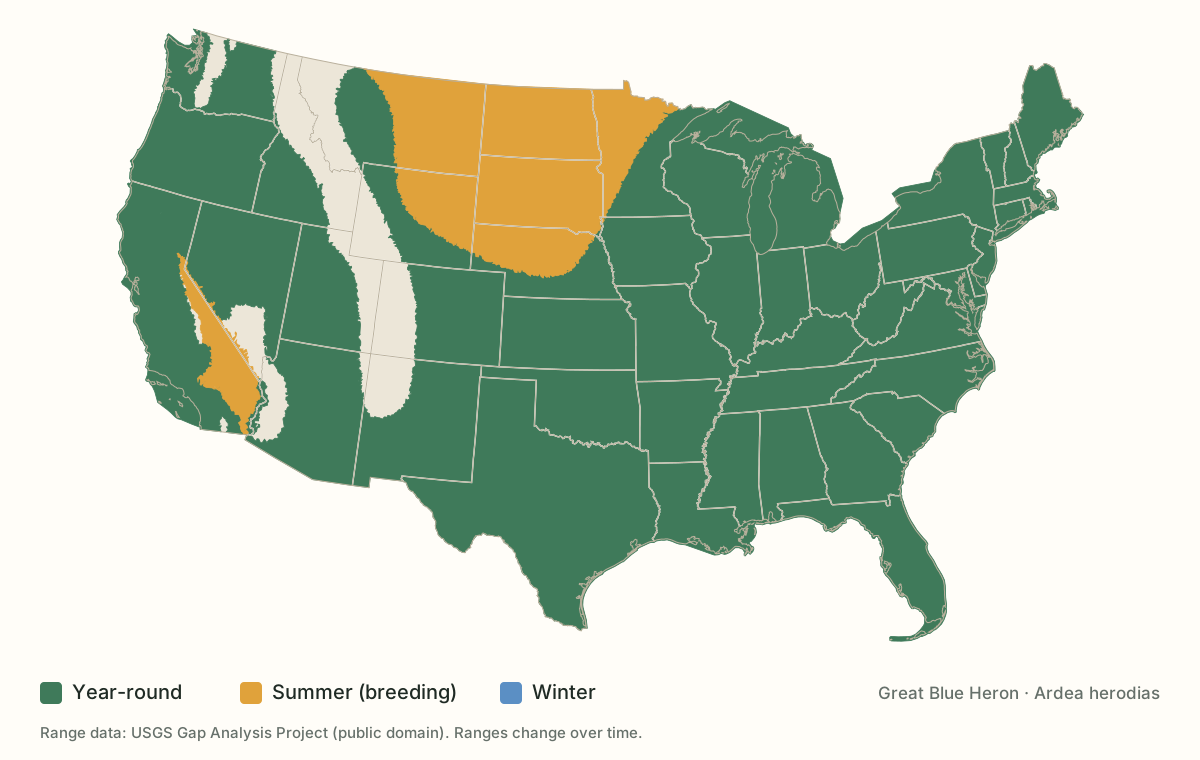
- Year-round across most of the US
- Diet
- Fish, plus frogs, snakes, crayfish and small mammals
Range in the United States
Life history
Food
Stands still or walks slowly in shallow water, striking fish with its bill. Also eats frogs, snakes, crayfish, rodents and even small birds.
Nesting
A large platform of sticks high in trees, usually in colonies called rookeries.
- Clutch
- 2–6 eggs
- Incubation
- about 27 days
- Young
- Fledge at about 2 months
- Broods
- 1 per year
Behavior
Hunts day and night. Its special neck vertebrae let it strike with lightning speed.
Conservation
Common and widespread; stable overall.
Cool facts
- Despite standing up to 4.5 feet tall, it weighs only 5–6 pounds thanks to hollow bones.
- Rookeries can contain hundreds of nests.
- Great Blue Herons can swallow fish much wider than their own neck.
Songs & calls
▶Bird sounds video coming soon
Watch the Great Blue Heron
▶Video coming soon