Wading Birds & Marsh Birds
Snowy Egret
Egretta thula
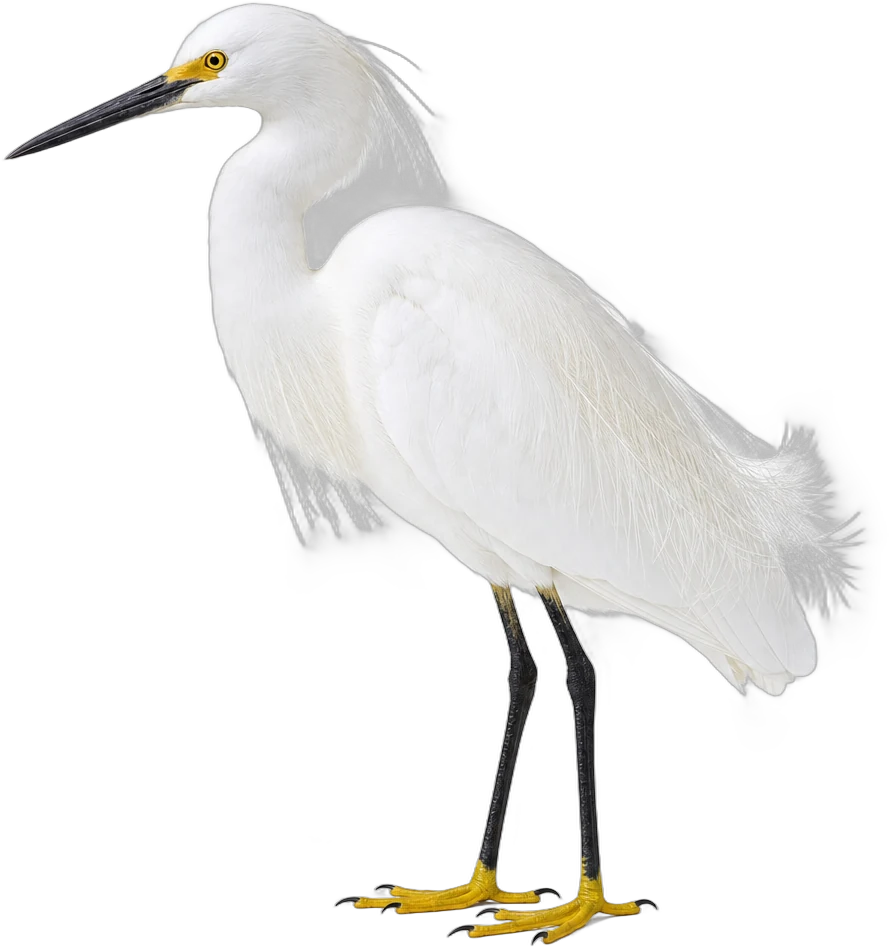
A dainty white heron with "golden slippers," its bright yellow feet. It often shuffles its feet in shallow water to stir up prey.
How to identify it
- All-white, smaller and slimmer than a Great Egret
- Thin black bill with yellow skin in front of the eye
- Black legs with bright yellow feet
- Wispy, curved plumes on the back, head and chest in breeding season
SizeBetween an American Crow and a Canada Goose
American Crow19 in
Snowy Egret24 in
Canada Goose37 in
Great Blue Heron46 in
6 inAverage length, bill to tail
Details
- Size
- 22–26 in long; wingspan about 39 in
- Weight
- about 13 oz
- Habitat
- Salt marshes, tidal flats, ponds and shallow coastal waters
- When to see it
- Year-round along the southern coasts; summer north to New England
- Diet
- Small fish, shrimp, crabs, insects
Range in the United States

Life history
Food
Eats small fish, shrimp, crabs and insects, often stirring up prey with its yellow feet or flicking its wings.
Nesting
A platform of sticks in shrubs or trees, in mixed colonies with other herons and ibises.
- Clutch
- 3–5 eggs
- Incubation
- 20–24 days
- Young
- Fledge at about 4 weeks
- Broods
- 1 per year
Behavior
An active, energetic hunter that dashes after prey. Breeding adults raise elaborate wispy plumes in courtship.
Conservation
Recovered from plume hunting, but numbers fluctuate and depend on protected coastal wetlands.
Cool facts
- Its plumes were once the most valuable of all, selling for twice the price of gold by weight.
- The bright yellow feet turn orange-red for a short time during courtship.
- Snowy Egrets sometimes hover over water to snatch prey.
Songs & calls
▶Bird sounds video coming soon
Watch the Snowy Egret
▶Video coming soon