Wading Birds & Marsh Birds
Clapper Rail
Rallus crepitans
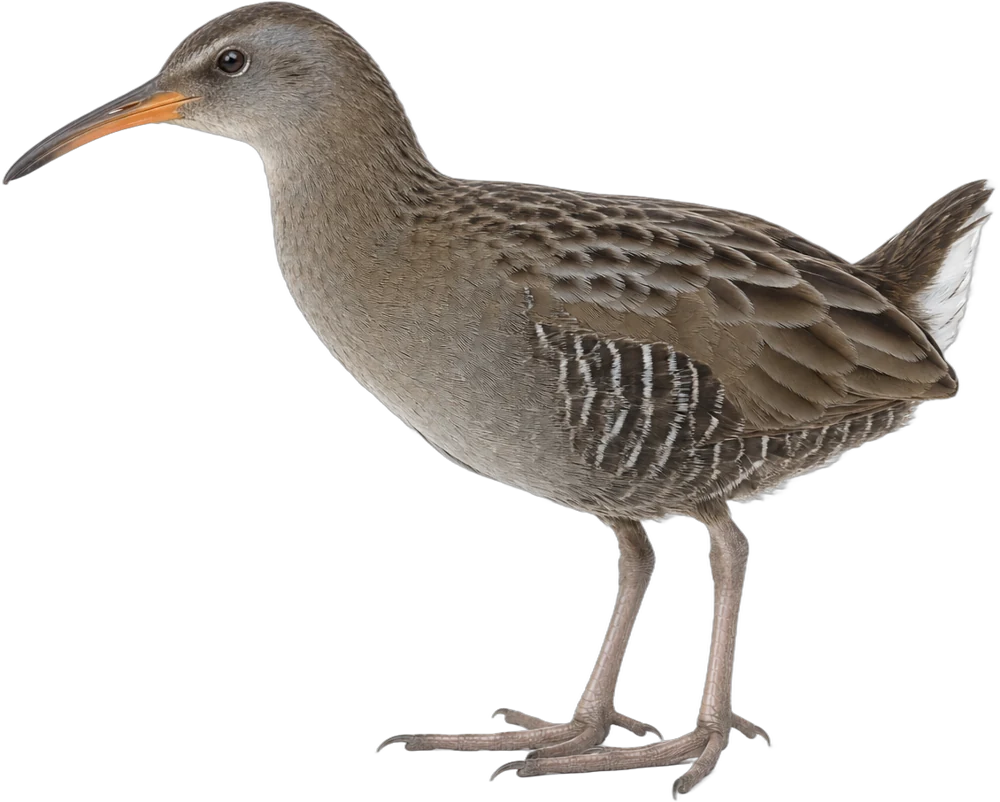
A secretive, chicken-like bird of salt marshes, heard far more often than seen. Its clattering calls echo across the marsh, especially at dawn and dusk.
How to identify it
- Grayish-brown, chicken-shaped body
- Long, slightly downcurved bill
- Gray-and-white barring on the flanks
- Short tail often flicked up
- Loud, clattering "kek-kek-kek-kek" call
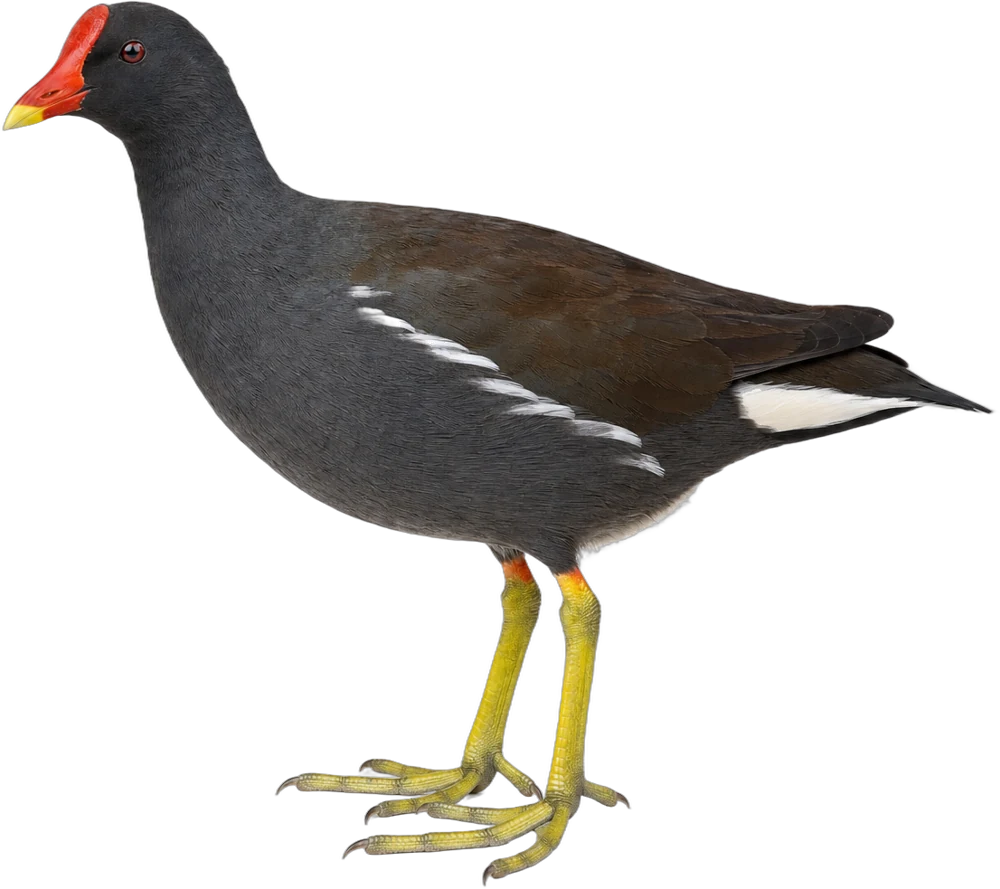
SizeBetween an American Robin and an American Crow
American Robin10 in
Clapper Rail15 in
American Crow19 in
Canada Goose37 in
6 inAverage length, bill to tail
Details
- Size
- 13–16 in long; wingspan about 19 in
- Weight
- about 9–14 oz
- Habitat
- Salt marshes with cordgrass along the coast
- When to see it
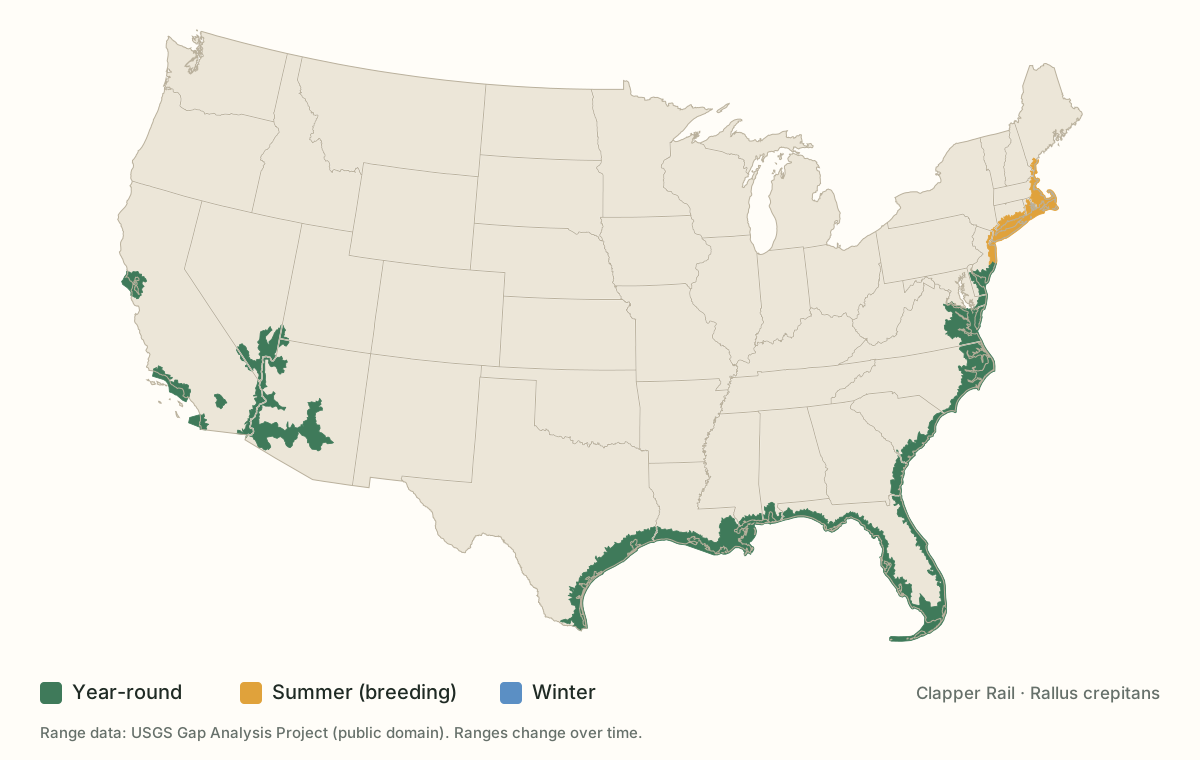
- Year-round along the Atlantic and Gulf coasts
- Diet
- Fiddler crabs, other crabs, snails, worms, insects
Range in the United States
Life history
Food
Eats fiddler crabs and other crabs, snails, worms, insects and small fish found in the marsh.
Nesting
A cup of marsh grass on a raised spot, often with a canopy of grass pulled over the top.
- Clutch
- 5–12 eggs
- Incubation
- 20–23 days
- Young
- Leave the nest soon after hatching; fly at about 9–10 weeks
- Broods
- 1–2 per year
Behavior
Runs through dense grass rather than flying. Calls in loud choruses, especially at dawn, dusk and after loud noises.
Conservation
Common in good salt marsh but threatened by rising sea levels and marsh loss.
Cool facts
- Its narrow body lets it slip easily between tall marsh grasses.
- High tides sometimes flood nests; rails can raise the nest to keep eggs dry.
- It was once known as the "marsh hen."
Songs & calls
▶Bird sounds video coming soon
Watch the Clapper Rail
▶Video coming soon