Backyard & Woodland Songbirds
Eastern Phoebe
Sayornis phoebe
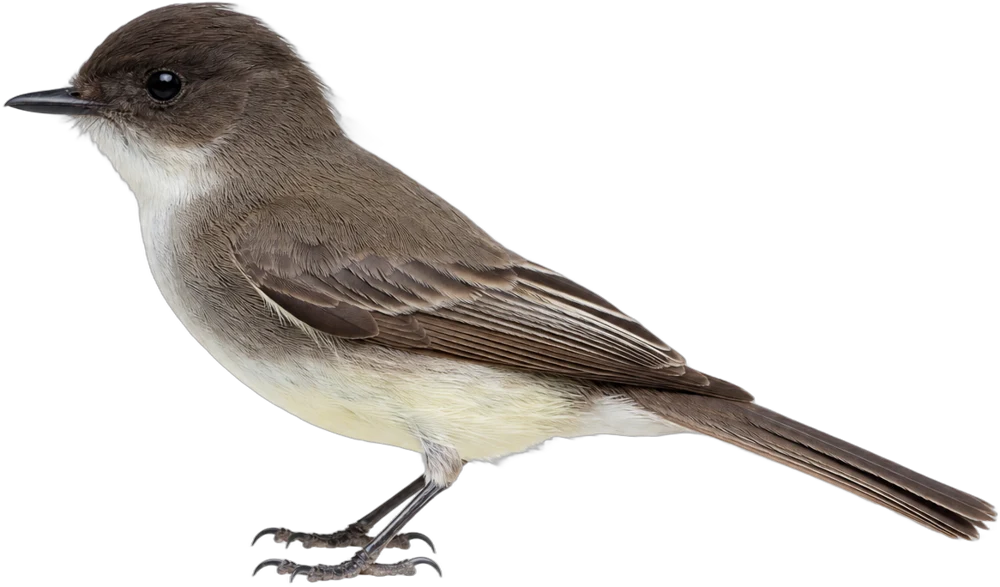
A plain gray flycatcher that constantly wags its tail and says its own name. It often builds its mud nest under bridges, porches and barn eaves.
How to identify it
- Gray-brown above, darkest on the head
- Whitish underparts, sometimes with a yellowish wash
- Constantly dips and wags its tail
- Raspy "fee-bee" song
SizeAbout the size of a Song Sparrow
Carolina Chickadee4 in
Song Sparrow6 in
Eastern Phoebe6 in
American Robin10 in
6 inAverage length, bill to tail
Details
- Size
- 5.5–6.5 in long; wingspan about 10–11 in
- Weight
- 0.6–0.7 oz
- Habitat
- Woodland edges near water, farmyards, bridges and buildings
- When to see it
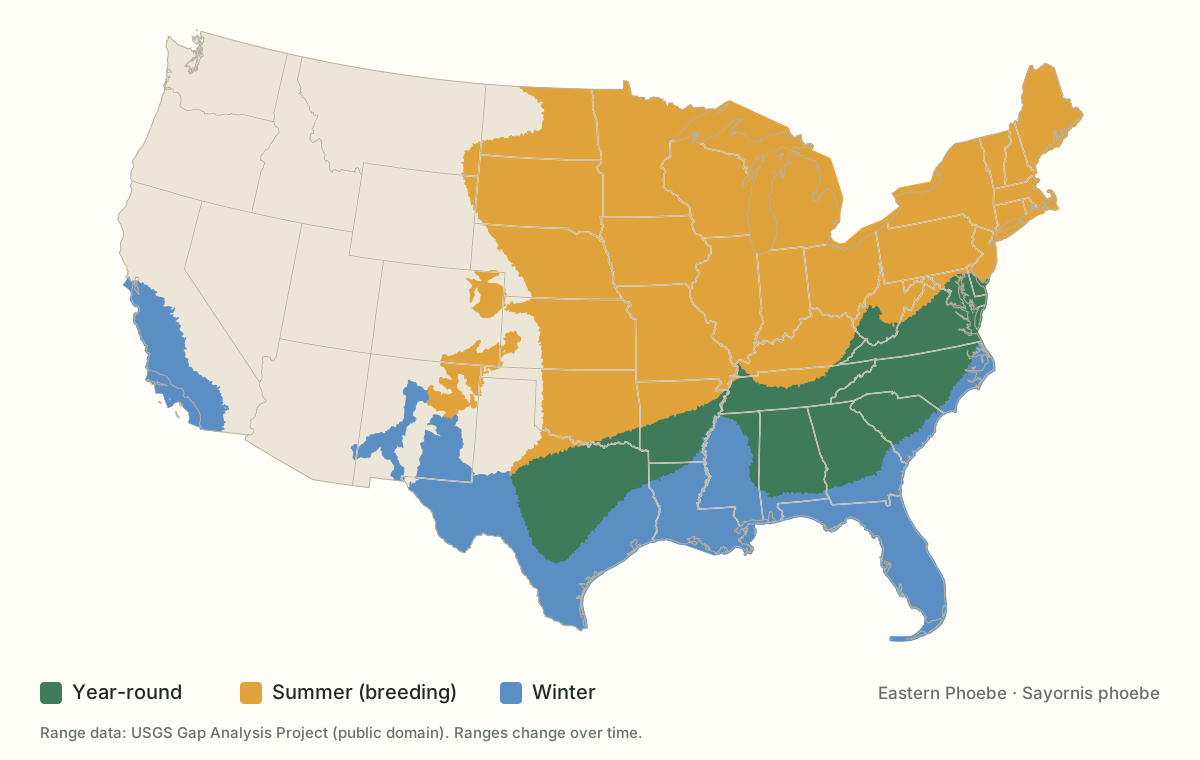
- Year-round across the Southeast; summer farther north
- Diet
- Flying insects; some berries in winter
Range in the United States
Life history
Food
Catches flying insects from a low perch; eats berries in winter.
Nesting
A cup of mud and moss stuck to a ledge on a bridge, building or cliff.
- Clutch
- 2–6 eggs
- Incubation
- about 16 days
- Young
- Fledge at about 16–20 days
- Broods
- 1–2 per year
Behavior
Constantly wags its tail while perched. Often nests near people.
Conservation
Common and stable.
Cool facts
- In 1804, John James Audubon tied silver thread to phoebe legs, one of the first bird-banding experiments in America.
- It's one of the earliest migrants to return in spring.
- Pairs often reuse the same nest site year after year.
Songs & calls
▶Bird sounds video coming soon
Watch the Eastern Phoebe
▶Video coming soon