Shorebirds & Seabirds
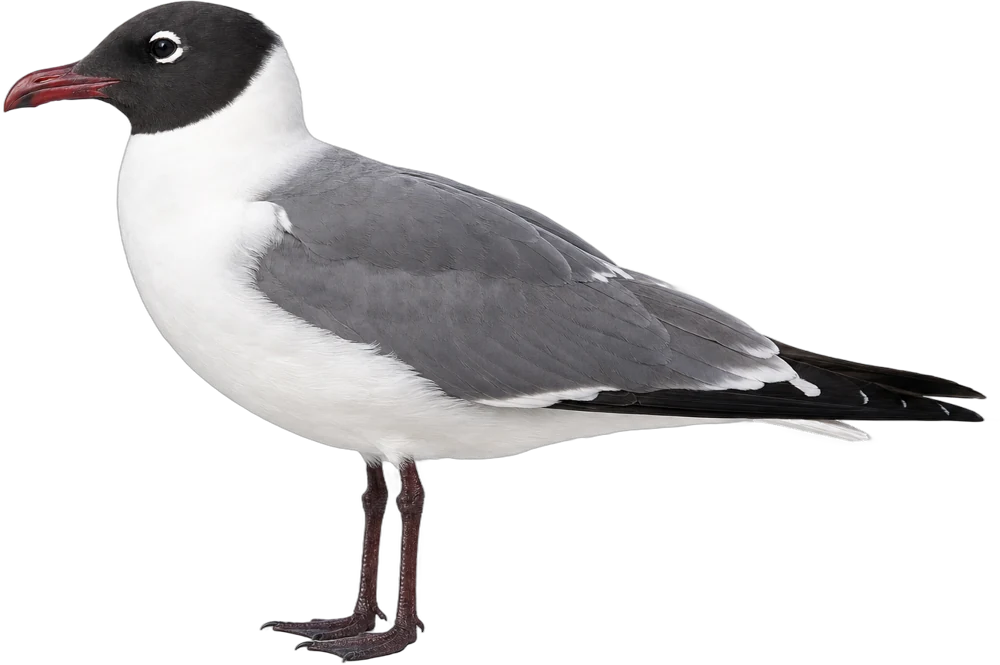
Laughing Gull
Leucophaeus atricilla
A medium-sized gull of southern beaches named for its loud, laughing call. It is a common sight around piers, parking lots and beachgoers' lunches.
How to identify it
- Breeding: black hood, dark gray back and a dark red bill
- Winter: smudgy gray on the back of a white head
- Black wingtips without white spots
- Loud "ha-ha-ha-ha-haah" laughing call
SizeAbout the size of an American Crow
American Robin10 in
Laughing Gull17 in
American Crow19 in
Canada Goose37 in
6 inAverage length, bill to tail
Details
- Size
- 15–18 in long; wingspan 39–43 in
- Weight
- 7–13 oz
- Habitat
- Beaches, bays, salt marshes, harbors
- When to see it
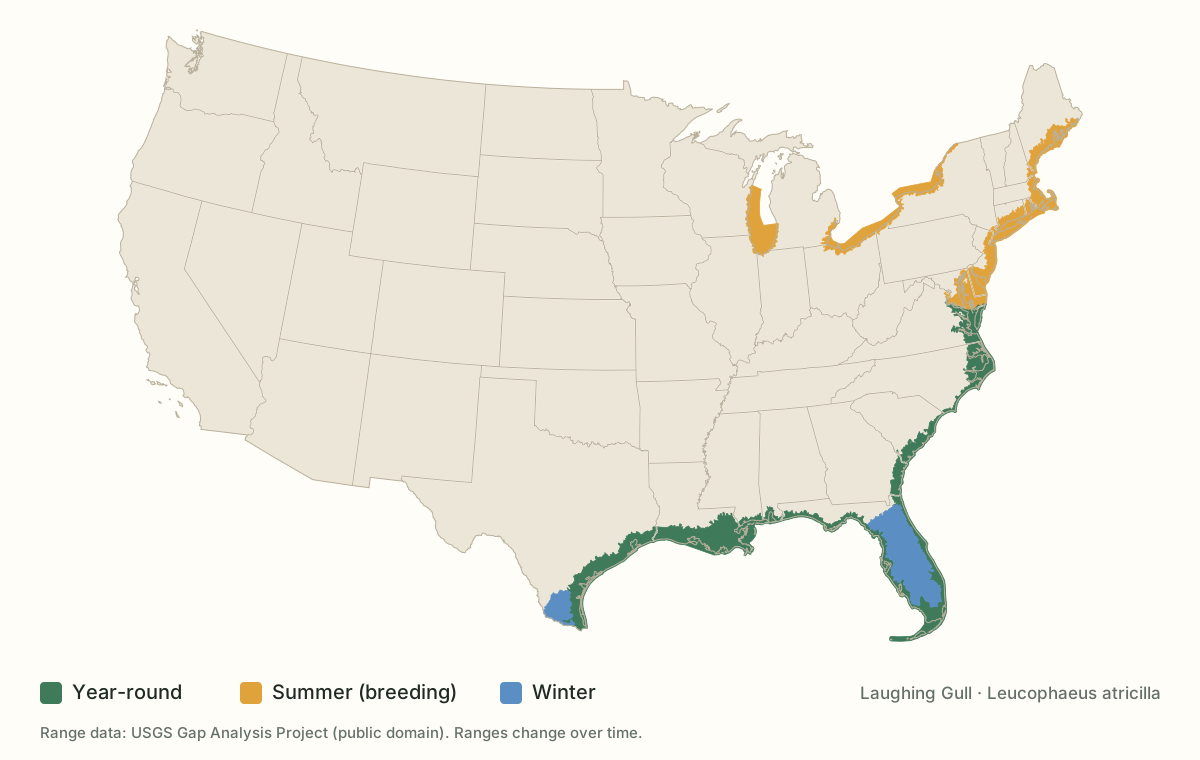
- Year-round along the southern Atlantic and Gulf coasts; summer farther north
- Diet
- Fish, crabs, insects, scraps from people
Range in the United States
Life history
Food
Eats fish, crabs, insects and horseshoe crab eggs, and often steals from other birds or scavenges from people.
Nesting
A grassy cup on the ground in salt marshes or on beaches, in colonies.
- Clutch
- 2–4 eggs
- Incubation
- about 22–27 days
- Young
- Fledge at about 5 weeks
- Broods
- 1 per year
Behavior
Very social and noisy; follows boats and gathers wherever people eat on the beach.
Conservation
Common; recovered from egg collecting and plume hunting in the 1800s.
Cool facts
- It sometimes lands on pelicans' heads to grab fish from their pouches.
- It takes three years to reach adult plumage.
- Its call sounds remarkably like human laughter.
Songs & calls
▶Bird sounds video coming soon
Watch the Laughing Gull
▶Video coming soon