Shorebirds & Seabirds
Least Sandpiper
Calidris minutilla
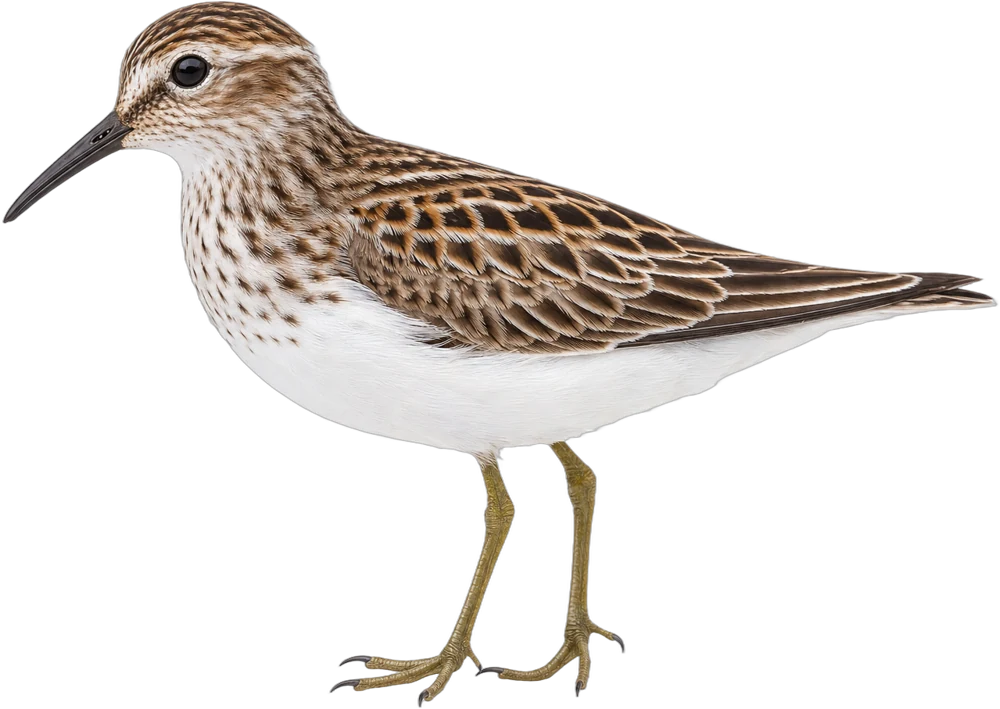
The world's smallest shorebird. Flocks creep along the muddy edges of ponds and marshes, picking at tiny prey.
How to identify it
- Very small and brown, with a streaked brown breast
- Yellowish-green legs
- Short, thin, slightly drooping bill
- Crouched posture while feeding
SizeAbout the size of a Song Sparrow
Carolina Chickadee4 in
Song Sparrow6 in
Least Sandpiper6 in
American Robin10 in
6 inAverage length, bill to tail
Details
- Size
- 5–6.5 in long; wingspan about 11 in
- Weight
- about 0.7–1 oz
- Habitat
- Mudflats, marsh edges, ponds and flooded fields
- When to see it
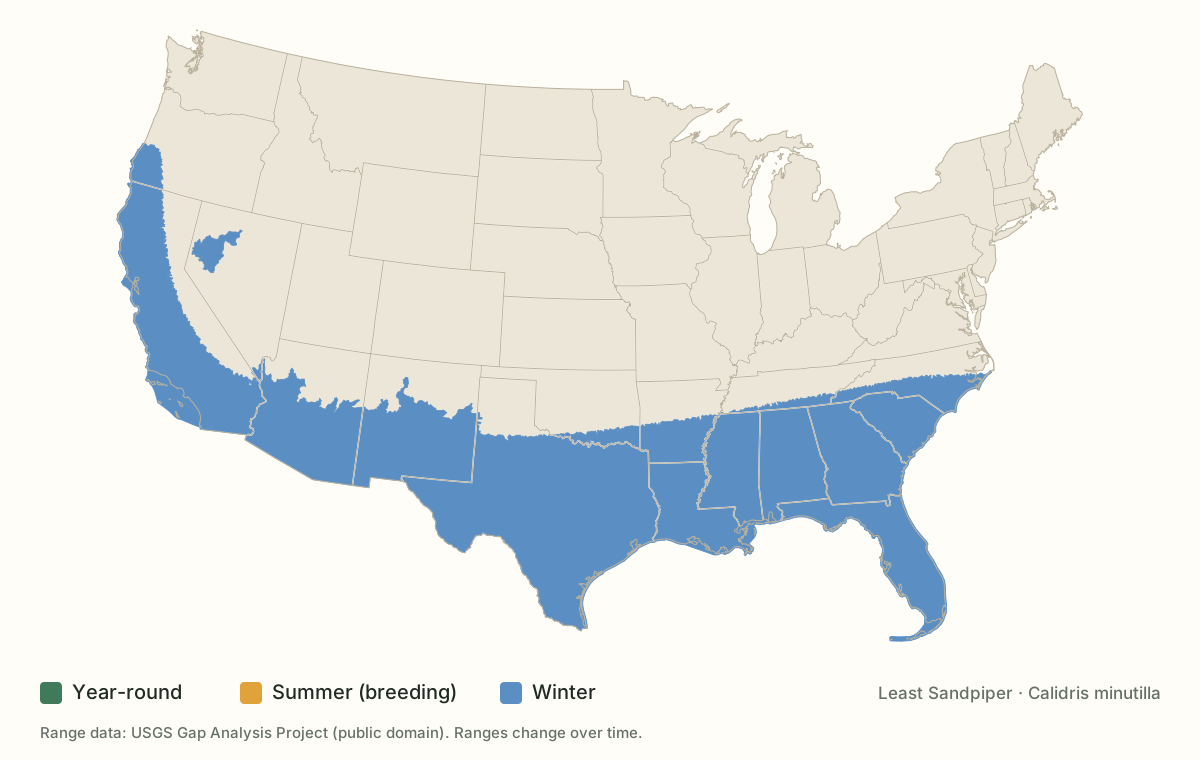
- Winter across the southern US; migrant elsewhere; breeds in the subarctic
- Diet
- Small insects, crustaceans, worms
Range in the United States
Life history
Food
Picks tiny insects, crustaceans and worms from mud at the water's edge.
Nesting
A shallow cup in moss or grass on subarctic tundra or bogs.
- Clutch
- 3–4 eggs
- Incubation
- 19–23 days
- Young
- Leave the nest within a day; fly at about 2–3 weeks
- Broods
- 1 per year
Behavior
Feeds in a crouched posture on mudflats; often in flocks with other small sandpipers.
Conservation
Common and widespread.
Cool facts
- It is the smallest shorebird in the world, weighing about as much as a few nickels.
- Some fly nonstop over the Atlantic Ocean during fall migration.
- Yellowish legs set it apart from similar "peeps."
Songs & calls
▶Bird sounds video coming soon
Watch the Least Sandpiper
▶Video coming soon