Shorebirds & Seabirds
Ruddy Turnstone
Arenaria interpres
A stocky shorebird that, true to its name, flips over stones, shells and seaweed to find food underneath.
How to identify it
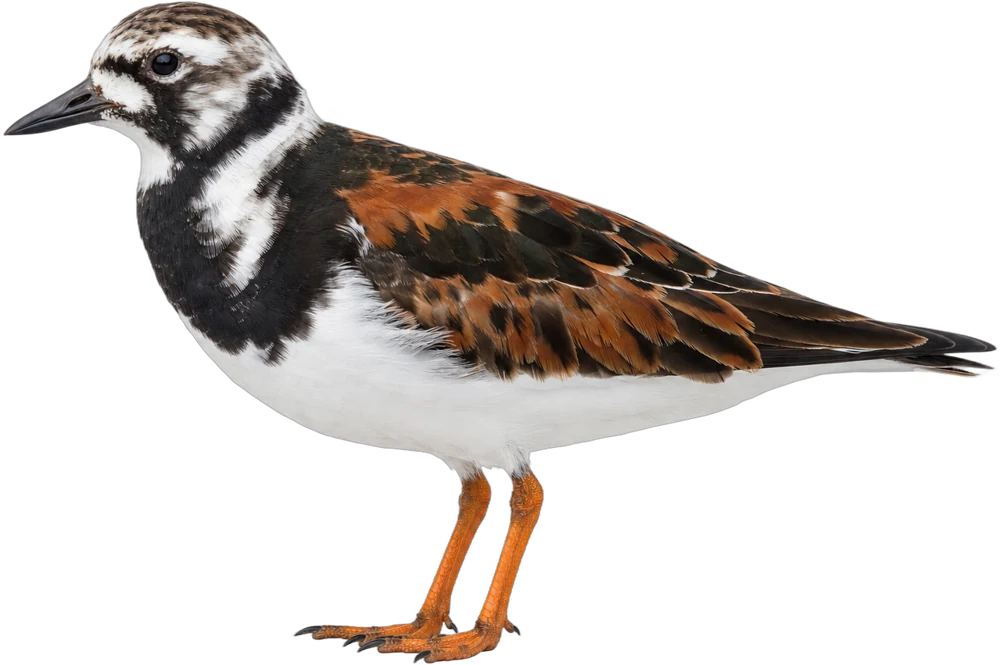
- Short, slightly upturned black bill
- Short orange legs
- Breeding: rusty back and a bold black-and-white face pattern
- Winter: duller brown with a dark breast patch
- Flashy black-and-white pattern in flight
SizeAbout the size of an American Robin
Song Sparrow6 in
Ruddy Turnstone9 in
American Robin10 in
American Crow19 in
6 inAverage length, bill to tail
Details
- Size
- 8–10 in long; wingspan 20–22 in
- Weight
- 3–7 oz
- Habitat
- Rocky shores, jetties, beaches and mudflats
- When to see it
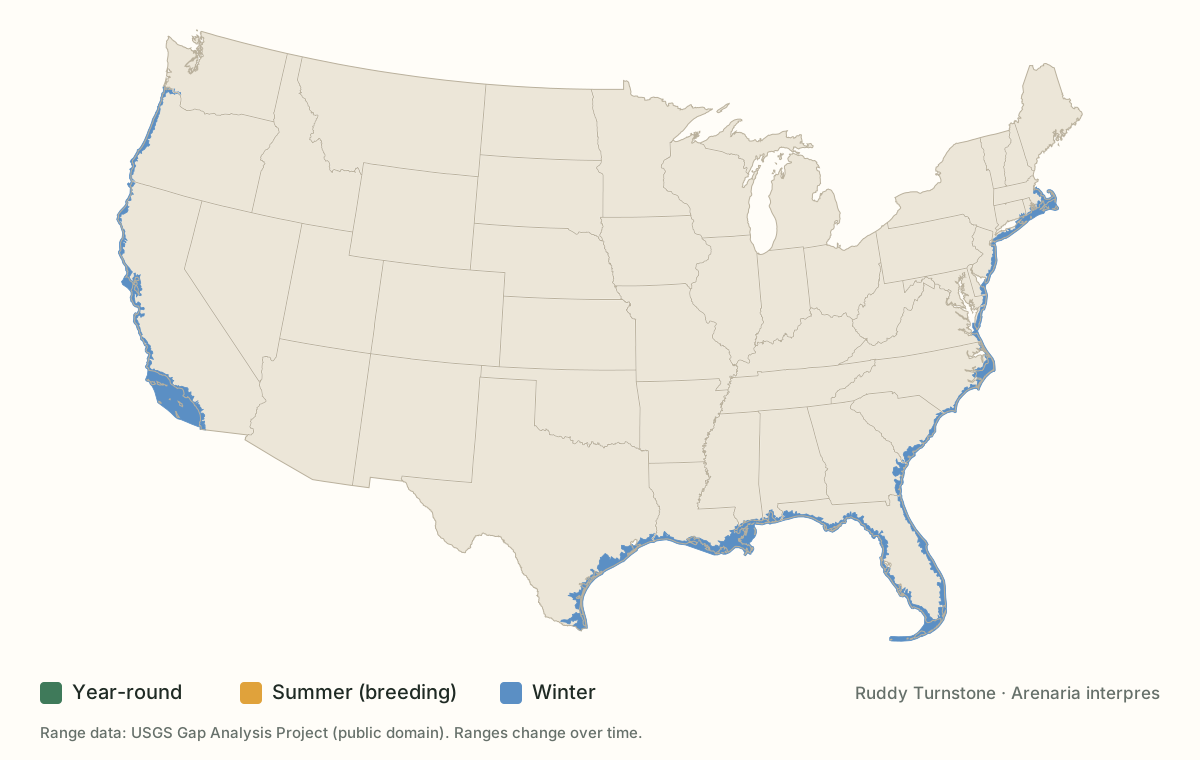
- Winter visitor and migrant along the coasts; breeds in the Arctic
- Diet
- Insects, crustaceans, mollusks, horseshoe crab eggs
Range in the United States
Life history
Food
Flips stones, shells and seaweed with its bill to find insects, crustaceans and mollusks; feasts on horseshoe crab eggs in spring.
Nesting
A shallow scrape on Arctic tundra near the coast.
- Clutch
- 2–4 eggs
- Incubation
- 21–24 days
- Young
- Leave the nest soon after hatching; fly at about 3 weeks
- Broods
- 1 per year
Behavior
Feeds busily along rocky shores and jetties, often in small groups.
Conservation
Widespread but declining in some areas.
Cool facts
- It nests in the high Arctic and winters as far south as South America.
- Turnstones will eat almost anything, including food scraps on beaches.
- Its legs are short and orange, perfect for scrambling over rocks.
Songs & calls
▶Bird sounds video coming soon
Watch the Ruddy Turnstone
▶Video coming soon