Shorebirds & Seabirds
Sanderling
Calidris alba
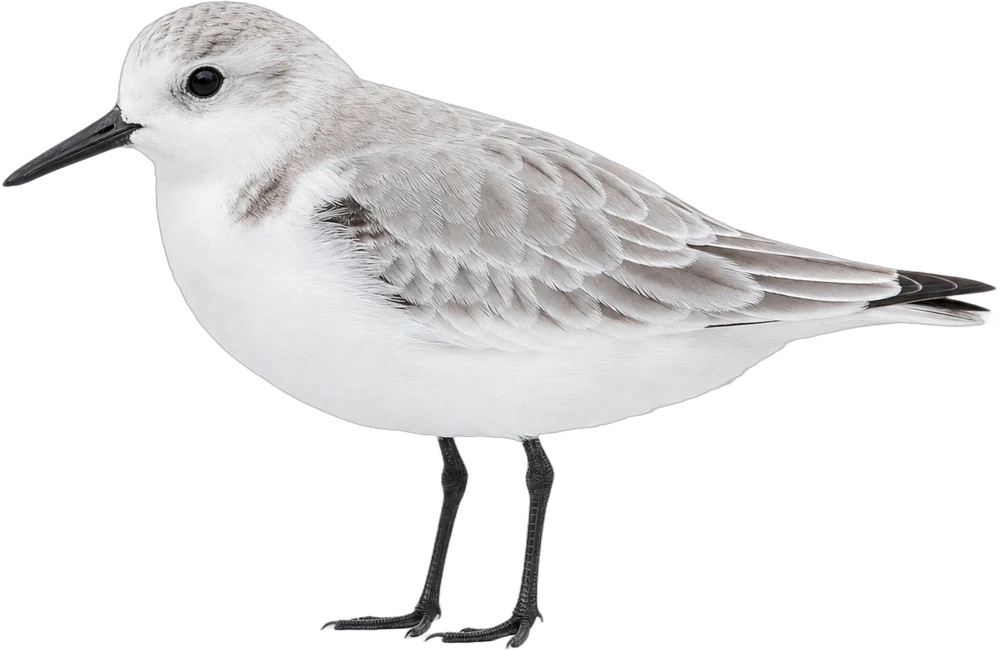
A small, pale sandpiper that runs back and forth with the waves like a wind-up toy, grabbing tiny animals left by the surf.
How to identify it
- Winter: very pale gray above and bright white below
- Black bill and black legs
- Dark patch at the bend of the wing
- Runs quickly along the edge of the waves
SizeBetween a Song Sparrow and an American Robin
Carolina Chickadee4 in
Song Sparrow6 in
Sanderling8 in
American Robin10 in
6 inAverage length, bill to tail
Details
- Size
- 7–8 in long; wingspan about 14 in
- Weight
- 1.4–3.5 oz
- Habitat
- Sandy beaches along the ocean
- When to see it
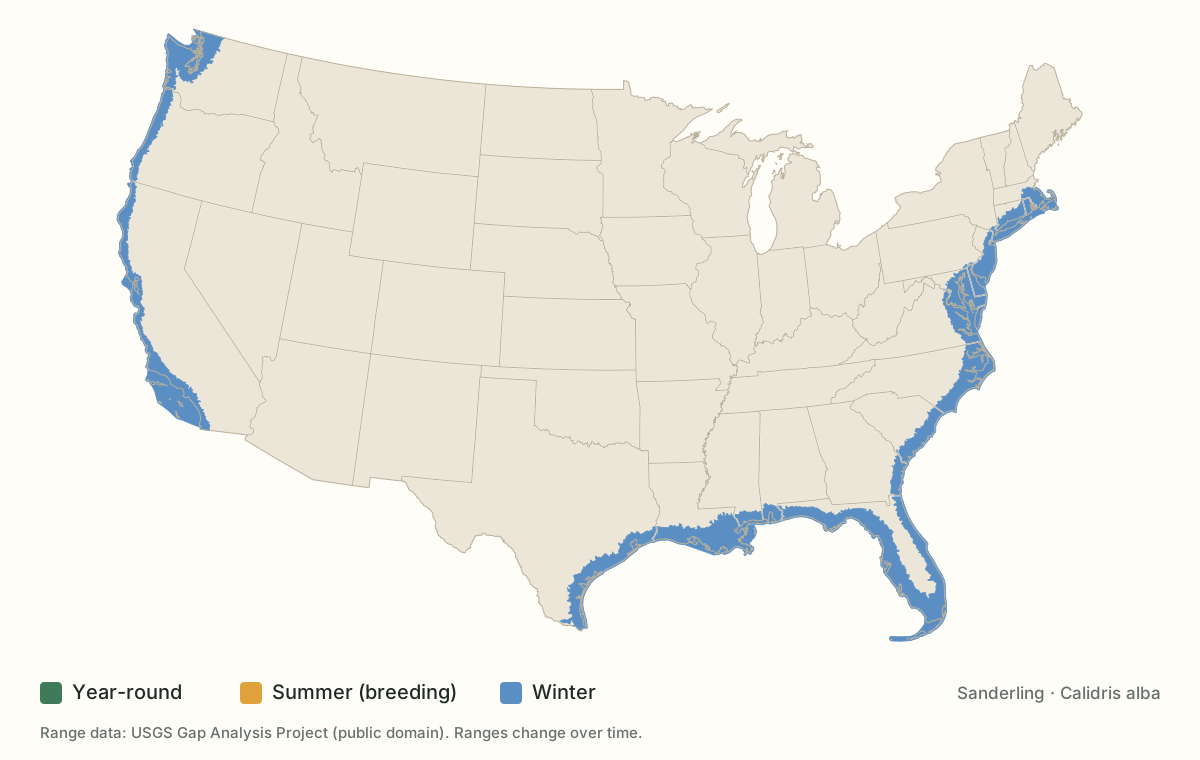
- Winter visitor along all US coasts; breeds in the high Arctic
- Diet
- Small crabs, worms, mollusks
Range in the United States
Life history
Food
Chases waves to snatch small crabs, worms and mollusks exposed in the wet sand.
Nesting
A shallow scrape on dry Arctic tundra.
- Clutch
- 3–4 eggs
- Incubation
- 23–32 days
- Young
- Leave the nest within a day; fly at about 2–3 weeks
- Broods
- 1–2 per year
Behavior
Runs along the surf line in tight groups. Often rests on one leg in flocks on the beach.
Conservation
Common but has declined; depends on undisturbed beaches during migration.
Cool facts
- Unlike most sandpipers, it has no back toe, which helps it run fast on sand.
- Some females lay two clutches, one for the male to raise and one she raises herself.
- It is one of the most widespread shorebirds in the world.
Songs & calls
▶Bird sounds video coming soon
Watch the Sanderling
▶Video coming soon