Warblers, Sparrows, Finches & Blackbirds
Prothonotary Warbler
Protonotaria citrea
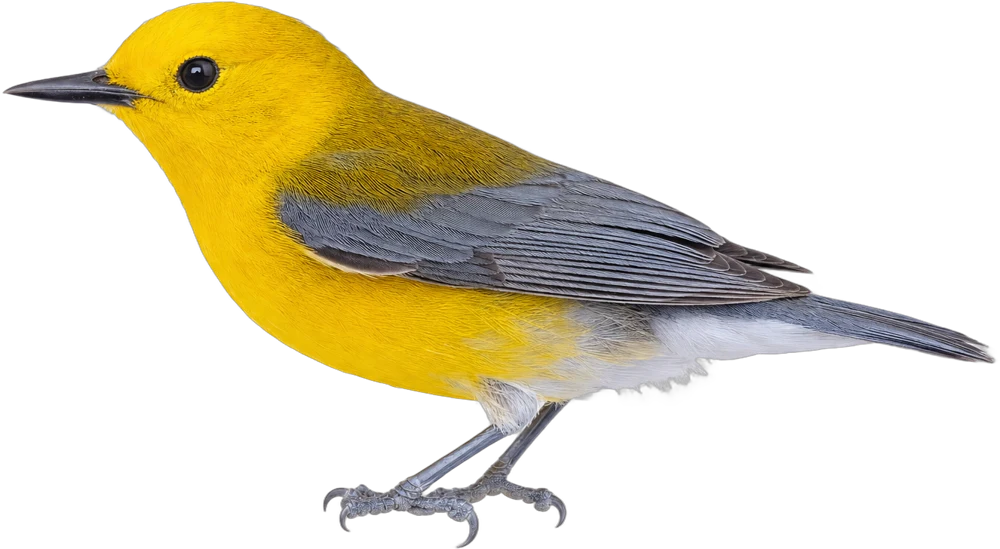
A glowing golden-yellow warbler of southern swamps. It is one of only two eastern warblers that nest in tree holes, often right over the water.
How to identify it
- Brilliant golden-yellow head and breast
- Blue-gray wings with no wing bars
- Large black eyes
- Loud, ringing "sweet-sweet-sweet" song
SizeAbout the size of a Song Sparrow
Carolina Chickadee4 in
Prothonotary Warbler5 in
Song Sparrow6 in
American Robin10 in
6 inAverage length, bill to tail
Details
- Size
- 5–5.5 in long; wingspan about 8.5 in
- Weight
- 0.5–0.6 oz
- Habitat
- Flooded forests, cypress swamps and river edges
- When to see it
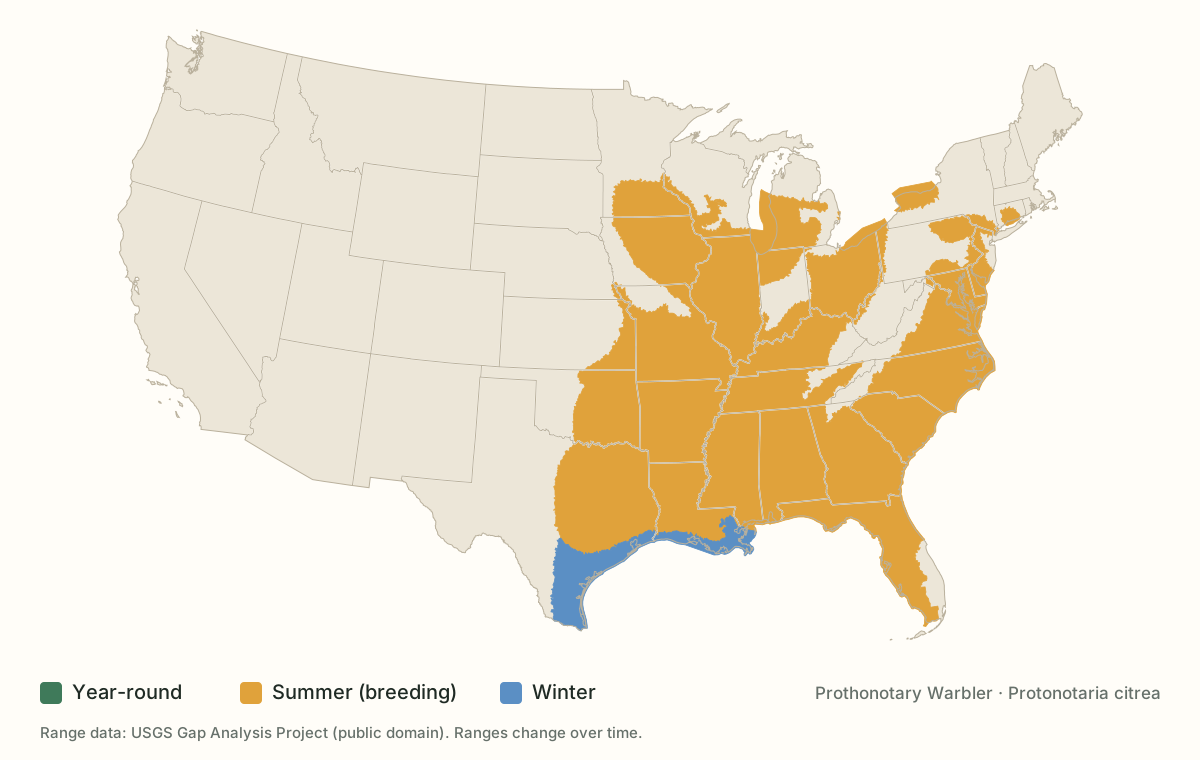
- Summer across the Southeast (April–September); winters in Central and South America
- Diet
- Insects, snails
Range in the United States
Life history
Food
Eats insects and snails gleaned from branches and leaves over water.
Nesting
In a tree cavity or nest box over or near water, filled with moss.
- Clutch
- 3–7 eggs
- Incubation
- 12–14 days
- Young
- Fledge at about 10–11 days
- Broods
- 1–2 per year
Behavior
Males may build several "dummy" moss nests to attract a mate.
Conservation
Declining due to loss of flooded forests in the US and mangroves where it winters.
Cool facts
- Its name comes from Catholic church clerks (prothonotaries) who wore yellow robes.
- It's one of only two eastern warblers that nest in cavities.
- It played a role in a famous 1948 spy case involving Alger Hiss.
Songs & calls
▶Bird sounds video coming soon
Watch the Prothonotary Warbler
▶Video coming soon