Shorebirds & Seabirds
Royal Tern
Thalasseus maximus
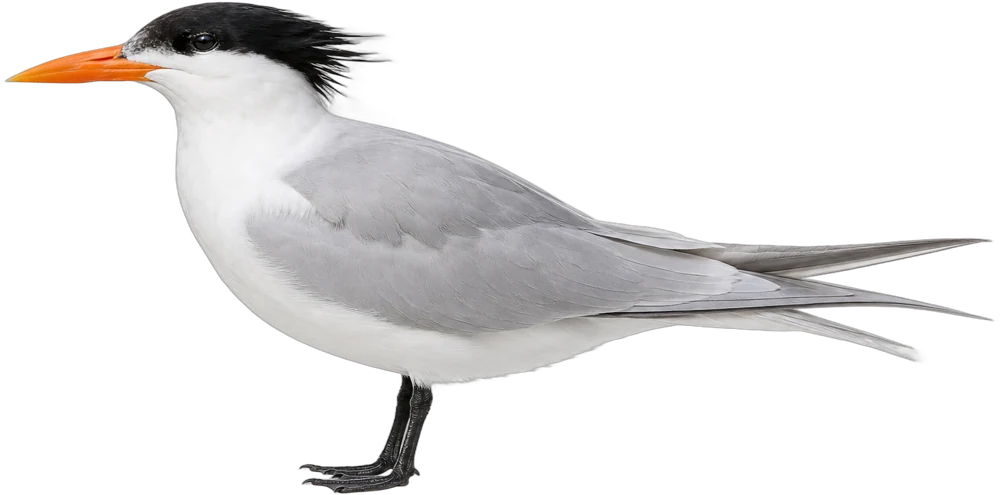
A large tern with a bright orange bill and a shaggy black crest. It plunges into the ocean for fish and nests in dense colonies on sandy islands.
How to identify it
- Thick, bright orange bill
- Black shaggy crest at the back of the head
- White forehead for most of the year (all-black cap only early in breeding season)
- Pale gray back, white below, forked tail
SizeAbout the size of an American Crow
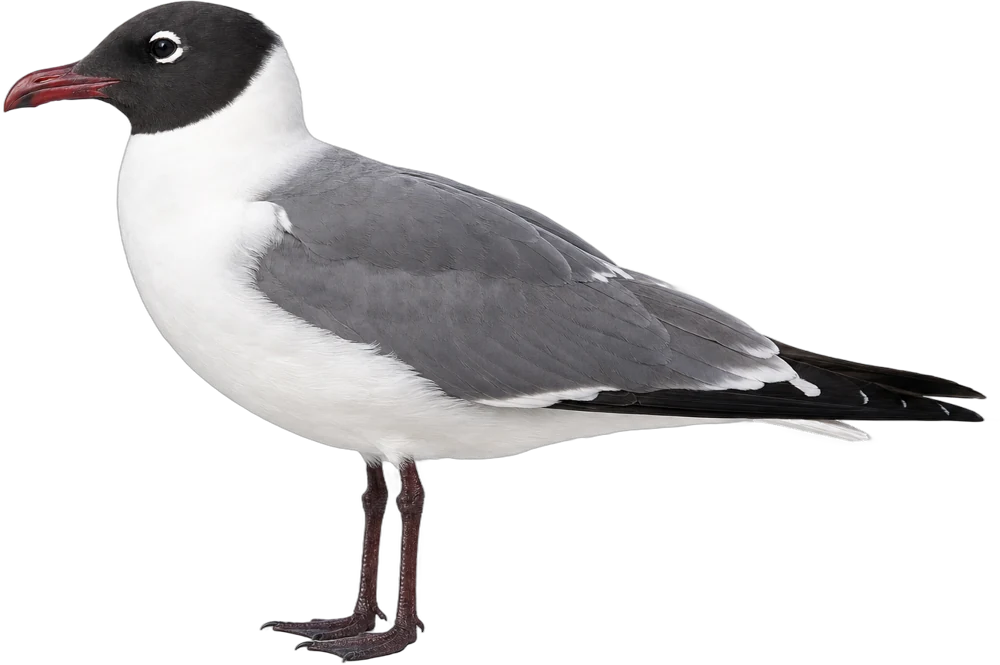
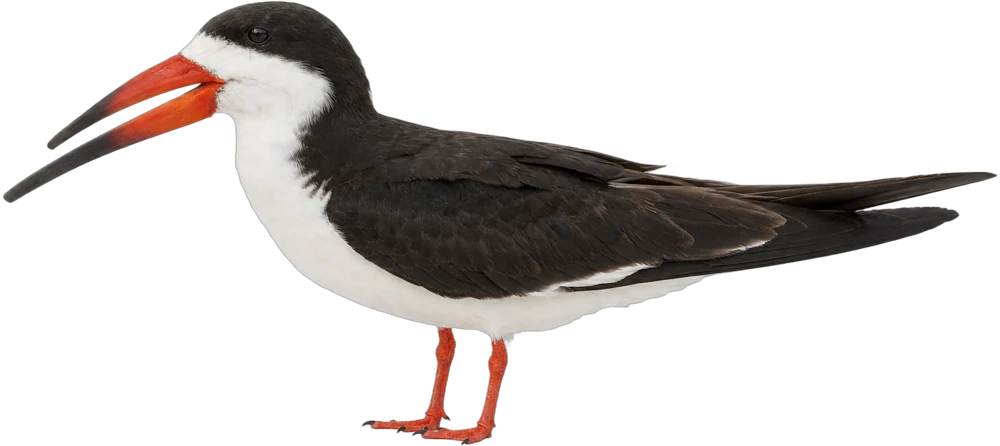
American Robin10 in
American Crow19 in
Royal Tern19 in
Canada Goose37 in
6 inAverage length, bill to tail
Details
- Size
- about 18–20 in long; wingspan about 41–44 in
- Weight
- 12–16 oz
- Habitat
- Beaches, ocean coasts, inlets and bays
- When to see it
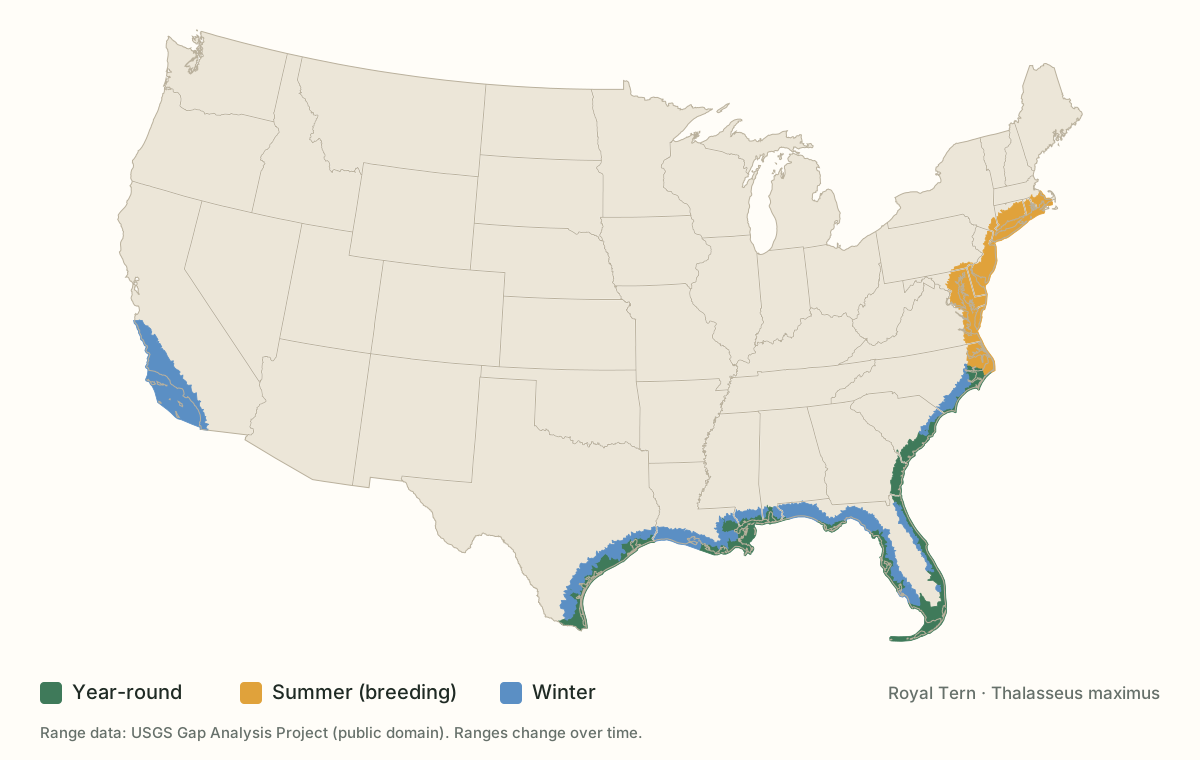
- Year-round along the southern Atlantic and Gulf coasts; summer north to the Mid-Atlantic
- Diet
- Small fish and crabs
Range in the United States
Life history
Food
Plunge-dives for small fish such as anchovies and menhaden, plus crabs and shrimp.
Nesting
A shallow scrape on open sand in dense colonies on islands.
- Clutch
- 1 egg (rarely 2)
- Incubation
- 28–35 days
- Young
- Fledge at about 4–5 weeks
- Broods
- 1 per year
Behavior
Chicks gather in a group called a crèche, but parents still find and feed their own chick.
Conservation
Common, but dependent on a small number of safe nesting islands.
Cool facts
- Each chick has unique markings and calls that help parents recognize it.
- Royal Terns nest so close together that their nests are about 2 feet apart.
- Its all-black cap lasts only a short time early in the breeding season.
Songs & calls
▶Bird sounds video coming soon
Watch the Royal Tern
▶Video coming soon