Birds of Prey
Turkey Vulture
Cathartes aura
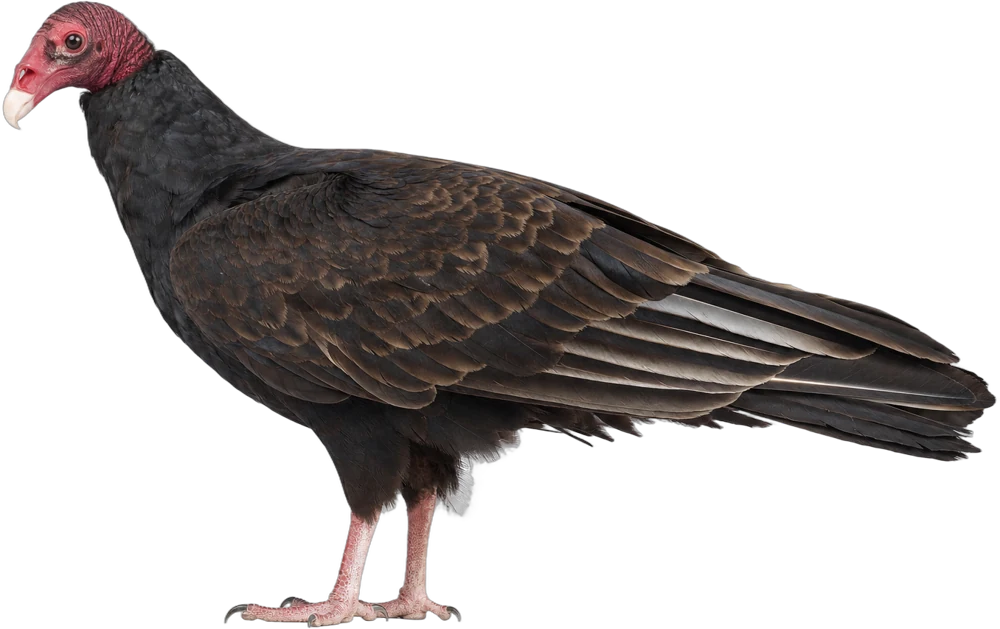
A large scavenger that finds dead animals by smell, a rare ability among birds. It soars for hours with its wings held in a shallow V, wobbling in the wind.
How to identify it
- Small, bare red head (gray on young birds)
- Two-toned underwings: dark in front, silvery behind
- Holds wings in a V and rocks side to side while soaring
- Rarely flaps
SizeBetween an American Crow and a Canada Goose
American Crow19 in
Turkey Vulture29 in
Canada Goose37 in
Great Blue Heron46 in
6 inAverage length, bill to tail
Details
- Size
- 25–32 in long; wingspan 67–70 in
- Weight
- 4.4–5.3 lb
- Habitat
- Open country, roadsides, farmland and forest edges
- When to see it
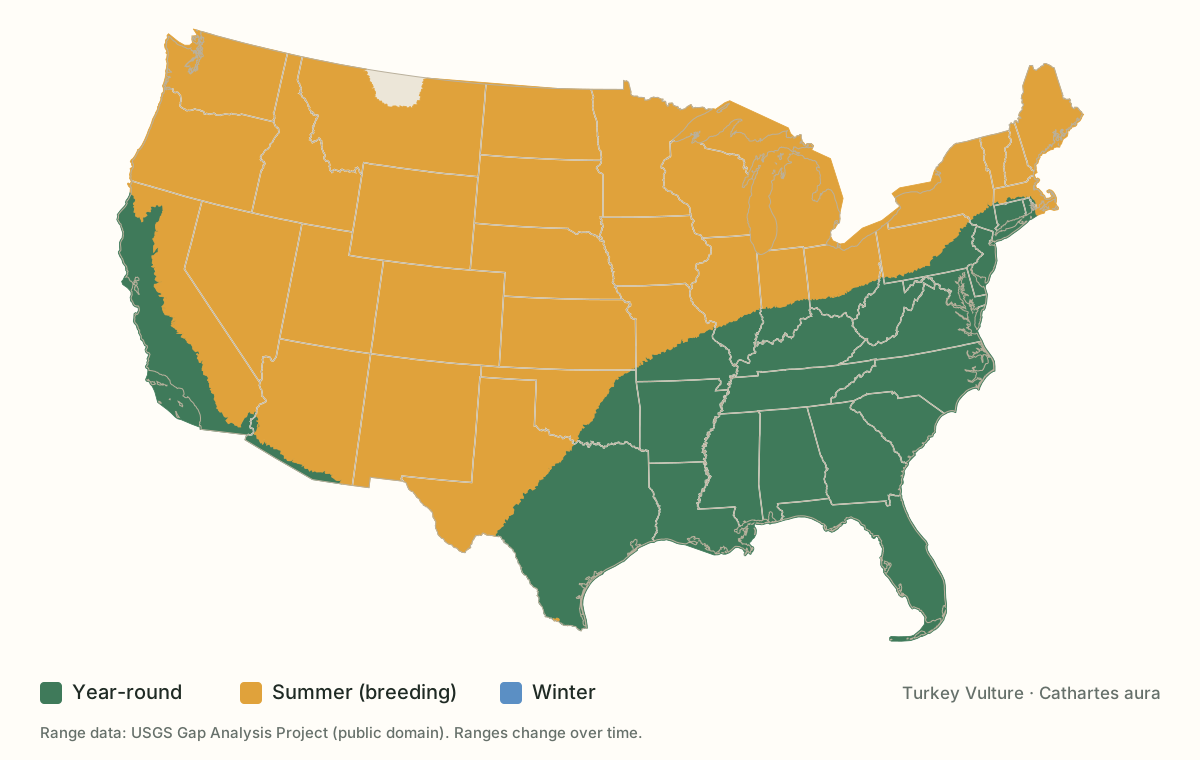
- Year-round across the South; summer in the North
- Diet
- Carrion (dead animals)
Range in the United States
Life history
Food
Eats carrion, finding fresh carcasses by smell as well as sight; rarely eats live prey.
Nesting
No nest is built; eggs are laid on the ground in caves, hollow logs, rock crevices or old buildings.
- Clutch
- 1–3 eggs
- Incubation
- 28–40 days
- Young
- Fledge at about 9–10 weeks
- Broods
- 1 per year
Behavior
Roosts in groups and spreads its wings in the morning sun to warm up. Vomits when threatened to scare off predators.
Conservation
Common and increasing; expanding its range northward.
Cool facts
- It has one of the best senses of smell of any bird.
- Gas companies once used vultures circling over pipelines to find leaks.
- Its bare head helps keep it clean while feeding.
Songs & calls
▶Bird sounds video coming soon
Watch the Turkey Vulture
▶Video coming soon