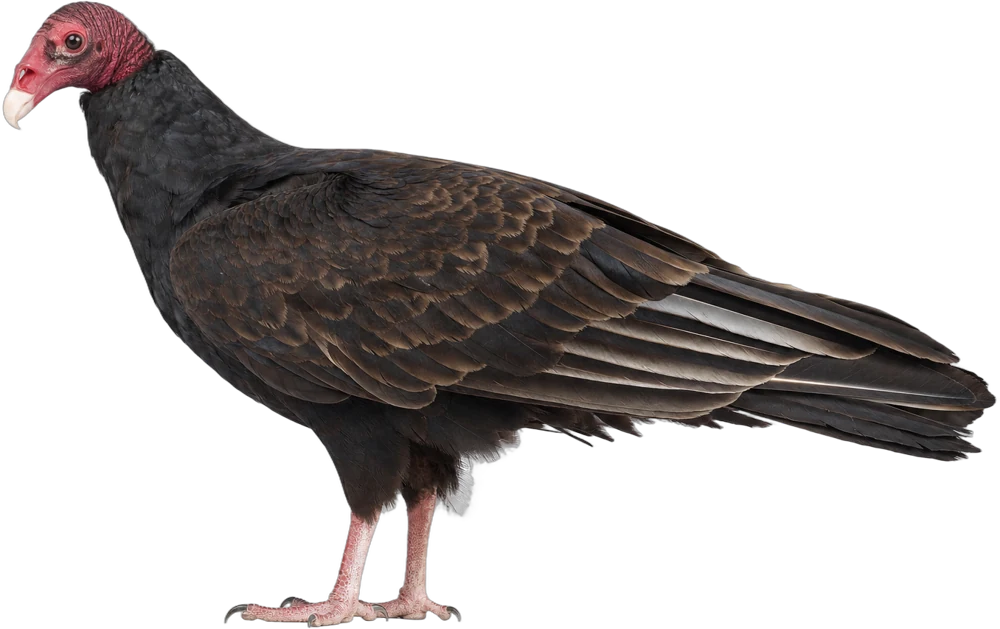
Birds of Prey
Black Vulture
Coragyps atratus
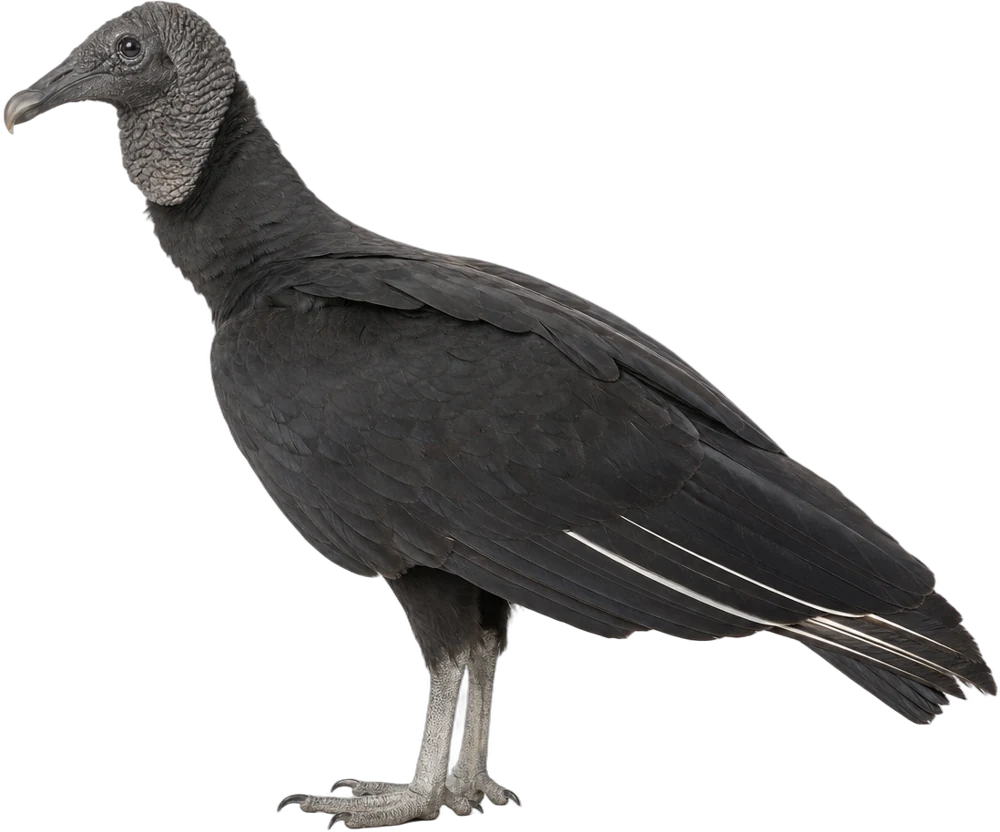
A stocky, social vulture of the South that often follows Turkey Vultures to find food. Groups roost together and can be bold around people.
How to identify it
- All black with a bare, wrinkled gray head
- White patches near the wingtips in flight
- Short, square tail
- Flaps quickly between short glides
SizeBetween an American Crow and a Canada Goose
American Crow19 in
Black Vulture25 in
Canada Goose37 in
Great Blue Heron46 in
6 inAverage length, bill to tail
Details
- Size
- 23–27 in long; wingspan 54–59 in
- Weight
- 3.5–6.6 lb
- Habitat
- Open country, farmland, towns and roadsides
- When to see it
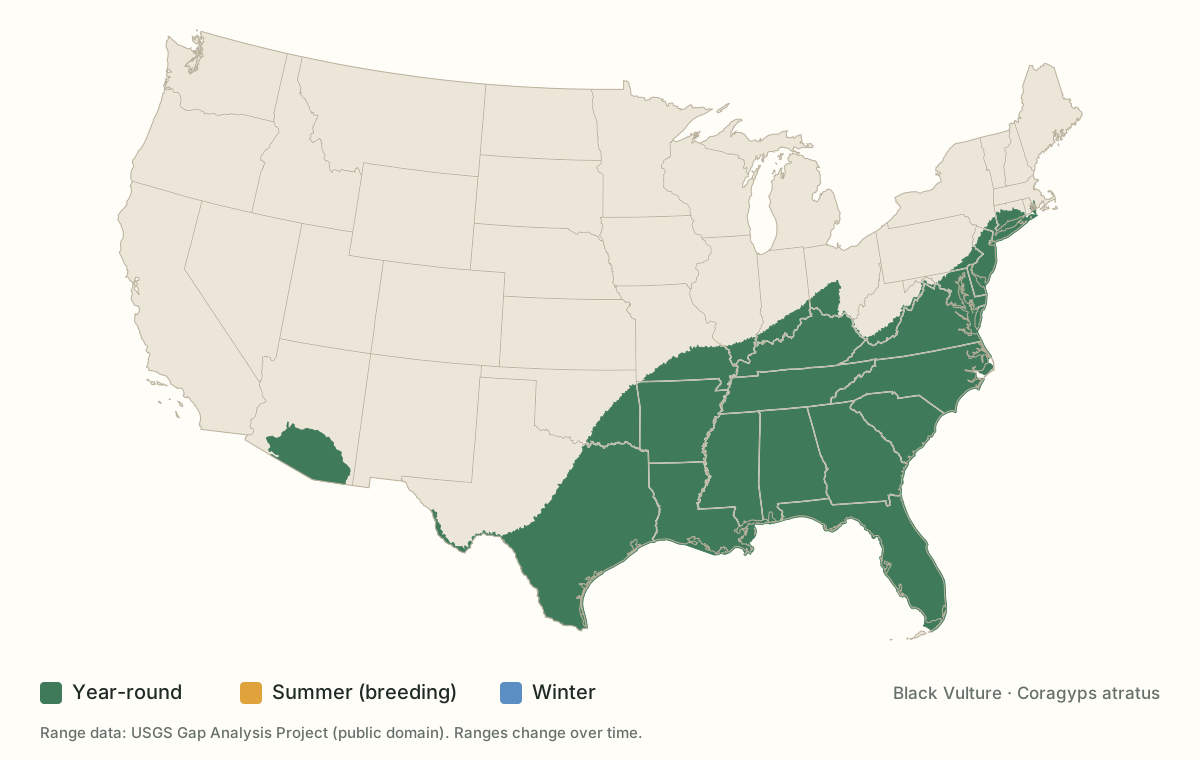
- Year-round across the Southeast
- Diet
- Carrion; occasionally newborn animals
Range in the United States
Life history
Food
Eats carrion, often following Turkey Vultures to find it; sometimes kills newborn or weak animals.
Nesting
No nest; eggs are laid on the ground in caves, hollow trees, thickets or abandoned buildings.
- Clutch
- 1–3 eggs
- Incubation
- 37–48 days
- Young
- Fledge at about 11–14 weeks
- Broods
- 1 per year
Behavior
Highly social; family members roost and feed together and can push larger Turkey Vultures off carcasses.
Conservation
Common and expanding northward.
Cool facts
- It has a weak sense of smell compared with the Turkey Vulture.
- Black Vultures cool off by urinating on their legs.
- Family groups stay together for years.
Songs & calls
▶Bird sounds video coming soon
Watch the Black Vulture
▶Video coming soon