Waterfowl & Diving Birds
American Black Duck
Anas rubripes
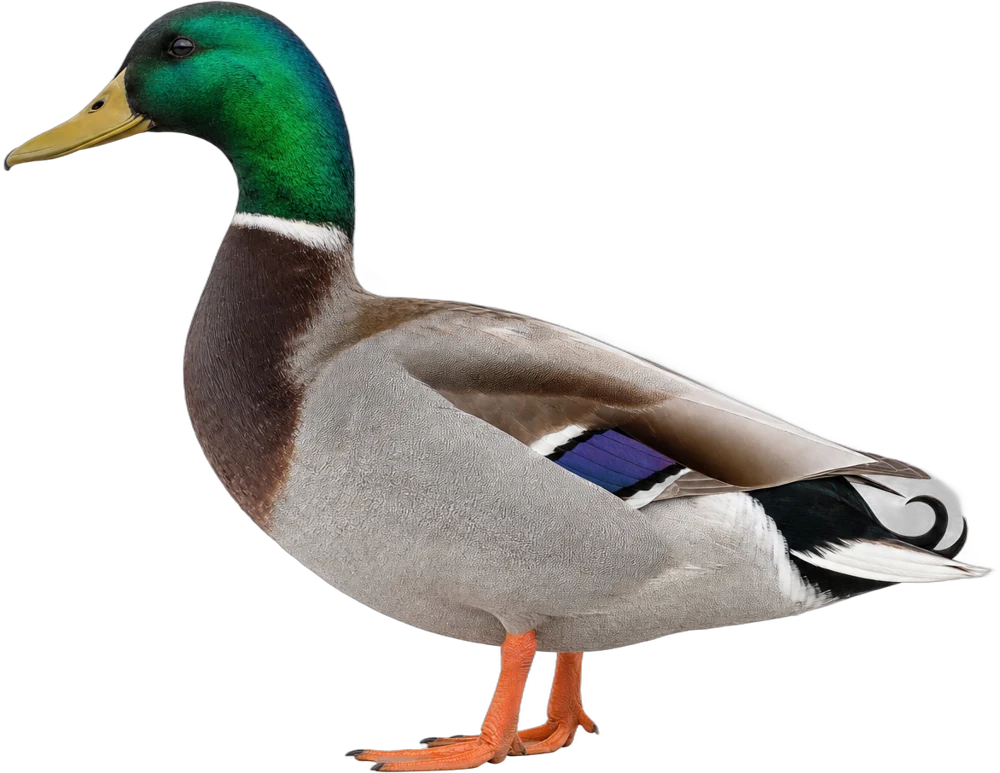
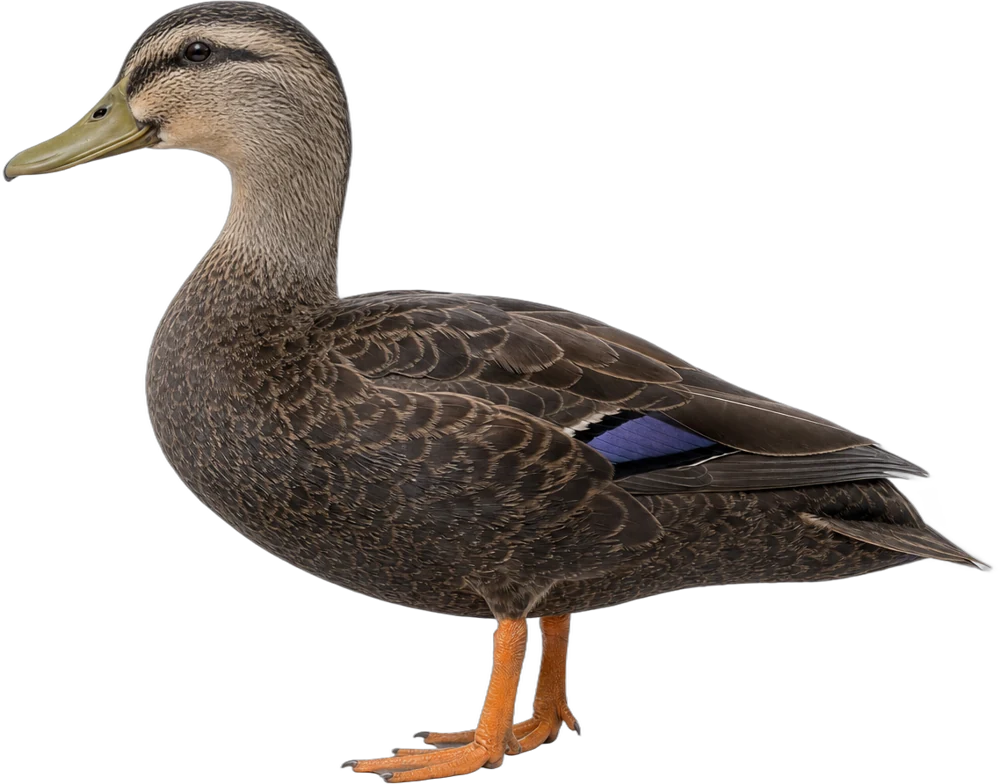
A dark, mallard-sized duck of eastern marshes. In flight its dark body contrasts with flashing white underwings.
How to identify it
- Sooty dark-brown body, clearly darker than a female Mallard
- Paler, grayish-brown head and neck
- Male has an olive-yellow bill; female's is duller green
- Violet-blue wing patch without bold white borders
- Bright white underwings in flight
SizeBetween an American Crow and a Canada Goose
American Crow19 in
American Black Duck22 in
Canada Goose37 in
Great Blue Heron46 in
6 inAverage length, bill to tail
Details
- Size
- 21–23 in long; wingspan 33–37 in
- Weight
- 1.6–3.6 lb
- Habitat
- Salt and freshwater marshes, bays, beaver ponds and wooded swamps
- When to see it
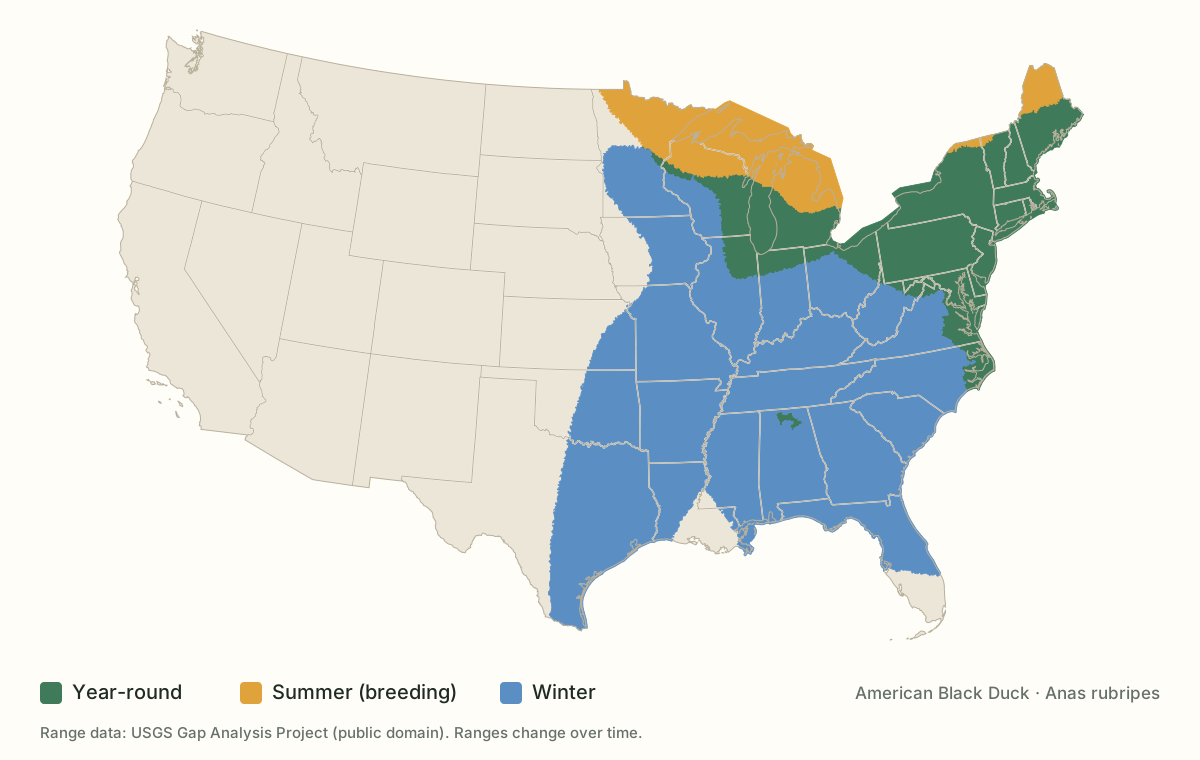
- Year-round in the Northeast; winter visitor farther south, including the Carolinas
- Diet
- Aquatic plants, seeds, snails, mussels and insects
Range in the United States
Life history
Food
Eats aquatic plants, seeds and roots, plus snails, mussels, insects and small crustaceans, especially in salt marshes in winter.
Nesting
A shallow bowl on the ground in thick cover near water, lined with grass and down.
- Clutch
- 6–14 eggs
- Incubation
- 23–33 days
- Young
- Leave the nest within a day; fly at about 8 weeks
- Broods
- 1 per year
Behavior
Wary and quick to flush. Often found in mixed flocks with Mallards, which it frequently pairs with.
Conservation
Declined by more than half from the 1950s to the 1990s, largely from habitat loss and hybridizing with Mallards; numbers are now more stable.
Cool facts
- Males and females look nearly alike; the male's bill is yellower.
- In flight, the white underwings flash against the dark body like a signal.
- Interbreeding with Mallards is one of the biggest long-term threats to the species.
Songs & calls
Watch the American Black Duck
▶Video coming soon