Waterfowl & Diving Birds
Northern Pintail
Anas acuta
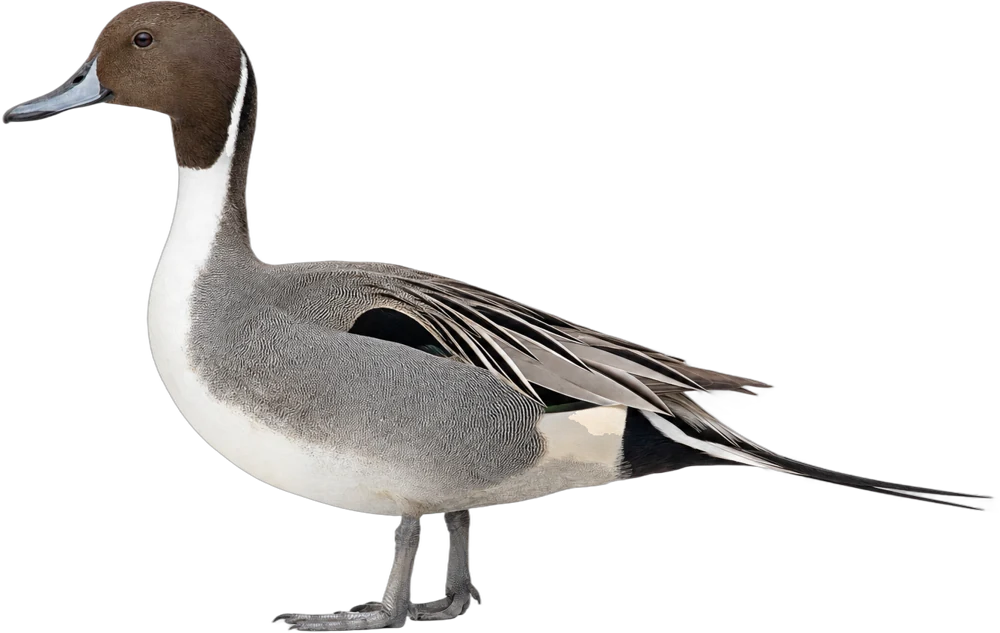
A slender, elegant duck with a long neck and, in males, a needle-pointed tail. Large flocks winter in coastal marshes and flooded fields.
How to identify it
- Male: chocolate-brown head with a white stripe running up the neck
- Male: long, thin black central tail feathers
- Female: plain mottled brown with a long neck and gray bill
- Slim, long-winged shape in flight
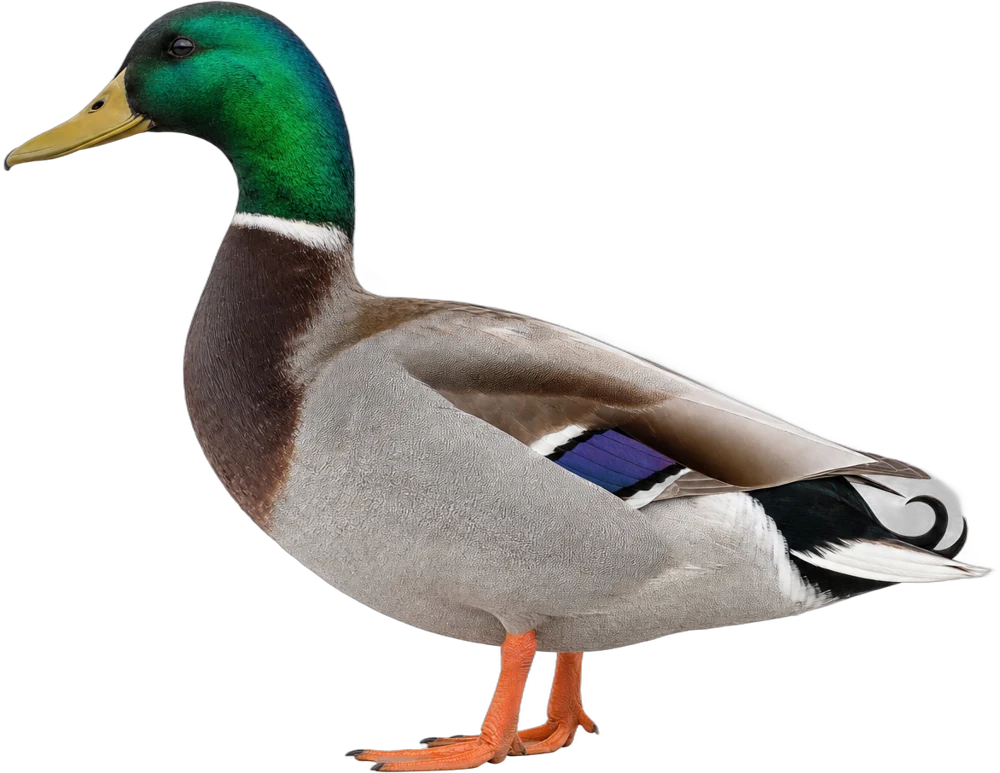
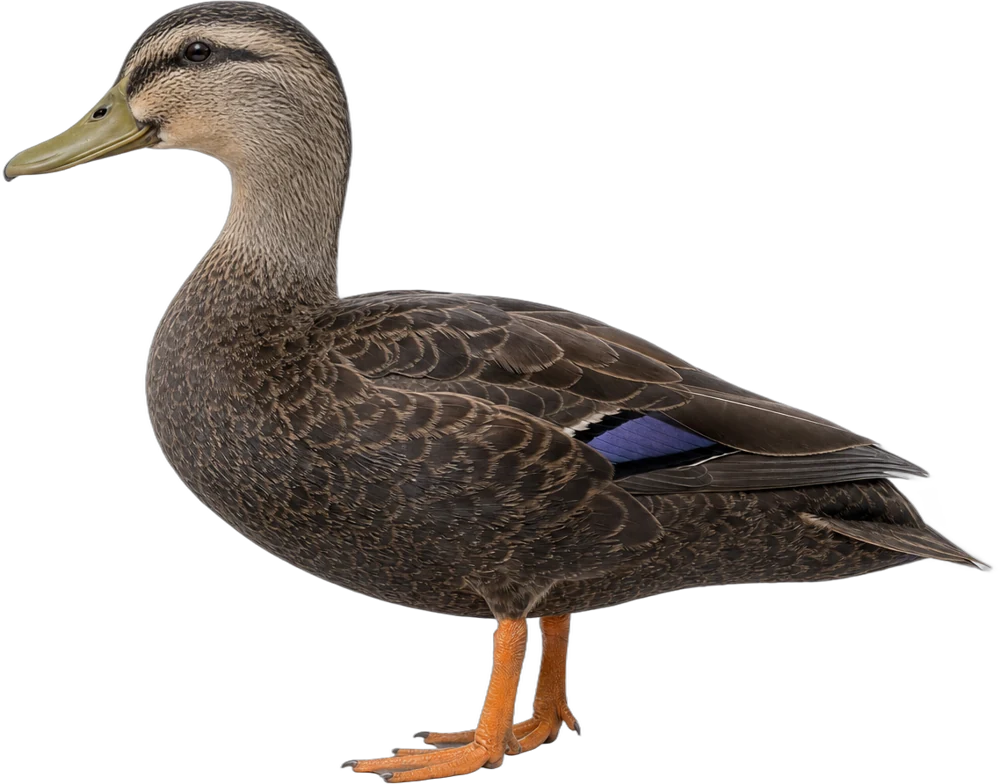
SizeBetween an American Crow and a Canada Goose
American Crow19 in
Northern Pintail25 in
Canada Goose37 in
Great Blue Heron46 in
6 inAverage length, bill to tail
Details
- Size
- 20–30 in long (including tail); wingspan about 34 in
- Weight
- 1.1–3.1 lb
- Habitat
- Marshes, shallow lakes, flooded fields and coastal estuaries
- When to see it
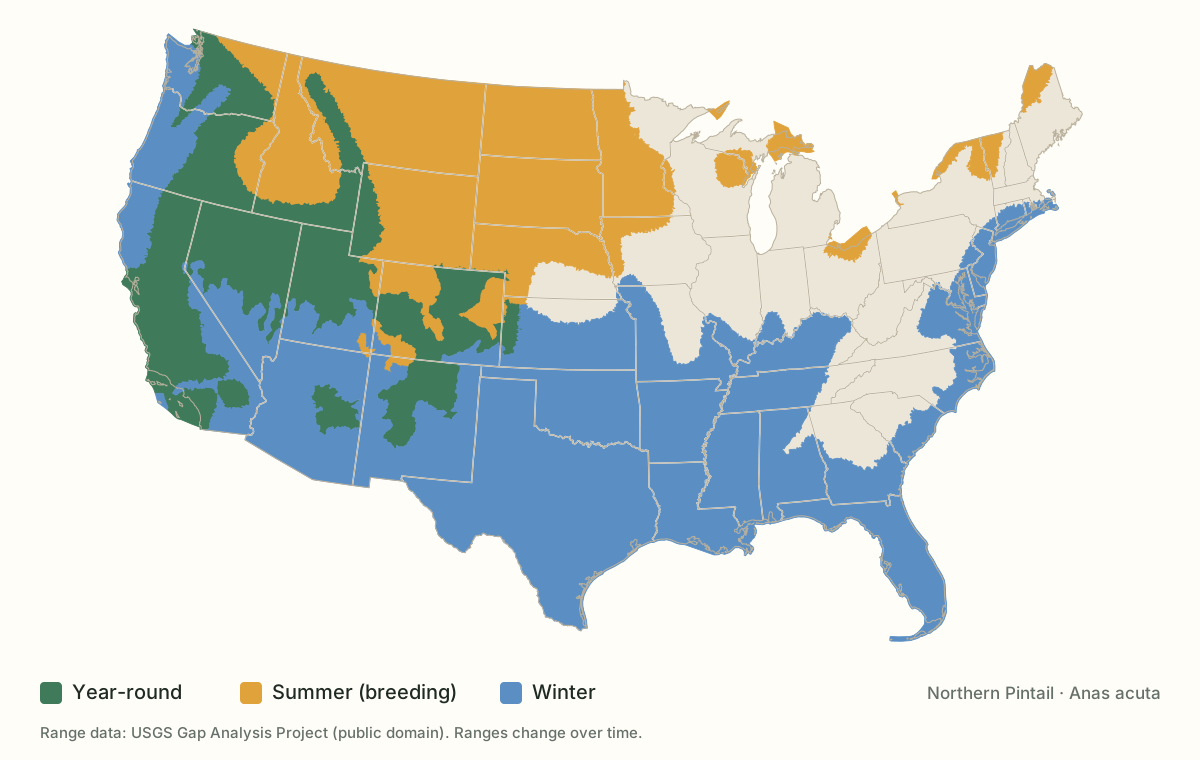
- Winter visitor across the South; breeds on northern prairies and in the West
- Diet
- Seeds, waste grain, aquatic plants, snails and insects
Range in the United States
Life history
Food
Feeds on seeds of marsh plants, waste rice and grain, and aquatic insects and snails. Its long neck lets it reach deeper than most dabbling ducks.
Nesting
A scrape on the ground, often surprisingly far from water and in short vegetation, lined with grass and down.
- Clutch
- 3–12 eggs
- Incubation
- 22–24 days
- Young
- Leave the nest within a day; fly at about 6–7 weeks
- Broods
- 1 per year
Behavior
One of the earliest ducks to migrate north in spring. Fast, graceful flyers that often travel in large flocks.
Conservation
Common but well below historic numbers, mainly because of drought and the loss of prairie wetlands where it nests.
Cool facts
- Pintails have been tracked flying over 1,800 miles nonstop during migration.
- The male's long central tail feathers can add up to 4 inches to his length.
- Pintails often nest in open fields, which makes their nests vulnerable to farming.