Waterfowl & Diving Birds
Mallard
Anas platyrhynchos
The most familiar duck in the world and the ancestor of most domestic ducks. Mallards live almost anywhere there is water, from city ponds to remote marshes.
How to identify it
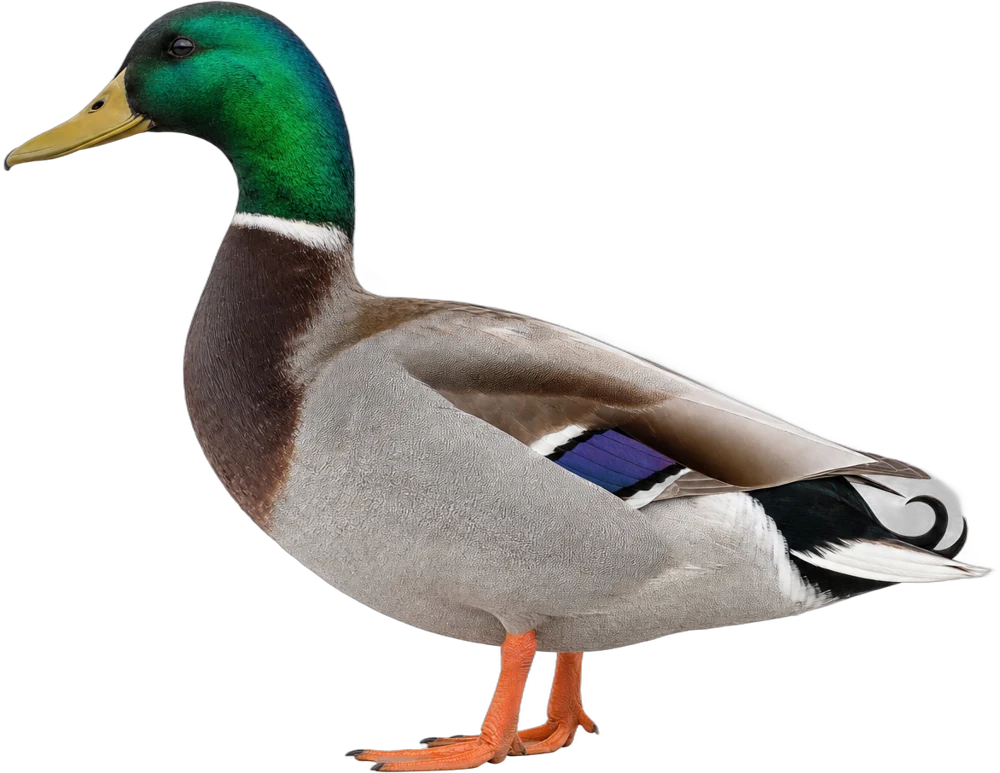
- Male: glossy green head, thin white collar, chestnut breast and yellow bill
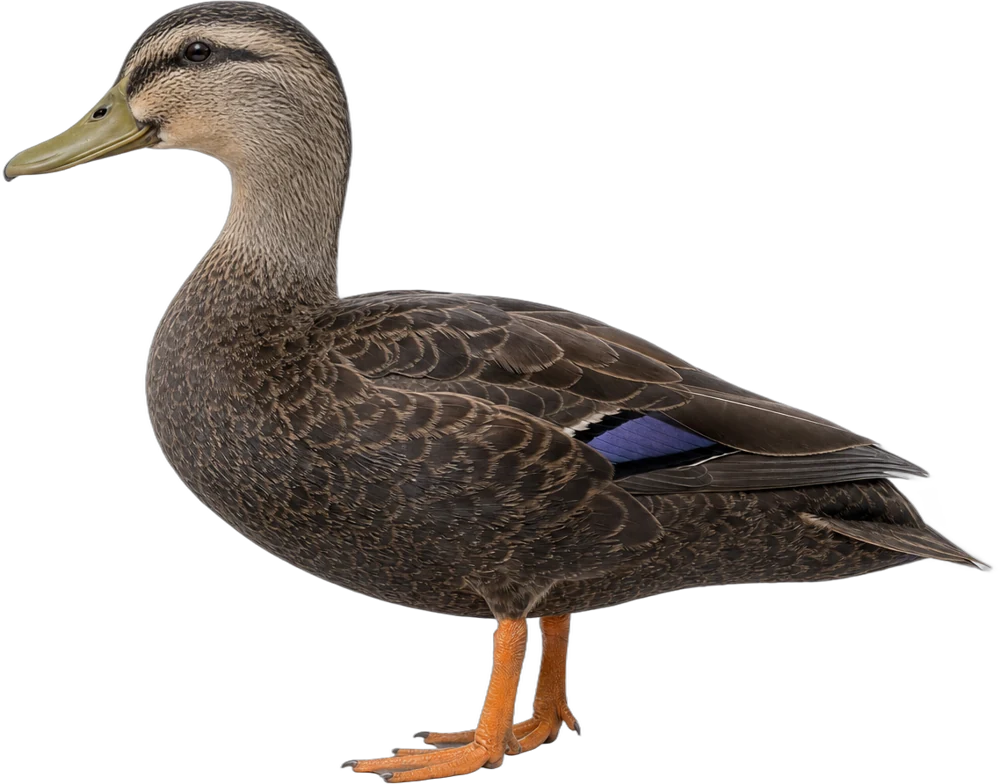
- Female: mottled brown with an orange bill marked with black
- Blue wing patch (speculum) with white borders on both sexes
- Female gives the classic loud "quack"
SizeBetween an American Crow and a Canada Goose
American Crow19 in
Mallard23 in
Canada Goose37 in
Great Blue Heron46 in
6 inAverage length, bill to tail
Details
- Size
- 20–26 in long; wingspan 32–37 in
- Weight
- 1.6–3.5 lb
- Habitat
- Ponds, lakes, rivers, marshes and city parks
- When to see it
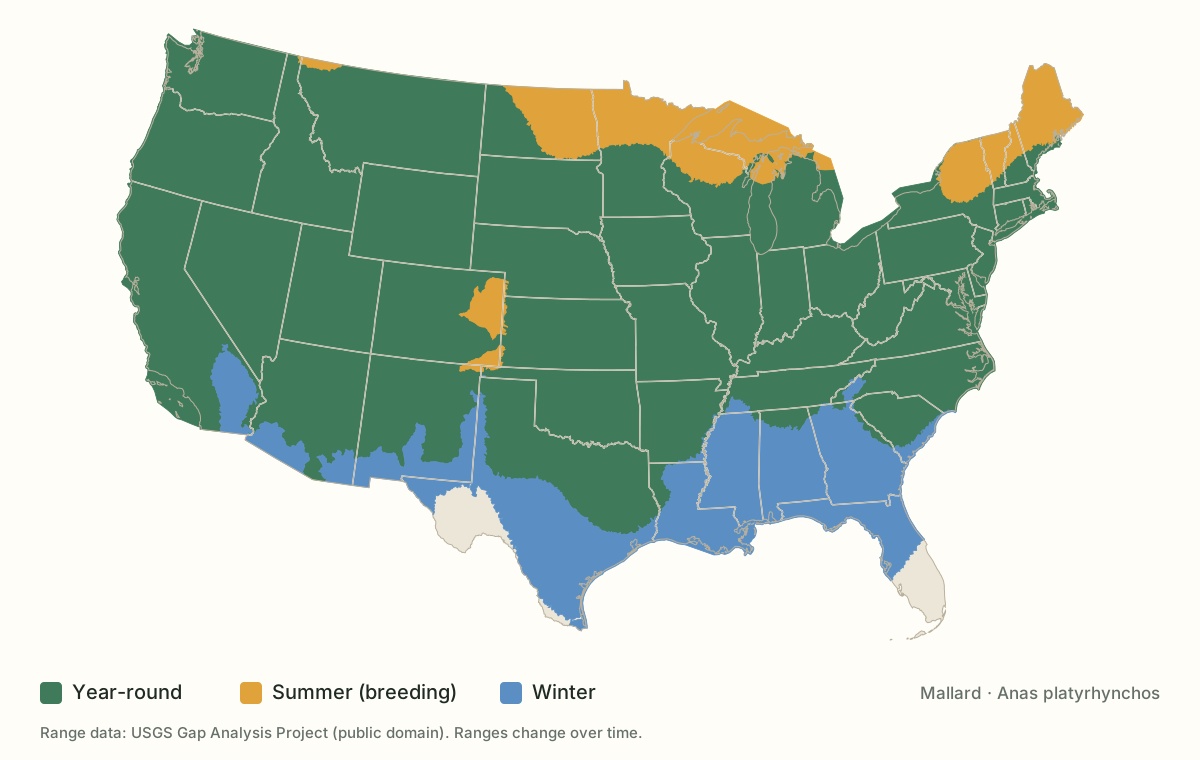
- Year-round across most of the US
- Diet
- Seeds, aquatic plants, insects and snails; grain in fields
Range in the United States
Life history
Food
A dabbler that tips forward to reach plants, seeds and invertebrates just under the surface. It also grazes on land and eats grain, and readily takes handouts in parks.
Nesting
A shallow bowl on the ground hidden in tall vegetation, usually near water, lined with plant material and down.
- Clutch
- 8–13 eggs
- Incubation
- 23–30 days
- Young
- Leave the nest within a day; fly at about 7–9 weeks
- Broods
- 1 per year
Behavior
Pairs form in fall and winter, but males leave soon after the female starts incubating. Mallards readily breed with other duck species, including American Black Ducks.
Conservation
Abundant and widespread; one of the most numerous ducks in the world.
Cool facts
- Almost all domestic ducks are descended from Mallards.
- Only the female gives the loud, classic "quack"; the male's call is a softer, raspy note.
- Mallards can take off almost straight up from the water.